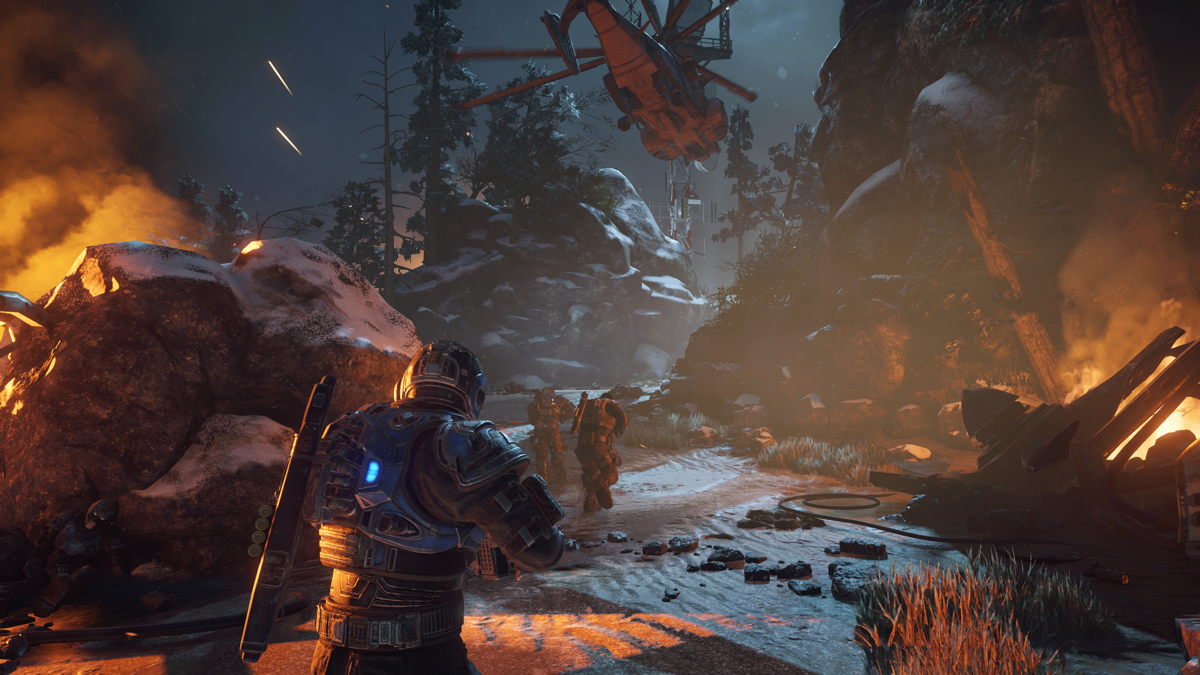
A waist-high wall is a comforting sight in Gears of War 4. You know what to do with it. Then the wind begins moving things that look considerably less cooperative, and the wall stops answering every question.
The Coalition's windflares make weather part of the action. Their value is not simply that debris looks dramatic. They ask you to reconsider familiar judgments about movement, an exposed firing lane and how long a position remains useful.

Weather can change the job your cover is doing
Cover is a position from which you intend to act. Before a weather hazard changes the fight, that might mean a good view of an enemy and a manageable route to the next wall. Once conditions deteriorate, the same spot may demand a different plan.
The official July 2017 update describes strong wind affecting movement and projectile aiming, with a lightning phase adding another threat. Those changes are consequential because movement and aiming are usually how you turn a defensive position into progress.
Our practical recommendation is to identify the next position before leaving the current one. Look at the route, the exposure and what would force you to change course. Planning a second step is especially useful when the environment can interfere with the first.

Do not treat every weapon decision as the same aiming problem
If wind changes a projectile's travel, correcting the crosshair is not the whole decision. You also need to decide whether the shot is worth committing to under those conditions. Range, the available angle and the opportunity to reposition become part of the choice.
Watch the particular interaction the game is presenting. A familiar approach deserves adjustment when the conditions supporting it have changed.
That gives the weather a purpose beyond visual spectacle. It can interrupt the comfortable assumption that the same position and shot will remain equally useful from the beginning of an encounter to the end.

A warning is time to move, not a damage test
The Coalition points to a telltale sizzle before lightning strikes on Reclaimed Windflare. The useful response is to treat the cue as an instruction to reassess where you are standing.
In a fight, it is tempting to finish one more burst before moving. A warning competes directly with that impulse. The design makes attention part of the challenge: can you stop pursuing a target long enough to respond to a second threat?
For a group learning an encounter, call environmental cues as well as enemy positions. A short warning that gets a partner moving is more useful than a long explanation after the hazard has already arrived.

Campaign weather and Reclaimed Windflare have different contexts
Gears of War 4 first uses windflares in its campaign. The July 2017 update brought a storm-focused version of Reclaimed to Versus and Horde. That is a historical map addition, not a claim that a particular 2017 event or playlist is running today.
The distinction matters because a campaign encounter can guide you through its intended dramatic sequence, while a multiplayer arena brings other players' decisions into the same weather. The environmental idea travels between them, but the complete fight is not identical.
When revisiting the game, choose the experience you mean to examine. A campaign replay lets you watch how the storm changes an authored encounter. A multiplayer session asks how a team responds when other players also have plans.

Co-op makes clear decisions more valuable
The current Xbox description identifies a two-player campaign with local split-screen or online co-op, following JD Fenix with Kait and Del. A second player makes coordination possible, but it does not automatically make your next move obvious to them.
Agree on the immediate objective. Cross the open ground together, cover a move, or wait until the next position is understood. Avoid giving both players different unstated plans and asking the storm to sort them out.
The weather is especially effective when it makes the squad feel small inside a larger threat. Gunfire still matters, but the environment refuses to remain a passive backdrop. For a series built around learning how to use physical space, that is a natural source of pressure.

A useful reason to revisit Gears 4
Our take: the windflares give this entry a clear identity within Gears. They challenge the security of a known position without discarding the cover-based combat around it. Replaying with attention to the warning cues and movement decisions can reveal more than simply remembering that the storm looked good.
For the physical Xbox One release, check Zypher's Gears of War 4 listing for the exact copy and contents. These images show that title, not a later Gears sequel. If your shelf needs room for a different campaign, see Zypher's trading and selling information.


