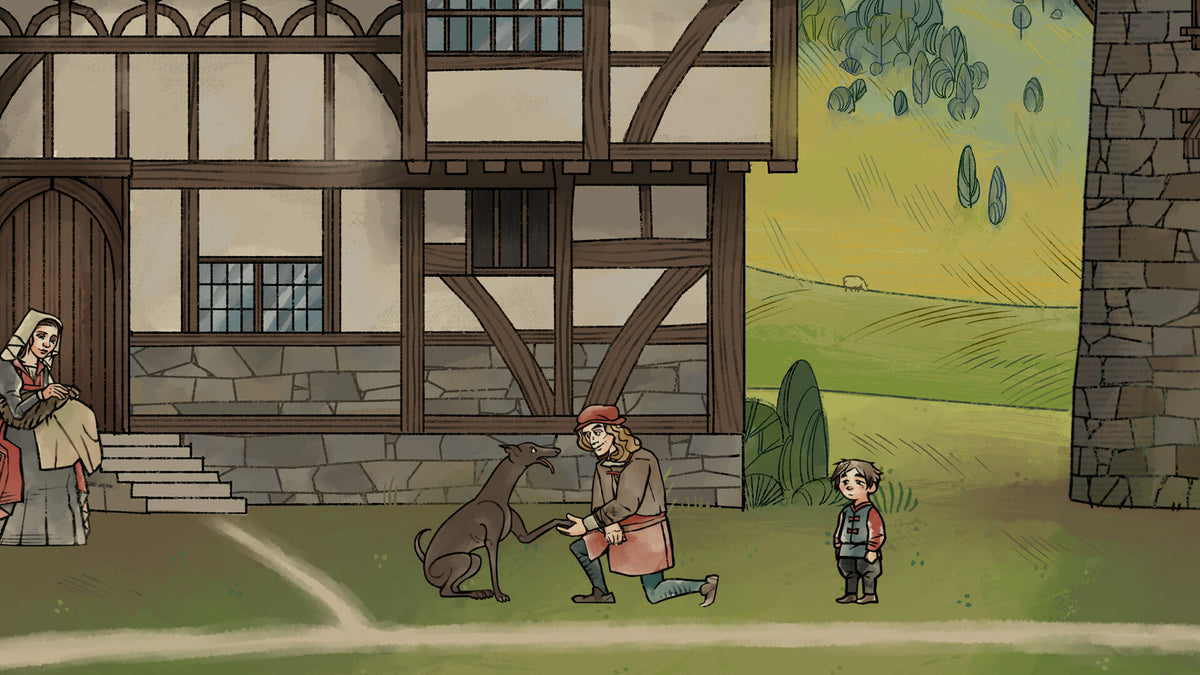
A meal in Pentiment can be a decision about evidence. Sit with one household and you hear its version of life in Tassing. Spend that opportunity elsewhere and a different part of the community opens up. The murder investigation happens among people who still need to eat, work and decide whether they trust you.
That is what makes Obsidian’s historical adventure interesting beyond its striking illustrated look. You play Andreas Maler, an artist caught in the affairs of a Bavarian town and its nearby abbey. His education helps him interpret the world, but it does not give him ownership of everyone else’s time. The investigation has limits.
For a first playthrough, our recommendation is to choose a version of Andreas you find plausible and follow the consequences of being that person. Pentiment becomes more compelling when Andreas has a point of view, a set of interests and some uncomfortable gaps. Trying to turn him into a walking answer key fights the premise.
Backgrounds give Andreas a vocabulary
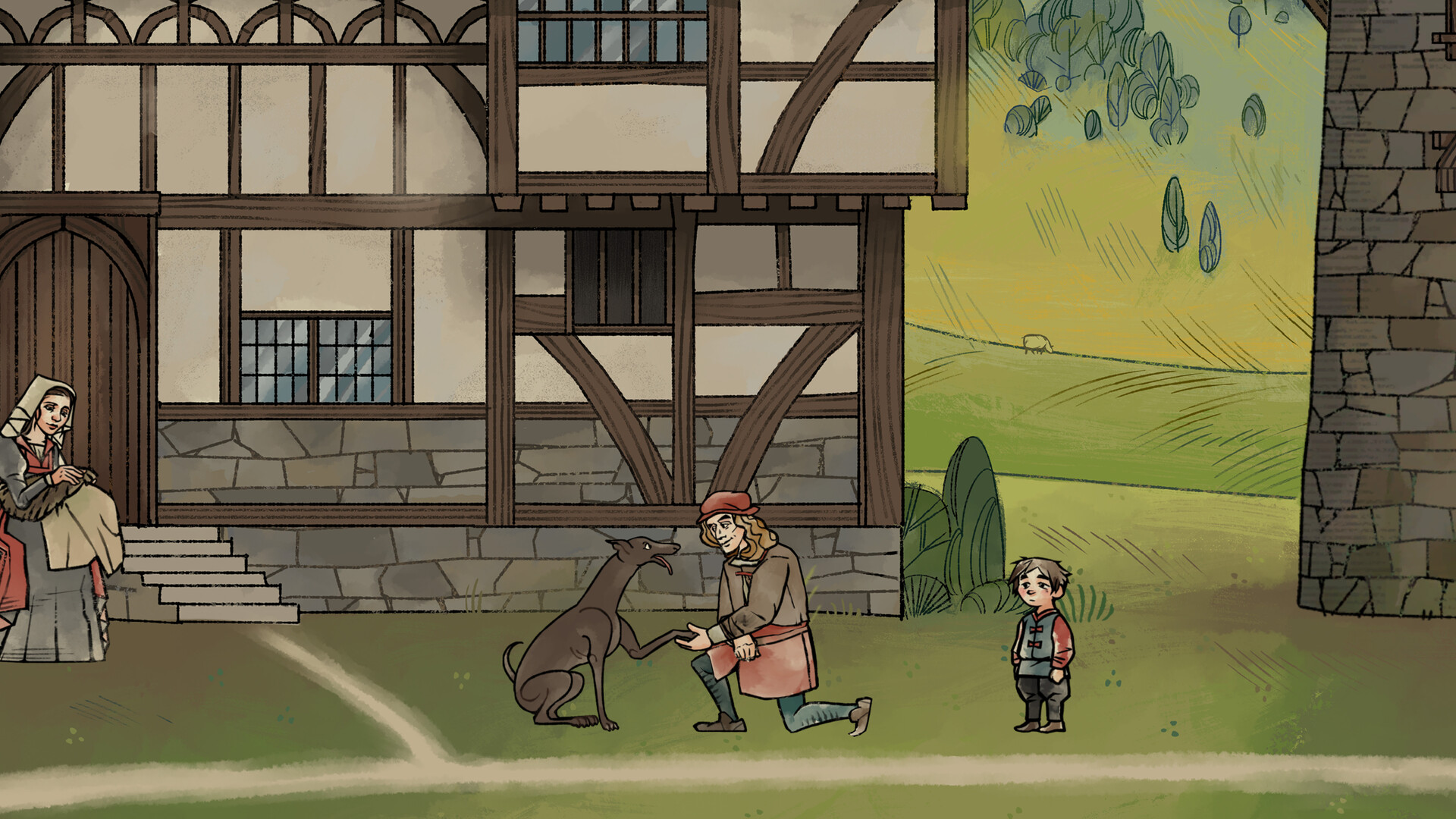
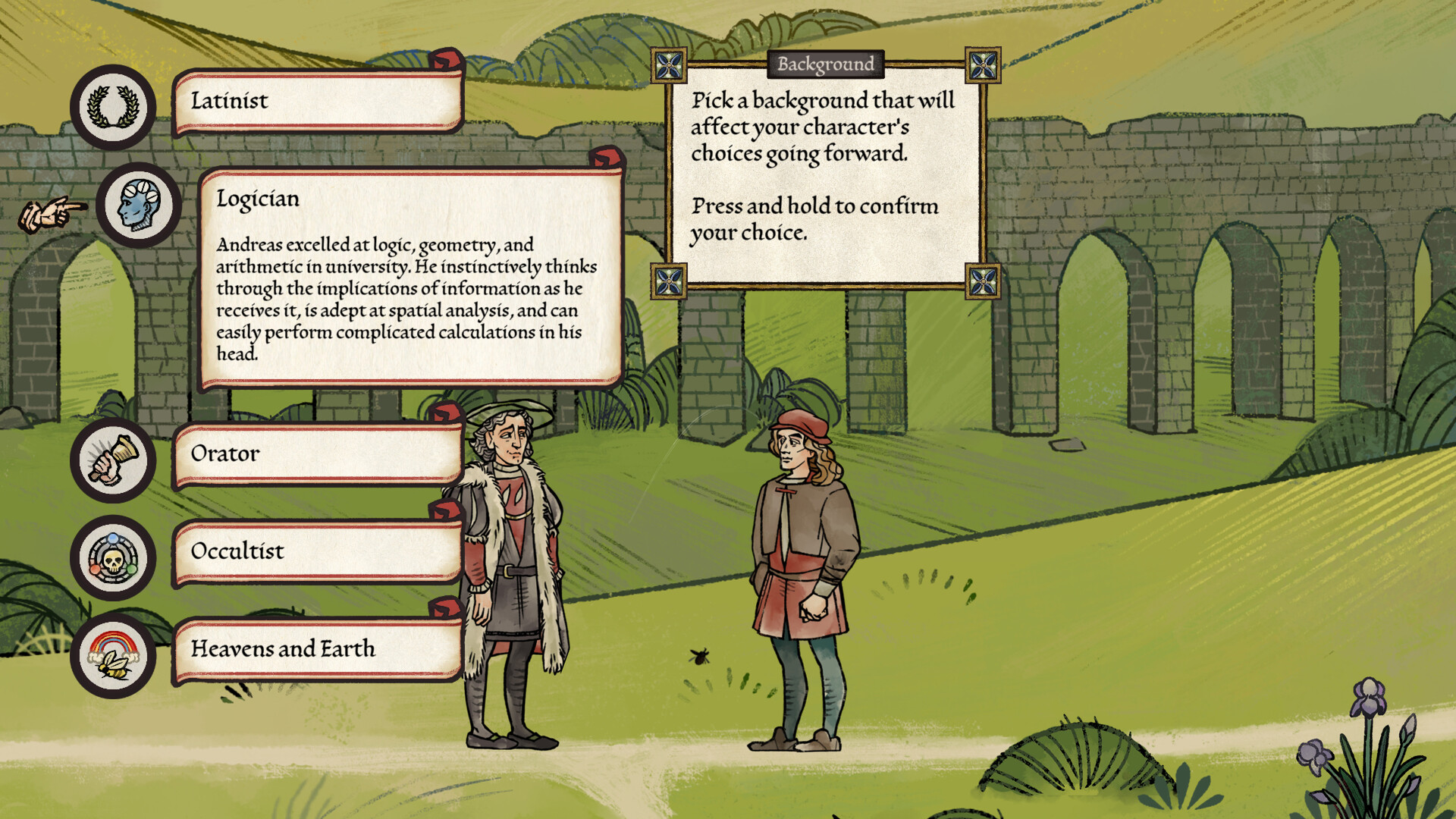
Academic and social backgrounds shape the choices available to Andreas. The official game description makes that connection explicit: who he is affects how he encounters Tassing and Keirsau Abbey. An educated response is a way to participate in a conversation, rather than a universal replacement for understanding the person speaking.
Look at the background-selection screens. The game presents fields of study and interests as parts of a life. That gives you a useful starting question: what would this artist notice? A character who reads a situation through theology is approaching it differently from one who brings another education to the exchange.
Choose an interest because you want to hear how it changes Andreas’s voice. Hunting a supposedly perfect combination before the first meaningful conversation can turn a rich introduction into administrative work. There will still be things he does not know and people who do not welcome his intervention. Those limits help him feel like a person walking through a community.
The deadline makes a promising lead cost something
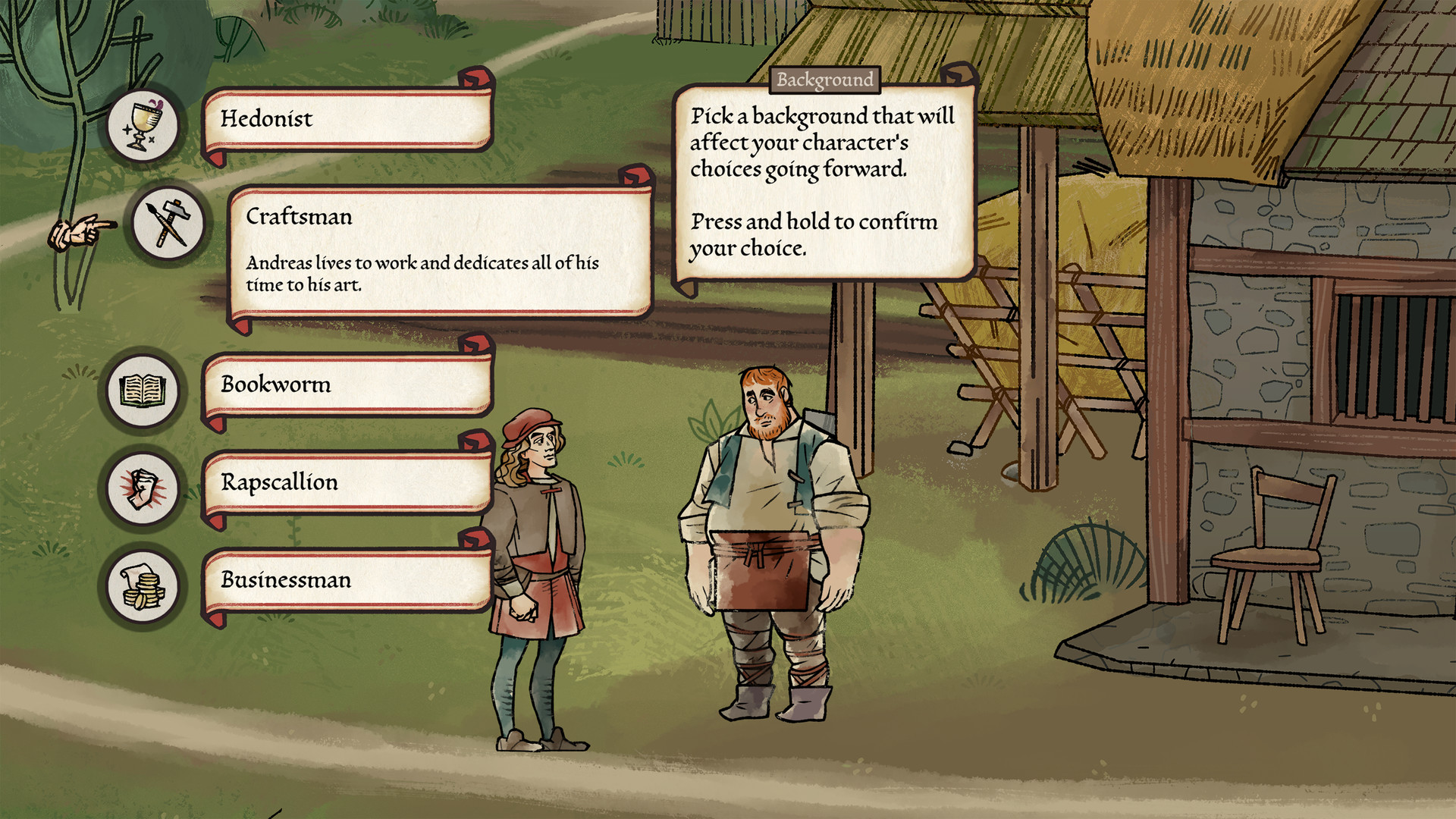
In an interview with MMORPG.com, director Josh Sawyer explained that the pressure to investigate without obtaining every piece of information was intentional. Andreas is working within someone else’s timetable. The design asks him to reach a consequential decision with an incomplete view.
That gives a promising lead a cost. Following it means committing attention that could have gone elsewhere. A choice can be sensible even when you later discover that another route contained useful information. The existence of that other route does not prove the original decision was foolish.
Keep your immediate question small enough to guide the next step. You might want to understand a person’s grievance, challenge a detail in an account or hear from somebody outside the obvious circle. A concrete purpose helps you decide when to pursue a conversation instead of treating every available interaction as an equally urgent task.
A place at the table has a point of view
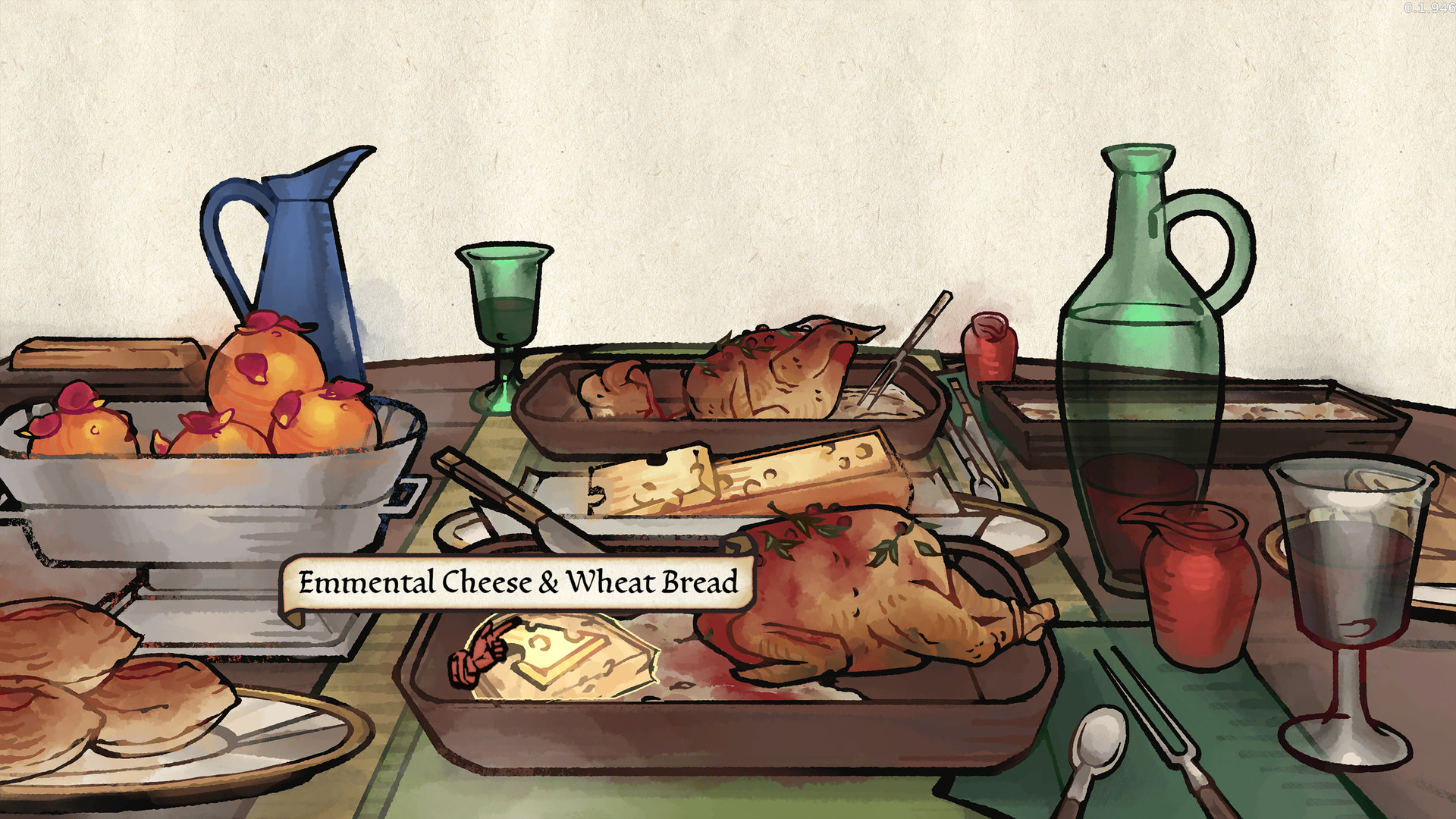
Sawyer’s discussion of the schedule specifically included meals. They belong inside the investigation’s time budget, which gives the everyday act of sitting down with people a practical weight. The table is a social setting as well as a route to information.
The food and the room also do visual work. In the publisher’s in-game meal capture, plates and vessels fill the foreground. Elsewhere, people gather inside domestic and institutional spaces with very different layouts. Pentiment invites you to notice where a conversation happens and who is present for it.
Our design read is that the meal keeps evidence attached to a relationship. Someone offering a story is also someone sharing a table, with loyalties and worries that extend beyond Andreas’s current question. Listen for those priorities. A person does not become a neutral information terminal because the protagonist has arrived with a mystery.
A failed conversation can still tell you something
A dialogue check can make an interaction feel like an exam. Sawyer pushed back against treating success at those checks as the entire point of Pentiment. The entertaining interaction and its place in the story matter too. That is useful advice when a conversation does not produce the response you wanted.
Read the exchange that actually happened. Did Andreas sound dismissive? Did he appeal to an interest the other person did not share? Did a gap in his background become visible? Even when you dislike the outcome, it can give the character a clearer outline.
For a first run, we suggest carrying that version of Andreas forward rather than immediately searching for the sentence that would have produced a different result. You are allowed to reconsider a decision, of course. But repeatedly replacing every awkward exchange can flatten the very social uncertainty that makes this investigation distinctive.
The illustrated world helps you read a complicated community
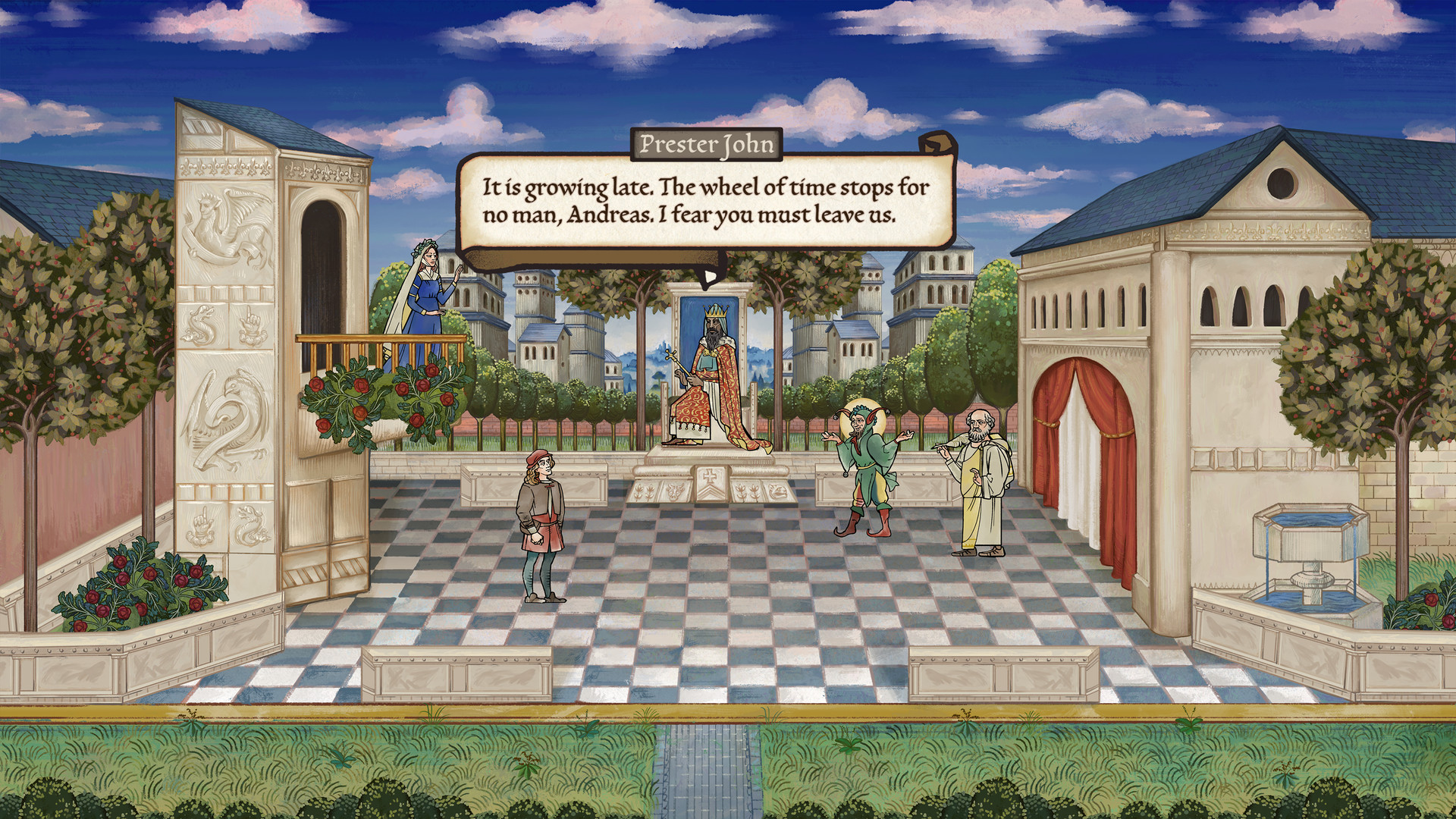
Pentiment draws on illuminated manuscripts and early printed books for its visual language. That choice fits a story set amid religious, political and social change. The official presentation connects the game’s world with a period when printing was changing how information circulated.
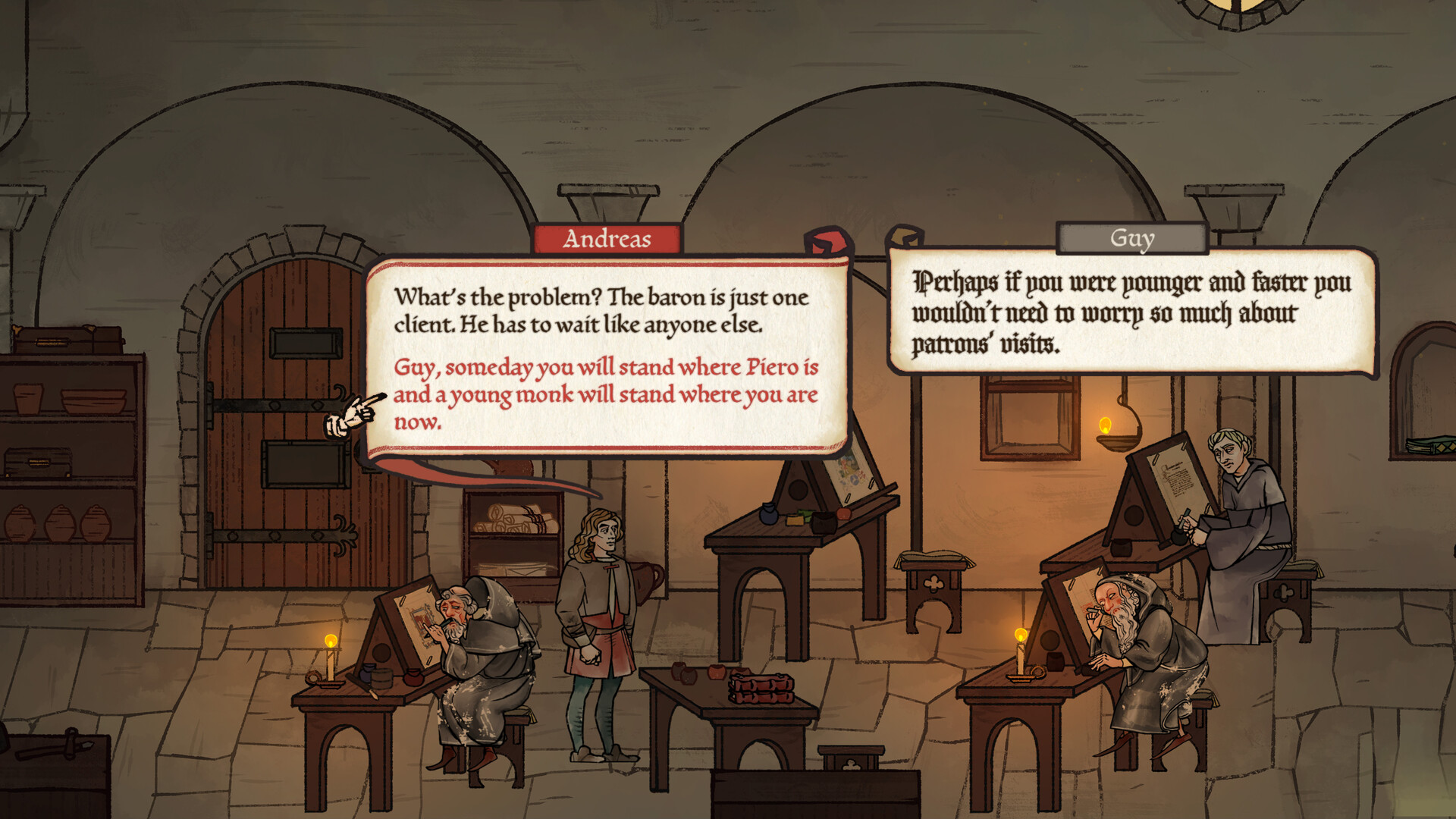
On screen, this means that a page, a courtyard and a workshop can share a recognizable visual grammar while remaining different spaces. The figures are immediately legible, and the text is part of the composition. It is a strong fit for a game in which reading and listening are central actions.
Spend a moment with the image before advancing a conversation. Notice the arrangement of people, the objects around them and the difference between a private room and a public space. The recommendation is simple: give the setting the same attention you give the selectable reply. The world is doing some of the storytelling before Andreas says anything.
A decision continues to belong to the town
The official game description promises consequences unfolding across generations. That scale makes an individual accusation or relationship feel different. You are contributing to a community’s history, rather than clearing a case file and leaving the location behind.
It also gives uncertainty a longer life. You may understand why you made a choice while still being troubled by what followed. Pentiment has room for that tension because the surrounding people have lives and interests beyond delivering a satisfying verdict to the player.
A useful way to finish a session is to note whom Andreas trusted and why. Keep the note in his terms: the account he believed, the person he wanted to protect, the information he could actually obtain. When the story moves on, you have a record of the reasoning that belonged to that moment. It is a more interesting companion to the next conversation than a list of outcomes you wish you had known in advance.
Make room for the next game
Find your next play at Zypher Trading Video Games, or sell your old games to Zypher when your shelf needs room.
Sources: Obsidian’s official Pentiment presentation; Josh Sawyer interview by MMORPG.com; Publisher’s Pentiment PC description and original screenshots. Gameplay recommendations and design interpretation are Zypher editorial judgment. Screenshots retain their original proportions. Zypher is an independent retailer.


