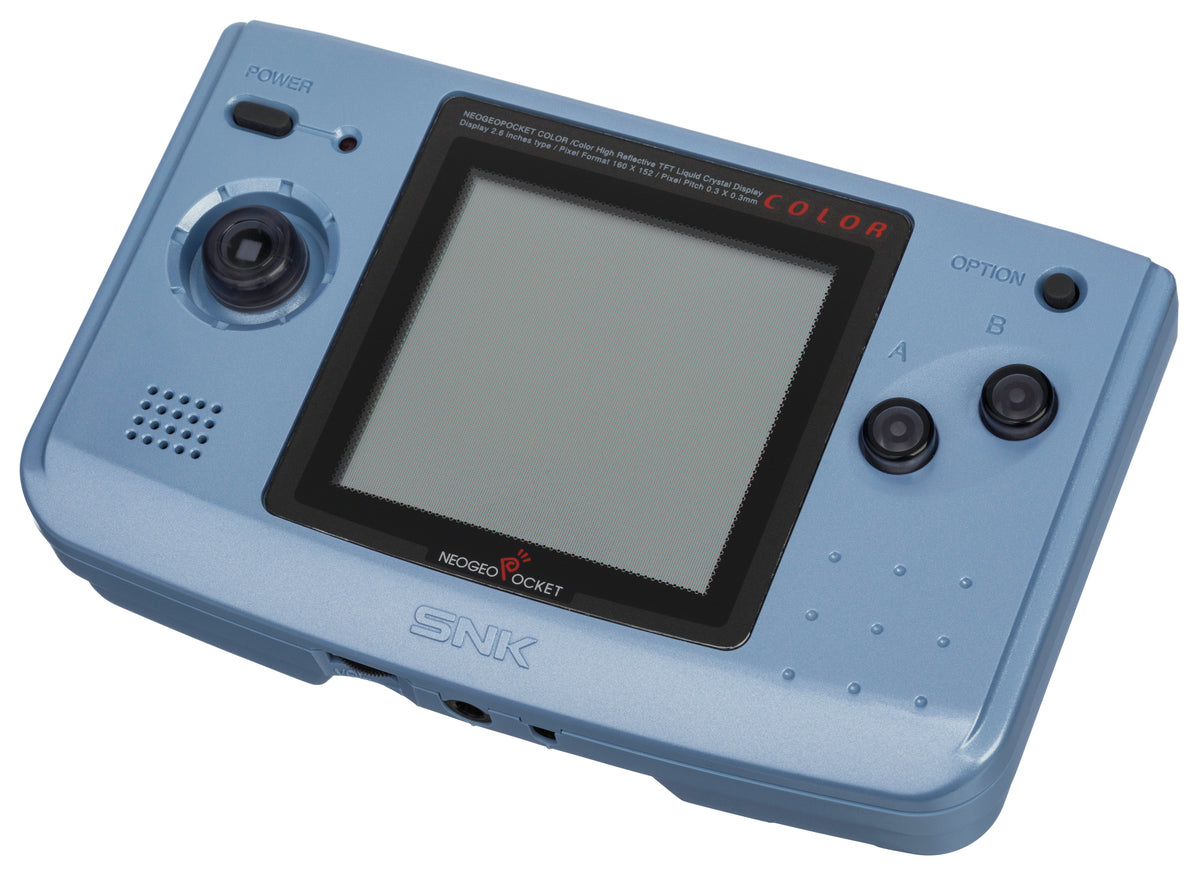
The Neo Geo Pocket Color had an awkward problem for anyone buying into it in the West: SNK stopped distributing the hardware and games while the system was still young. That is a different story from a handheld simply growing old and being replaced.
It also explains why this little machine deserves more than a quick “lost to Nintendo” dismissal. SNK had given its handheld a clear identity, then cut off its western distribution. Looking at both sides explains why the machine can still appeal to collectors despite that abrupt exit.
Featured image: blue Neo Geo Pocket Color hardware, photographed by Evan-Amos. Original photograph and public-domain dedication. The screen is off; this is a hardware photograph, not a gameplay capture.
A small machine with a very specific identity
SNK's historical hardware summary dates the monochrome Neo Geo Pocket to 1998 and its color successor to 1999. The company's Japanese timeline places the Color's launch in March 1999. Keep those models separate when shopping: a seller using “Neo Geo Pocket” casually may leave out the detail you actually care about.
The controls make the pitch unusually easy to see. There is a thumbstick on the left, two face buttons on the right, and a screen between them. SNK's retrospective specifically celebrates the thumbstick. That makes the controls worth examining closely on any used unit you are considering.

For a collector, that layout is part of the attraction. A modern controller can give you access to a game, but it does not turn into the original handheld. That is a sensible reason to want the machine. It is also a reason to care about the controls' condition instead of buying purely on how clean the shell looks.
June 2000 ended western distribution, not every market at once
Doug Trueman's June 13, 2000 GameSpot report documents SNK stopping distribution of Neo Geo Pocket Color hardware and software in North America and Europe. Retailers were asked to return unsold inventory for reimbursement.
The same report said Japan would continue receiving the hardware and software. SNK also said consumer support would continue at that time. That historical assurance is not a current warranty offer.
For western owners, the practical change was severe: the local release pipeline had been cut off. But calling June 2000 a single worldwide shutdown flattens an important regional difference. If you are researching a cartridge's release or packaging, the market on the box matters.
The company story matters more than a convenient villain
Nick Thorpe's 2018 Retro Gamer feature, 40 Years of SNK, places the handheld's withdrawal inside SNK's wider troubles. It records Aruze purchasing SNK in January 2000 and absorbing it as a subsidiary, followed by the withdrawal from non-Japanese markets that June.
That gives us company context and a documented sequence. It does not give us permission to invent a neat boardroom scene where one executive decides the fate of every cartridge. Nor does a short commercial life prove that the controls, games and ownership experience all failed in the same way.
Our reading is that the regional exit is the key to understanding the system's western story. You can admire the hardware and still recognize what a terrible prospect it is to buy a young platform just before its local distribution disappears. Both things can be true.

Decide whether you want the hardware or the games
There is a modern route into part of the library. Neo Geo Pocket Color Selection Vol.1 Steam Edition, released in 2021, contains ten games, including King of Fighters R-2 and both Metal Slug Mission games. SNK warns that its contents can differ from the Switch collection.
SNK's launch announcement lists SNK vs. Capcom: The Match of the Millennium separately. Do not assume that crossover is included in Steam Vol.1. Its Single, Tag and Team formats offer different ways to organize a fight, a useful detail when choosing which game interests you.
A collection is the more direct purchase to investigate if your goal is access to those particular games. Original hardware makes more sense when the handheld itself is the attraction. Before choosing either route, write down the actual titles you want. A familiar SNK logo is a starting point, not a contents list.
What to ask before buying an original unit
Start with evidence of the actual item. Ask for clear front and rear photographs, a readable model label, and a demonstration of the display and controls. An attractive powered-off screen tells you very little about the screen in use. Likewise, a thumbstick can look perfectly present without the listing showing its inputs registering.

Then separate condition from completeness. Is the offer the handheld alone, or are games, packaging and paperwork explicitly included? Have the screen, shell or other parts been replaced? A modification may suit your playing preferences, while an originality-focused collector may want something else. Ask which parts changed and request photographs that support the answer.
A complete box cannot compensate for a screen or control problem if your plan is to play. Conversely, a working loose unit may leave a packaging-focused collection unfinished. Decide which compromise you can live with before comparing asking prices.
Keep the crossover names straight at Zypher
For a different SNK/Capcom crossover on home hardware, Zypher lists Capcom vs. SNK 2: Mark of the Millennium for the original Xbox. That is a separate game and platform from the Pocket's SNK vs. Capcom: The Match of the Millennium. Similar names do not make the discs and cartridges interchangeable purchases.
Browse Zypher's video games and check the selected listing's condition and included contents before ordering. To clear room in your collection, use our general sell-your-old-games page to see how selling works and check current eligibility.


