A great PlayStation collection needs a fighting game that ruins a friendly evening, a racer that makes you care about one corner, and an adventure that makes a locked door feel personally insulting. This is The Zypher Top 25: original PlayStation games, ranked for the different reasons they deserve time in the console.
What qualifies, and how we ranked it
The scope is games released for the first PlayStation in North America, judged in their PS1 form. Later remakes do not get to sneak their improvements into the score. Multiple entries from a series qualify when they offer meaningfully different reasons to play. We are ranking games, not the resale value of their packaging.
Our order weighs the central play system, how well the game sustains it, the character of its presentation, and whether its awkward parts are worth putting up with today. These are Zypher's editorial choices, not a poll or an average of review scores. Each entry gives a strength and a catch. Read the catch before buying. Nostalgia has terrible customer service.
The featured photograph shows Sony's compact PS one hardware revision. Photo by Evan-Amos, public domain. Image source and rights.
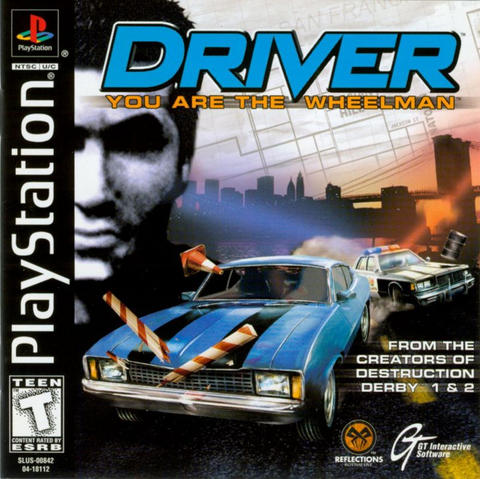
25. Driver: You Are the Wheelman
Driving is the job. Tanner's undercover missions make getting a car through a city the main event, and the Film Director replay editor lets you stage the escape afterward. That makes it our pick for someone who wants the car chase itself to carry the game.
The catch: the opening driving interview demands practice before the campaign gets moving. Use the training modes to learn the handling. A relaxed sightseeing trip is not the assignment.
24. Bushido Blade
A duel can end in one decisive strike. That changes the value of distance and hesitation: getting close is already a commitment. We choose it for the tension of the encounter, where a short fight can contain a great deal of second-guessing.
The catch: sudden endings make an uneven matchup obvious. Bring someone who wants to learn the duel with you. For longer exchanges and a different kind of practice, Tekken 3 is the stronger all-purpose fighting pick higher up.
23. PaRappa the Rapper
Following the teacher's commands gives this rhythm game its starting point, while COOL Mode allows a freer performance within its rules. The playful illustrated characters give the music a face. It earns a place because the presentation and the way you participate belong together.
The catch: improving those performances is the attraction. Choose it for a focused music game, rather than expecting an enormous adventure because the dog looks ready to go places.
22. Oddworld: Abe's Oddysee
GameSpeak makes communicating with other characters a practical skill. Rescuing fellow Mudokons gives the puzzle-platforming a purpose beyond moving the hero to an exit. A screen of hazards becomes more interesting when you need to get somebody else through it too.
The catch: our recommendation depends on enjoying deliberate problem-solving. If your favorite platforming is sprinting forward and improvising every landing, look toward a different entry here. Abe benefits from reading the situation first.
21. Resident Evil: Director's Cut
The mansion makes inventory space part of the horror. Chris and Jill have different carrying capacities, and item boxes make planning a return trip matter alongside choosing a weapon. We like how the environment can remain troublesome after the immediate threat is gone.
The catch: this is the PS1 Director's Cut, with Original, Beginner and Arrange modes, not the later remake. Its older movement and aiming scheme is part of the purchase. The title on the case needs to match the experience you want.
20. Final Fantasy VIII
The Junction system gives preparation its own identity. Guardian Forces open abilities, and acquired magic can be attached to character stats. Building a party becomes more interesting than automatically equipping the newest weapon.
The catch: understanding that system takes attention. Draw, draw points and item refinement offer different ways to obtain magic. Choose VIII when experimenting with setup sounds appealing; pick another RPG here if that sounds like homework with better hair.
19. WipEout XL
WipEout XL brings energy management into anti-gravity racing. Weapons can destroy craft, and pit lanes restore energy. The racing line shares your attention with whether the ship will survive to finish it.
The catch: the handling is something to learn on its own terms. This is our futuristic-racing choice for somebody who wants to practice a demanding system. The weapons do not excuse an argument with every wall.
18. Tomb Raider
Lara's movement makes a jump something you prepare. Walking to an edge, lining up and choosing how to cross a space turns architecture into the challenge. A room can be interesting before an enemy enters it.
The catch: the original controls are a substantial part of that procedure. Accept the measured movement rather than expecting a modern free-flowing adventure. We mean the original PS1 game, not the later Anniversary reinterpretation.
17. Crash Bandicoot: Warped
Crystals give you the basic completion goal, while re-entering a level after collecting its crystal lets you chase a Relic in Time Trial mode. That second assignment changes why you return to a course. We value having both an adventure to finish and a reason to polish the run afterward.
The catch: your favorite type of stage will not be the only one on the menu. We put Cortex Strikes Back above it because its tighter focus better fits our criteria. Preferring Warped's variety is a good reason to reverse them on your shelf.
16. Ape Escape
The gadgets and twin-stick controls make catching monkeys a distinct kind of platforming encounter. Selecting and using a tool gives you more to do than simply run into a target. The controller is part of the idea.
The catch: the original game requires a compatible analog controller. A basic original PlayStation pad without sticks is not enough. The monkeys will not accept “but the plug fits” as a substitute for the required controls.

15. Vagrant Story
Combat lets you select enemy limbs inside a targeting sphere, while Chain and Defense abilities add timing to the encounter. It rewards examining the situation instead of expecting the attack command to do all the thinking.
The catch: the overlapping systems need patience. We rank it for the satisfaction of learning those rules, rather than immediate accessibility. Its detailed combat gives it a separate reason to sit beside the party-based RPGs in this list.
14. Legacy of Kain: Soul Reaver
Shifting between material and spectral realms changes how you read a room. Raziel's movement, the altered terrain and the ways of finishing vampire enemies make the fiction something you use. The world is more than scenery behind the dialogue.
The catch: environmental problem-solving asks for observation and reconsidering assumptions. Choose it for that relationship between story and mechanics. This entry judges the original Soul Reaver, not the later remastered bundle.
13. Spyro 2: Ripto's Rage!
Avalar's inhabitants give exploration a set of specific jobs. Talismans reward helping a realm, while orbs come through challenges and open further routes. The journey has a purpose beyond sweeping every gem off the floor.
The catch: completion involves those separate challenges. Someone who only wants movement and exploration may not welcome every diversion. Its place here comes from giving residents something to contribute, rather than assuming that more collectibles automatically means a better game.
12. Crash Bandicoot 2: Cortex Strikes Back
The warp rooms organize focused platforming courses, and the slide adds a useful movement option. Hunting crystals gives each trip a clear objective. Our preference is for the compact obstacle-course identity, with a distinct task waiting behind the next entrance.
The catch: that focus is also its boundary. For broader exploration, look toward Spyro 2. Crash knows what it wants from the bandicoot and does not require a committee meeting to explain it.
11. R4: Ridge Racer Type 4
The Grand Prix ties a team and manager to a sequence of races, while grip and drift cars give cornering different approaches. It supplies a campaign with character without needing Gran Turismo's car-ownership structure.
The catch: choose R4 for learning its corners and following that race-team campaign. Choose Gran Turismo 2 when the garage and progression are the main attraction. We rank the two for different strengths, rather than pretending they are interchangeable racers.
10. Final Fantasy IX
Zidane, Vivi and Garnet bring different concerns to the fantasy adventure. Vivi’s uncertainty about his past and Garnet’s changing view of her kingdom give our reading of the journey a center: identity and belonging. The party’s contrasting concerns are why it places this high.
The catch: this is our story-and-character pick, rather than the setup experiment represented by VIII. That difference matters more than declaring one Final Fantasy the automatic winner for every player. Choose the kind of RPG you want to spend time with.
9. Silent Hill
Harry's search for Cheryl gives the town an immediate reason to be frightening. Fog, darkness and the flashlight limit what you can comfortably understand. We favor horror that can make the next stretch of ordinary street feel like a bad decision.
The catch: restricted visibility is central to the appeal. If you want clean information and a confident action hero, that unease may irritate more than frighten. This is the original PlayStation Silent Hill, not Silent Hill 2 or a later remake.
8. Final Fantasy Tactics
Terrain height and job abilities both matter, so preparing the party continues onto the battlefield. Learning an ability and choosing where to place a unit are connected decisions. It gives the Final Fantasy name a different job from another long journey through towns.
The catch: studying those relationships is the attraction. This is the original PS1 release; do not assume a later version's additions are on the disc. An army assembled through menu choices still expects you to understand its job descriptions.
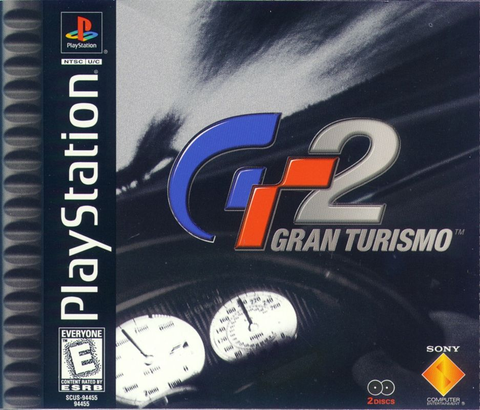
7. Gran Turismo 2
Simulation mode connects winning races with buying cars and upgrading parts. License tests and rally racing broaden the work. The garage makes a session feel connected to the last, rather than a fresh start with an interchangeable vehicle.
The catch: progression takes commitment. We rank it above R4 for that continuing relationship with the garage, but it is not automatically the better choice for somebody who just wants an immediate race. Buy for the kind of driving evening you actually want.
6. Resident Evil 2
Leon and Claire give the Raccoon City disaster two people worth following. Inventory and item management keep the horror connected to what you carry and what you are willing to spend. A useful item is a decision, rather than another icon to vacuum up.
The catch: this entry judges the two-disc PS1 game, rather than the 2019 remake. The linked Zypher listing is a Greatest Hits copy; check its specific edition and included discs. A case looking reassuring from the outside does not establish what is inside it.
5. Final Fantasy VII
Materia makes the party flexible: slot the orbs into weapons or armor to change available abilities. That gives equipment another question beyond its attack or defense value. We rank VII this high because building those options gives you something practical to do alongside following Cloud and AVALANCHE.
The catch: the original PlayStation edition spans three discs. Verify the included set and a working way to save before committing to the journey. A modern remake is a separate buying decision; this ranking does not borrow its presentation or battle system.

4. Tekken 3
Punches and kicks correspond to the fighter's limbs, while sidestepping adds another way to manage an opponent's attack. Practice, versus and team battles give you ways to learn a character and discover that your friend has learned something unpleasant too.
The catch: access is quick; mastery takes work. Learning movement and responses is a better reason to keep it connected than relying on one successful attack. It earns this position as a repeat-play fighting game, not simply a character roster.
3. Tony Hawk's Pro Skater 2
The manual trick extends how you connect a skating sequence, giving the space between other tricks a job to do. We favor a score-chasing game where the next attempt can begin with a concrete plan, rather than just a wish for a larger number.
The catch: improving familiar spaces is the point. If repetition feels like wasted time instead of practice, its appeal shrinks. We mean the original PS1 sequel, not the later Tony Hawk's Pro Skater 1 + 2 remake.
2. Castlevania: Symphony of the Night
Alucard's exploration mixes platforming, RPG equipment and a castle whose routes invite investigation. Weapons and transformations give you reasons to reconsider an approach. Our runner-up rewards curiosity as much as getting through a fight.
The catch: being willing to search is part of the agreement. For somebody who wants a straightforward succession of stages, the structure may feel unfocused. We rank the PS1 version; check a later compilation as its own edition when deciding what to buy.
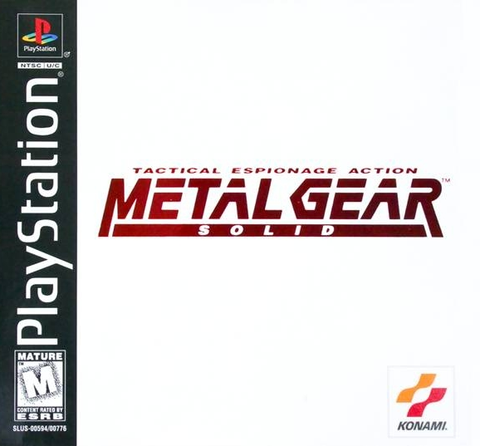
1. Metal Gear Solid
Infiltrating Shadow Moses gives the stealth a concrete purpose. Watching an enemy, choosing how to get past and dealing with discovery put your decisions inside the same operation as the story. That combination is our strongest reason to return to the first PlayStation.
The catch: you need an appetite for the storytelling as well as the sneaking. We choose it for how those parts belong together. This is the original PlayStation Metal Gear Solid, not The Twin Snakes for GameCube. A familiar title is not an interchangeable disc.
Build the collection you will actually use
Start with one game whose strength fits the evening: a fighter for repeat matches, a racing campaign for steady progress, an RPG for a longer commitment. Buying twenty-five at once is a storage decision disguised as enthusiasm.
Check each listing's platform, edition, region, condition and included contents. Confirm Ape Escape's required controller and the discs in a multi-disc game. A photograph of an accessory does not promise that it comes with a game.
Buy your next classic from Zypher: shop our PS1 game links throughout this ranking, or browse all our games. Making room for the next shelf? Sell your old games to Zypher. Read the current listing options and contents before ordering.
Sources and edition references
Publisher manuals and original developer/publisher material checked October 28, 2026. The ranking and recommendations are Zypher editorial judgment. Older manuals are references for their original editions, not current product offers or service promises.
- 25. Driver: You Are the Wheelman
- 24. Bushido Blade
- 23. PaRappa the Rapper
- 22. Oddworld: Abe's Oddysee
- 21. Resident Evil: Director's Cut
- 20. Final Fantasy VIII
- 19. WipEout XL
- 18. Tomb Raider
- 17. Crash Bandicoot: Warped
- 16. Ape Escape
- 15. Vagrant Story
- 14. Legacy of Kain: Soul Reaver
- 13. Spyro 2: Ripto's Rage!
- 12. Crash Bandicoot 2: Cortex Strikes Back
- 11. R4: Ridge Racer Type 4
- 10. Final Fantasy IX
- 9. Silent Hill
- 8. Final Fantasy Tactics
- 7. Gran Turismo 2
- 6. Resident Evil 2
- 5. Final Fantasy VII
- 4. Tekken 3
- 3. Tony Hawk's Pro Skater 2
- 2. Castlevania: Symphony of the Night
- 1. Metal Gear Solid
Additional references: Sony’s developer recollections; archived Konami Silent Hill press release; Konami’s original Symphony of the Night page.