A good puzzle game changes what you notice. A room becomes a machine, a sentence becomes a rule you can move, or an entire island starts looking like evidence. These are 25 PC games we would put on a puzzle player's shortlist, ranked by the thinking they invite.
Our scope and ranking criteria
This is a curated ranking of released Windows PC games built substantially around puzzles, deduction or knowledge-driven exploration. It includes puzzle-platformers, construction, programming and falling-block games alongside adventure mysteries. Expansions and unreleased games are excluded. Each game appears once; original games and sequels can qualify separately, but another edition does not receive a second entry.
We prioritize the clarity and depth of the central idea, the variety of reasoning it supports and how convincingly the surrounding experience serves it. A broader recommendation wins close calls, while difficulty alone earns nothing. Placements and tradeoffs are Zypher editorial judgment, not poll results, review-score averages or claims that DJ personally tested these releases.
The linked publisher descriptions identify the PC editions. Check their current system requirements and purchase contents before buying; a console copy does not provide a PC license. Myst and Riven refer to their modern reimaginings, and Braid is explicitly the original PC release.
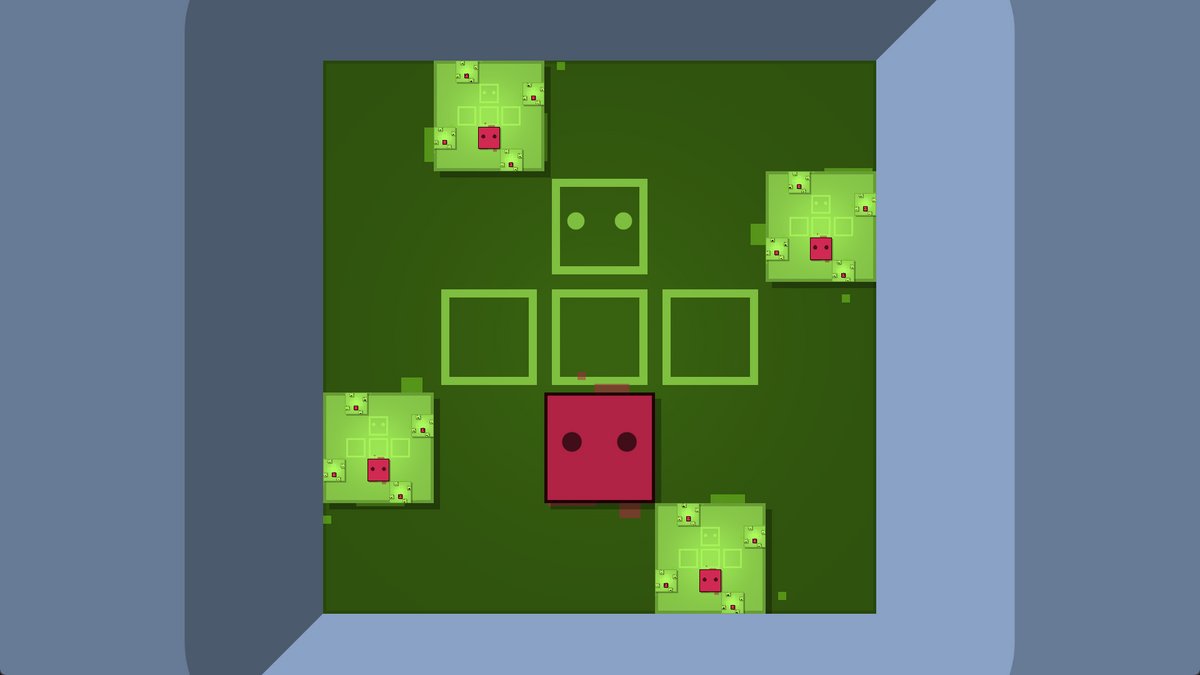
Featured screenshot: Patrick's Parabox, an entry in this list. Official developer press image, © Patrick Traynor, unmodified; capture build unspecified.
25. Human Resource Machine
Programming an office worker turns a task into a repeatable sequence. That earns its place as a puzzle about explaining a procedure precisely, rather than merely spotting an answer. The tradeoff is its deliberate resemblance to work: if debugging instructions sounds like the day you just escaped, choose something more spatial.
Publisher PC description and requirements
24. The Room
Fireproof builds its puzzles around intricate devices and cryptic correspondence. We rank the PC adaptation for the pleasure of inspecting a contraption and discovering what its parts do. Its narrower, object-focused scale is the attraction, but also the limit: this is a different recommendation from exploring an entire puzzle island.
Publisher PC description and requirements
23. Snakebird
Fruit changes the length of these improbable birds, making their shapes part of the solution. Pushing and positioning therefore mean thinking about the body you will have after a move. We value that concentrated spatial problem; the friendly presentation should not be mistaken for a promise of easy puzzles.
Publisher PC description and requirements
22. SpaceChem
Chemical production becomes a design problem: build a working process, then improve how it meets the quota. It ranks for making a solution something you construct rather than select. The catch is the engineering mindset. A player wanting a picturesque mystery may find a production problem an oddly demanding holiday.
Publisher PC description and requirements
21. The Swapper
Creating clones and transferring consciousness makes the player character part of the equipment. We like how that premise connects a spatial puzzle to an unsettling science-fiction question about identity. The isolated setting is a strength, though it makes this a heavier recommendation than a cheerful collection of logic exercises.
Publisher PC description and requirements
20. Antichamber
Reconfiguring spaces and a matter-manipulating gun challenge the assumptions you bring to exploration. It earns this position by making a corridor itself suspicious. The qualification is equally central: players who want stable, immediately legible geography may find its refusal to behave more exhausting than enlightening.
Publisher PC description and requirements
19. Superliminal
Forced perspective and optical illusions make looking at an object part of manipulating the problem. We rank it for that unusually direct connection between perception and action. The tradeoff is a strong dependence on enjoying visual misdirection; it is a less natural choice for someone seeking an abstract, clearly bounded grid.
Publisher PC description and requirements
18. Gorogoa
Arranging and combining illustrated panels turns the composition of the picture into the puzzle. We value the economy of that interaction: an image can be both a scene and a component. Its visual storytelling is also the dividing line. Prefer explicit systems and diagrams? Another entry will suit you better.
Publisher PC description and requirements
17. FEZ
Gomez navigates three-dimensional structures through four two-dimensional perspectives. That earns FEZ a place for making the same architecture support different readings. Exploration and secrets give that idea room, although players wanting a tidy succession of isolated problems may prefer a more tightly compartmentalized game. This entry assesses the named PC release.
Publisher PC description and requirements

16. Braid, original PC version
Changing how time behaves across different worlds gives familiar platforming actions new consequences. We rank the original design for making a second attempt part of the reasoning. Edition caution matters: its Steam page warns that this older release may not work well on newer systems and points to Anniversary Edition as the updated alternative.
Publisher PC description and requirements
15. Opus Magnum
Programmable arms and tracks let you construct alchemical machinery, then pursue faster, smaller or simpler solutions. That open-ended optimization is why it outranks more narrowly prescribed contraptions here. The catch is knowing when you are satisfied. The machine can work while your desire to improve it is still very much running.
Publisher PC description and requirements
14. Tetris Effect: Connected
The familiar falling-block problem gains synchronized audiovisual presentation and the Zone mechanic, which can pause falling pieces. We rank this edition for joining immediate readability with pressure and expressive presentation. It asks a different kind of attention from slow deduction, so this placement is not a claim that every puzzle fan wants a timed challenge.
Publisher PC description and requirements
13. Myst, 2021 reimagining
This entry is Cyan's rebuilt Myst, not the original 1993 release. Exploring the Ages and interpreting their mechanisms gives the island a purpose beyond scenery; optional puzzle randomization is part of this edition. We value that place-based investigation, while recognizing that deciphering an environment feels less direct than receiving a clearly stated problem.
Publisher PC description and requirements
12. Riven, 2024 reimagining
We rank the modern Riven for puzzles woven into the world and its history. Observation has to become interpretation: separate details need to form an explanation. The corresponding cost is patience. If you want every problem neatly introduced and labelled, this approach can feel withholding. Do not confuse this edition with the original release.
Publisher PC description and requirements
11. Chants of Sennaar
Deciphering interconnected languages turns communication into the central puzzle. The notebook gives observations somewhere to accumulate, making this a strong choice for players who enjoy revising a hypothesis. We place it here for that sustained interpretive task; a preference for physical machinery over symbols is a good reason to choose another entry.
Publisher PC description and requirements
10. World of Goo
Dragging living goo into structures turns an idea into something that has to hold together. Different goo types expand the construction problem rather than merely changing its decoration. We rank it highly for making success visible in the structure itself. The tradeoff is physical experimentation, which can feel less exact than a purely symbolic solution.
Publisher PC description and requirements
9. The Talos Principle, original
Laser manipulation, drones and time replication give the original game several ways to complicate a room. Its nonlinear structure and philosophical framing earn it a separate place from the sequel. We favor its combination of systems and questions, though a player seeking puzzles without a surrounding discussion may find that framing an interruption.
Publisher PC description and requirements
8. Patrick's Parabox
Pushing boxes into and out of one another changes the relationship between a container and the space inside it. We rank it for taking that recursive premise seriously instead of leaving it as a single novelty. The cost is mental bookkeeping across nested spaces. A small picture can contain a surprisingly large disagreement with your brain.
Publisher PC description and requirements

7. Outer Wilds
A solar system caught in a time loop makes changing locations and the timing of a visit part of an investigation. It qualifies here as a knowledge-driven mystery, not a room-by-room logic collection. That breadth earns its high position; hazards and exploration also mean it asks more than sitting still and deducing.
Publisher PC description and requirements
6. Return of the Obra Dinn
Exploration and logical deduction turn a returned ship into an investigation. We rank it for asking the player to assemble an account from evidence, rather than simply reach the next door. The frozen scenes depict death and violence, so the visual restraint should not be mistaken for a light subject or a child-friendly mystery.
Publisher PC description and requirements

5. The Talos Principle 2
Gravity manipulation and mind transference extend the sequel's puzzle vocabulary, while its robot civilization gives the questions a wider setting. We place it above the original for that expanded ambition. The tradeoff is scale: the larger character-driven adventure is less concentrated than choosing one room and worrying at its machinery.
Publisher PC description and requirements
4. The Witness
An open island lets you leave a problem and investigate somewhere else, an approach Jonathan Blow explains in his developer account. We rank it for making discovery and understanding carry the journey. That freedom cuts both ways: players who want a strongly directed sequence may have to supply more of their own momentum.
Publisher PC description and requirements
3. Baba Is You
The rules are movable blocks. Rearranging them changes how the level behaves, including what the goal means. We put it third because changing the governing statement is a remarkable extension of ordinary box-pushing. The tradeoff is abstraction: you must be interested in questioning a rule, rather than merely becoming efficient at obeying it.
Publisher PC description and requirements
2. Portal
Opening portals changes how objects and the player move through a physical space. Our runner-up is the focused original: one strong idea becomes a new way to read a room. Its concentration is a major strength, though someone wanting the broader feature set and a separate cooperative campaign should look one place higher.
Publisher PC description and requirements
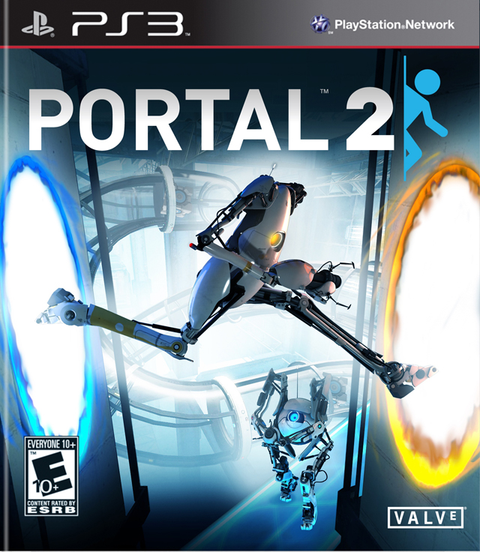
1. Portal 2
Valve adds new puzzle elements to the single-player adventure and gives two players a separate cooperative campaign. That combination takes first place for the breadth of its recommendation: there is a substantial solo puzzle game and a distinct reason to bring a partner. The qualification is coordination. Two people need to enjoy thinking together, not just occupying the same session.
Publisher PC description and requirements
Find the right physical edition at Zypher
Buy your next game from Zypher Trading Video Games. If Portal 2 is your pick and you want a console copy, check Portal 2 for Xbox 360 or Portal 2 for PS3. These are console releases, not Steam copies. Read the listing for condition and included items; do not assume an old download insert provides a usable code.
Shop Zypher's games, or sell your old games to Zypher when it is time to make room.
Publisher descriptions, exact editions, retained media permissions and Zypher listings checked October 31, 2026. For The Witness's nonlinear design rationale, see Jonathan Blow's developer account. Ranking explanations are original Zypher editorial interpretation; no solutions or endgame revelations are provided.