Your settlement can be short of soldiers, short of resources and very confident that the next shipment will fix everything. Age of Empires III makes that confidence part of the strategy. Help is available from the Home City, but the interesting decision is what help to request and what you intend to do when it arrives.
Ensemble Studios' 2005 Windows game brought a persistent Home City and a deck of support cards into the familiar business of gathering, building and fighting. This classic deep dive looks at that original design, especially the relationship between preparation and the decisions made during a match. Later collections and Definitive Edition need their own labels, because their contents and services are different.
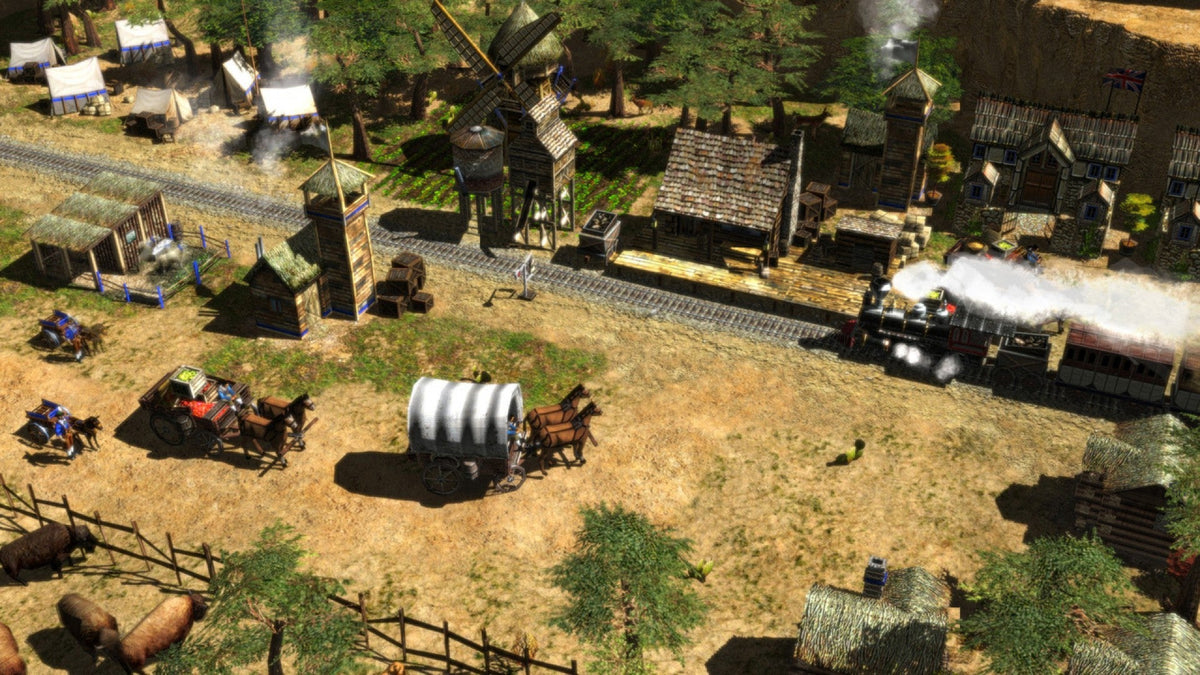
Featured visual: a publisher-supplied scene from the legacy Age of Empires III collection's Steam gallery. Images are identified by edition below; they are not new Zypher captures. © Microsoft. Used with permission from Microsoft.
The army starts taking shape before the first battle
The original Microsoft manual, preserved in a public transcription, describes cards held in an inventory and selected into a deck. Home City progression unlocks additional choices. You cannot rewrite the active deck during the game.
That last restriction gives preparation a purpose. Our reading is that the deck is a statement about the situations you expect to handle. You are deciding which kinds of support belong in the plan before finding out how cooperative the map and the opposition will be.
A sensible first experiment is to give the deck a simple intention. Decide whether you want it to help establish an economy, provide military support, or answer a particular weakness you noticed last time. This is a learning exercise, not a prescribed competitive build. A complicated selection you cannot explain gives you very little to evaluate afterward.
After the match, compare that intention with what actually happened. Perhaps the support you prepared was useful but requested too late. Perhaps you brought an answer to a problem that never appeared. Those are different lessons. Rebuilding the entire deck after every defeat can hide the difference.

A shipment is a decision about the next few minutes
Experience makes shipments available, and those shipments can provide units, resources or improvements. The original manual ties the available choices to your civilization and selected deck. Its Home City is therefore more than scenery between battles.
Consider Settlers or Food Crates alongside a military shipment. The manual names those economic options; each suggests a different plan for what happens next. Our interpretation is that economic help asks you to turn support into later strength. Military help asks you to make immediate use of the force that arrives. Neither choice is automatically clever just because the card looks impressive.
Before requesting support, identify the job it will perform. An additional force needs somewhere useful to go. Resources need a purchase waiting for them. An improvement needs an economy or army that can exploit it. The shipment's value comes from that connection, rather than from the satisfaction of clicking an available reward.
This is also a good way to review a close loss. Instead of writing off the whole game as poor army control, look at the decision before the army moved. Did your support choice fit the situation you were actually facing? A tactical mistake can begin in a very peaceful-looking menu.
The Home City does not excuse an idle economy
The manual identifies Food, Wood and Coin as resources and stresses keeping villagers working. Shipments sit alongside that economy. They do not replace the need to assign workers and understand what your settlement can afford.
For a return visit, our suggestion is to watch one spending problem closely. If a planned purchase keeps waiting, check which resource is missing and what the workers are doing. That produces a more useful explanation than deciding the entire civilization is slow.
There is a particular trap in enjoying the military side of an RTS: the force on screen feels like the game, while the workers feel like something already handled. Give the economy another look after issuing army orders. The next decision will be easier to make if you know what is actually accumulating.
You do not need to master every opening to learn from this. Pick a manageable goal, such as understanding why a particular building or unit was delayed. Then compare another attempt with that question in mind. A smaller experiment can teach more than a spectacularly busy defeat.

Separate the strategic idea from later edition rules
The developer's Definitive Edition systems overview still places cards and shipments at the center of the game's identity. It also describes Explorers collecting guarded treasures, batch military training and resources entering the stockpile without a drop-off trip.
That overview is useful evidence for the later edition. It is not a license to copy every number or civilization rule into a guide to the 2005 release. Our advice is to use the exact edition's help when an instruction depends on a deck limit, unit statistic or unlock condition.
The distinction matters most when borrowing a detailed build order. A broad idea about requesting support can remain useful across versions while a precise sequence relies on different balance or available content. Check the assumptions before blaming yourself for failing to reproduce somebody else's timings.
For this original-game revisit, keep the aim modest: understand the relationship between a prepared deck, an available shipment and the economy supporting the next action. That is a specific system worth examining without pretending that all releases behave identically.
The campaign gives a returning player another way in
The original manual describes a fictional campaign following three generations of the Black family. It offers a narrative route into the game rather than requiring your first session back to be a competitive match.
Our recommendation is to approach a scenario around its stated objective. Notice which decisions it asks you to make, then connect those decisions to the support and production options available. Finishing the objective and becoming fluent with the whole game are separate achievements.
If a mission goes badly, keep one useful observation for the retry. It might concern spending, the support you chose, or attention drifting away from the settlement. That turns the next attempt into a test of an idea rather than a repetition performed with extra determination.

What an old copy can still offer
The franchise's official legacy-service notice says Age of Empires III (2007) was retired from sale and its online multiplayer services ended October 30, 2024. It explicitly says owners can still play campaign and skirmish content. That notice concerns the legacy collection, not a shutdown of Definitive Edition.
For an existing owner, that makes a solo revisit a different proposition from organizing an old online lobby. Do not treat an archived manual's account instructions or a historical storefront paragraph as evidence that those services still work.
For a physical collector, inspect the exact release, discs and stated contents. A familiar cover does not establish a current digital entitlement or a working route through an old online service. Decide whether you want the historical object, access to its solo content, or a modern edition before comparing offers.
Keep the next strategy purchase specific
Our view is that Age of Empires III remains interesting because it makes preparation visible inside the battle plan. The next shipment asks you to connect an earlier choice to a current need. On a return visit, follow that connection closely. It is the part of the game this deep dive recommends learning first.
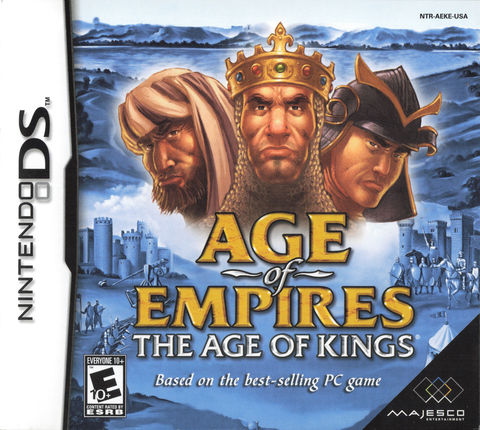
Build your physical collection with Zypher Trading Video Games. For a separate handheld strategy release, check Age of Empires: The Age of Kings for Nintendo DS. That listing is the DS title, not Age of Empires III for PC. Read its condition and included contents before buying.
Shop Zypher's games, or sell your old games to Zypher. Sources and listing checked November 10, 2026. Revisit suggestions and design interpretations are Zypher editorial analysis, not a claim of a new playtest.