
A tank division can win a fight and still be a terrible plan. In Rise of Nations, the interesting question is often what the army has made possible: another city, a useful stretch of territory, or enough breathing room to develop the nation behind it.
Big Huge Games' 2003 strategy game puts empire-scale ambitions inside a real-time match. The appeal is that those ambitions stay connected. Research, settlement placement and military orders belong to the same unfolding problem. Your economy does not get a private turn while the enemy waits.
This is a look at the original game's design, using its manual and Microsoft's historical descriptions. The images show the later Rise of Nations: Extended Edition, including expansion content where identified. The observations and suggested experiments are Zypher editorial analysis, not a claim of a new hands-on test.
Featured image: opposing fleets fight near a snowy coast in Rise of Nations: Extended Edition. Full publisher gameplay screenshot. Used with permission from Microsoft.
The map has a political shape
Microsoft's February 2002 unveiling emphasized city infrastructure, new communities and expanding national borders. It pitched the scope of Civilization alongside real-time action. That is a useful description of the tension, even without borrowing the announcement's enthusiasm.
A battlefield is more interesting when the patch of ground has a reason to matter beyond the troops currently standing on it. Consider a proposed advance toward an exposed frontier. One plan aims only to defeat the nearby force. Another asks what territory the nation could sensibly develop afterward. The same direction on the map can support very different intentions.
That makes a good question for a returning player: what would make this advance worthwhile if the opponent's army withdrew? If the answer is nothing, perhaps you are chasing a fight rather than pursuing the match. There is nothing wrong with enjoying the fight. Just know which decision you are making before committing everything to it.
Your border can do work before the army does
The original manual ties border expansion to Civic research and structures including cities and forts. It also describes researched attrition in hostile territory and Supply Wagons that can prevent it.
Our reading is that this changes the meaning of distance. A march is not merely a line between your production area and a target. The ownership of the intervening space can affect what that march asks of the force. A border is therefore something to study while planning the operation, rather than decoration to notice afterward.
Try framing the decision as a pair of plans. One aims to force a quick result with the troops already available. The other prepares a more sustainable advance. Compare their demands before deciding which one fits. The point is not that patience always wins. It is that speed should be a conscious bargain, with an objective worth the commitment.
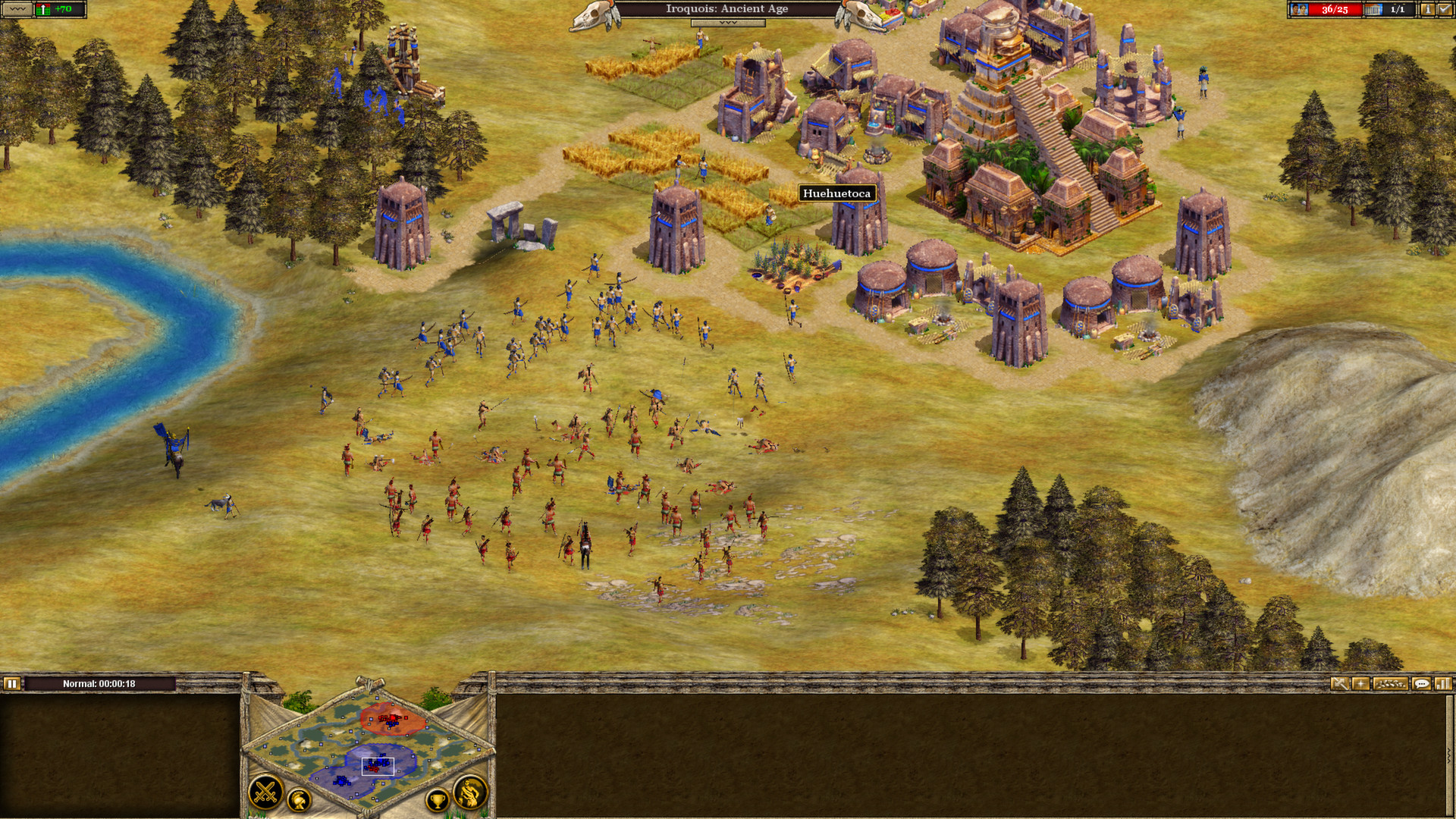
A city capture is an operation with an aftermath
In the manual's capture sequence, infantry take a depleted City Center when your military strength exceeds the enemy's within the city radius. Assimilation follows before the city and surrounding territory become yours. Reducing its health and finishing the takeover are separate parts of the job.
That distinction makes a city a better objective than a simple target marker. You need an answer for what happens after the first success. A spectacular attack that leaves you unable to complete the operation has produced a promising middle, not a finished result.
For a suggested practice exercise, pick a limited objective and describe the desired end state before the attack. Name what you want to possess and what you want available afterward. Then judge the result against that description. This is more informative than celebrating a large exchange of damage and discovering that you have not actually improved your position.
Read the economy as a rate, not just a pile
The interface distinguishes stored resources from gathering rates and a Commerce Limit. The Library contains Military, Civic, Commerce and Science research, alongside age advancement. Those named systems keep national development visible while the fighting continues.
A stockpile answers what you can afford now. A rate invites a different question: what can you keep doing? We recommend checking both when deciding whether to add more production or pursue another upgrade. The useful habit is to connect the proposed spending with the problem you are trying to solve, rather than treating every available button as an instruction.
This is where a broad historical RTS can feel satisfyingly compact. Spending on development while an army needs attention creates a real choice about what the nation needs next. A player who enjoys pure battlefield control may find that distracting; a player who likes the preparation behind an attack may find it is the entire attraction.

History changes the tools, not the need for a plan
The publisher's Steam description traces the game from an Ancient Age city toward Information Age warfare, with land, sea and air units. That sweep is a large part of the fantasy: the nation grows into a different military vocabulary within the same game.
For us, the interesting continuity is the objective underneath the equipment. An impressive new tool still needs a job. Before producing it, ask whether it helps secure the place, route or outcome you actually want. Newer hardware is a poor substitute for knowing why the force is leaving home.
The featured naval scene makes a useful visual reminder. A fleet can look wonderfully convincing in a screenshot. A player still has to decide what its presence should accomplish. That gap between owning the tools and employing them is where a strategy game earns its time.
Conquer the World gives the next fight a wider context
The base game includes Conquer the World, a linked campaign. Microsoft's 2017 Extended Edition announcement also names expansion-era historical campaigns, including Napoleon and the Cold War. Those later package features should not all be credited to an original 2003 disc.
A linked campaign is an appealing choice when you want a reason to care about the next battlefield beyond the match itself. The larger map gives your next session a destination. Choose that structure if continuing a conquest is the motivation; choose a standalone match if you would rather start with a fresh problem and leave the previous result behind.

Choose the edition deliberately
Steam dates Extended Edition to June 12, 2014 and lists both Rise of Nations and Thrones and Patriots in the package. Its visual updates and Steam features belong to that release. An older boxed game and a present Steam purchase are different products, even when much of the design is shared.
Our recommendation is to begin with the experience you want: an original physical collection, an edition containing the expansion, or a current PC installation. Match that goal to the actual listing. Do not use an old manual's matchmaking instructions as proof of a current service, or a modern storefront's features as evidence about what an old disc includes.
Make room for the next game
Shop physical games at Zypher Trading Video Games. Browse the current game selection, check the platform and selected condition, and read what comes with the copy before ordering. This PC feature does not promise a matching physical edition in our catalog.
Clearing a shelf? Sell your old games to Zypher and check current eligibility before sending anything.
Sources and image credits
Original Microsoft manual, Microsoft's 2002 unveiling, 2017 edition announcement and current publisher Steam listing checked November 9, 2026. Design judgments and suggested exercises are Zypher's. All four images are complete released Rise of Nations: Extended Edition gameplay screenshots from its publisher Steam gallery, displayed proportionally under Microsoft's screenshot guidelines. Used with permission from Microsoft. No endorsement is implied.


