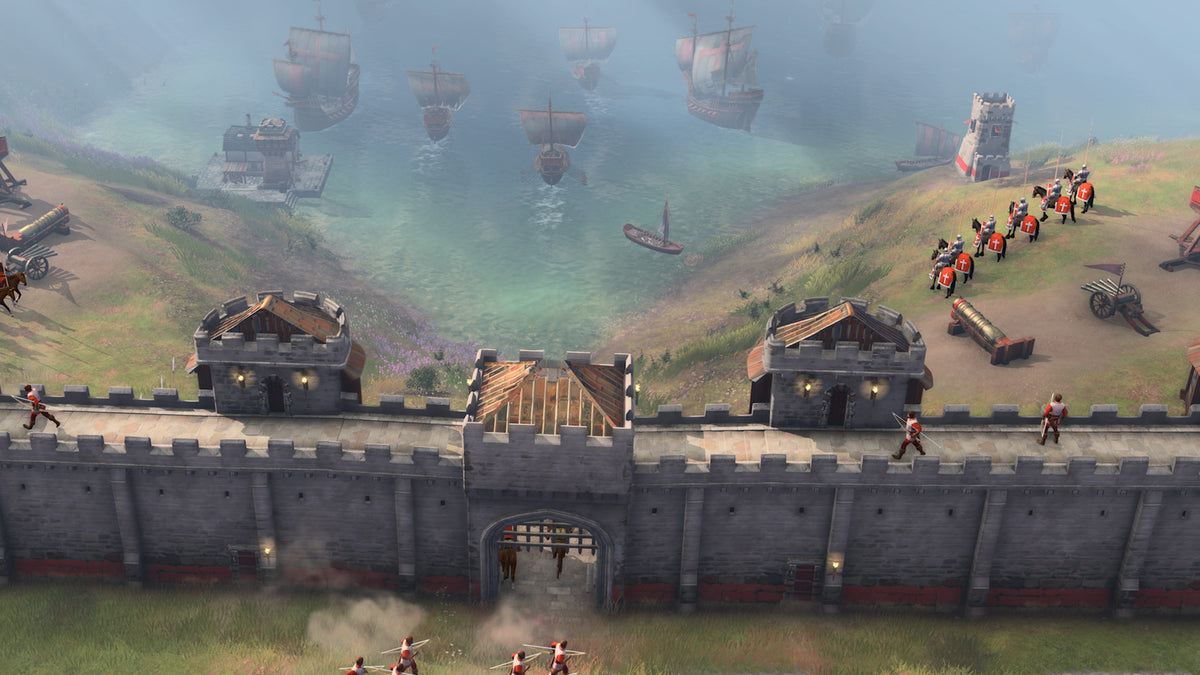
A large army can spend a very impressive amount of time doing the wrong job. In Age of Empires IV, the objective might demand destroying landmarks, holding Sacred Sites or protecting a Wonder. Winning a convenient fight somewhere else is not automatically progress toward any of those.
For a returning player, the first strategic question is what can end this particular match. The official quickstart introduces three standard victory routes, but the actual mode and lobby rules matter. Read those settings before importing a plan from a different game type. Then make the next army, expansion and defensive structure serve the win condition you are actually playing.

Landmarks give an attack a destination
The official quickstart describes Landmark Victory in terms of destroying the opponent’s landmarks. That gives scouting a specific purpose: you need to identify the relevant targets, rather than simply finding something red to attack.
Our practical recommendation is to separate opening a route from completing the objective. A battle near the frontier may be necessary, but after it ends you still need to ask where the surviving force should go. If the attack stalls at the first building it meets, an expensive military advantage can become a sightseeing tour.
Defense benefits from the same clarity. Look at the route an enemy force would need to reach the important structures. A defense that protects a random stretch of map may be less useful than one that gives you time to respond along that route. The strongest-looking wall is not always the one protecting the decision that matters.

Sacred Sites make location part of the contest
Sacred Victory requires taking and maintaining control of the map’s Sacred Sites under the applicable rules. It asks a different question from a direct attack on the enemy town: can you establish and keep the necessary map control?
That makes reinforcements and travel time part of the plan. Before committing to a remote position, consider how the next group will reach it and what happens if the opponent attacks from another direction. Capturing a location is a moment; supporting that location is an ongoing responsibility.
A useful practice exercise is to watch where your army is when control changes. Were units present but poorly arranged? Were reinforcements still crossing the map? Did you leave a different important position exposed? Those observations give you something to improve beyond “build more troops.”

A Wonder changes what the opponent must answer
Wonder Victory involves building a Wonder and protecting it for the required countdown. Check the match’s current rules and displayed timer rather than relying on a remembered number from an older guide.
The interesting strategic shift is that a large construction project becomes a deadline for the opponent. That does not make the defense automatic. Resources committed to the structure are resources you must account for while preparing the force and position that will keep it standing.
Before choosing this route, ask what you can defend and how quickly you can replace losses. A beautiful economic total is not a defensive plan. The decision becomes more convincing when the surrounding army, routes and production can support the commitment you just made.

The economy should answer the chosen plan
Food, wood, gold and stone feed different parts of the economy. The official introductory lessons place Villager production, resource gathering, housing and advancing through the ages alongside military learning. Those systems matter because every strategy needs a way to keep functioning after its first purchase.
Rather than copying an entire build order immediately, choose a small objective for a practice match. Can you fund the units you intend to use? Can you keep producing them while replacing losses? Is the resource you are stockpiling actually the resource your next decision requires?
That is a better diagnostic than blaming a civilization after one disorganized attempt. If the army you want cannot be produced with the economy you built, you have found a concrete planning mismatch to address.

Use Art of War to isolate a skill
The game’s Art of War lessons provide focused challenges, with the quickstart highlighting economy and combat exercises. They let you work on a particular task without also having to manage every uncertainty of a full opponent.
Pick a lesson that matches the problem you noticed. If your economy could not fund the plan, practise that. If the army composition fell apart in the fight, work on combat and counters. Repeating the same complete match while ignoring the same weakness is a remarkably efficient way to stay annoyed.
This guide is about reading victory conditions and building a plan around them, rather than prescribing a current ranked build or a universal civilization tier list. The useful habit is portable: check the rules, name the objective and make the next decision help achieve it.

Find your next game at Zypher
For a PC purchase, verify the current Age of Empires IV package and any separately listed expansions. Zypher’s other strategy games are separate products with their own edition details. Browse Zypher’s current games, or start with our trading and selling page to make room for your next pick.


