Dracula has an impressive castle and a deeply questionable approach to access control. Give Alucard a little time in Castlevania: Symphony of the Night and a suspicious corner stops being scenery. It becomes unfinished business.
That is the appeal of Konami's 1997 adventure. Progress is not only a matter of defeating the next creature. It is also learning a place well enough to recognize what you could not reach before, then returning with a reason to try again.
The castle gives your memory something to do
In a straightforward stage-based action game, moving onward often means leaving the previous space behind. Symphony asks for a different relationship with its setting. A route can matter before you can fully use it, and an obstacle can become a note you carry in your head.
Our reading is that this is why getting lost can be enjoyable here. The useful kind of confusion still gives you things to remember: an opening, a suspicious gap, a place that looked important. You may not know the whole route, but you have a theory about where you want to return.
That is a much better reason to revisit a corridor than a task list deciding you have not walked through it enough times this afternoon.

Changing form changes the question
Konami's original-game overview highlights Alucard's transformations into a bat, wolf and mist. Those abilities give the vampire premise a practical role in how you think about the castle.
A new capability can change the meaning of something familiar. Instead of only asking how dangerous a room is, you start asking what your current abilities let you do there. That is a satisfying form of progress because the place and the character develop in your understanding together.
The game does not need to replace the whole castle every time Alucard gains an option. The player can be the thing that changes. A space that once felt like a boundary can become part of a route.
We are keeping the late-game discoveries out of this piece. An article about why exploration works does not need to hand over every surprise before you have even found the entrance.
The RPG side gives curiosity another reward
Konami's Requiem announcement describes Symphony's expansion of the older action formula through RPG elements. The original-game overview also emphasizes hidden weapons, secrets and characters. Together, those features give exploration more to offer than another direction to walk.
That matters because curiosity needs reinforcement. Finding something useful makes looking around feel worthwhile. Finding something strange gives you another question. A discovery can improve what Alucard can do, explain a little more of the place, or simply make you wonder what else you have missed.

There is a balance here that modern games do not always respect. An unexplored possibility can be inviting without being transformed into a flashing checklist entry. Some of the pleasure belongs to noticing, not merely collecting the reward after the interface has already identified it.
Alucard gives the story a different perspective
The setup follows Richter Belmont's disappearance and Maria Renard's search, while Alucard is drawn back toward the castle. Konami identifies him as Dracula's son. That puts the central adventure in the hands of somebody whose connection to the place is more complicated than another hunter arriving for work.
It is an effective match for a game about investigating a familiar series from a different direction. The castle is recognizable as Castlevania territory, but the person moving through it and the kind of progress you are pursuing change the relationship.
You still get monsters and dramatic architecture. You also get the sense that continuing to poke around is part of understanding why you are there.

The art should be allowed to look like itself
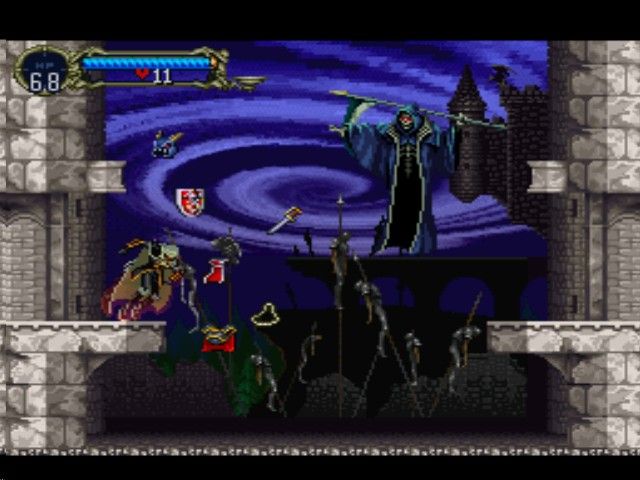
The original's sprite work gives the rooms and creatures a strong identity without needing them to resemble a modern 3D production. Notice the shapes, color contrasts and animated figures in the PlayStation images here. They make spaces readable while giving them a theatrical personality.
Our preference for revisiting a game like this is to start with a faithful presentation before experimenting with filters. That is a preference, not a claim that there is one correct display for every player. The important thing is understanding whether a setting is preserving the original pixels, smoothing them or changing the surrounding presentation.
Konami's 2018 PS4 Requiem release includes Symphony alongside Rondo of Blood, with presentation options and Trophies. It is a specific later package, not the same physical object as an original PlayStation disc.
Choose the release you actually want to own
If the goal is a PlayStation collection, check region, condition, case contents and label variant on the exact listing. If the goal is simply playing Symphony on another device, inspect that platform's current edition and requirements. Different releases should not be treated as identical purchases.
The reason to return is still wonderfully simple: this is a castle that makes an unanswered question feel like an invitation. Walk past something interesting, remember it, and come back with an idea. Dracula may object. That is usually a sign you are getting somewhere.
Build your Castlevania shelf with Zypher
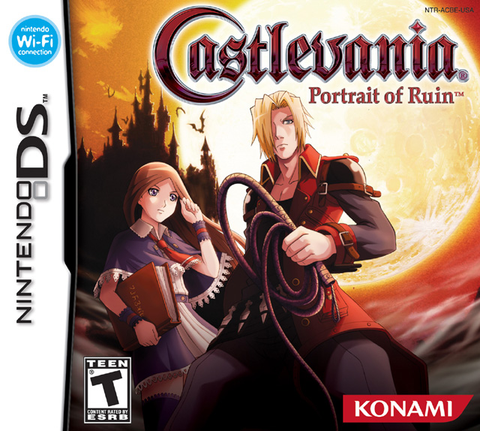
Check our Symphony of the Night PS1 listing for current availability. For other separate entries, explore Portrait of Ruin on DS or Lament of Innocence on PS2. Those are different games, not alternate copies of Symphony. Read the platform, condition and included items before buying from Zypher.
Sources and image credit
Konami's original-game history and feature overview; Konami's Requiem explanation on PlayStation Blog; official Requiem announcement. Checked October 21, 2026. PlayStation screenshots are identified in their captions; catalog imagery retains MobyGames source attribution. This is researched criticism of the original design, not a new Zypher performance test.