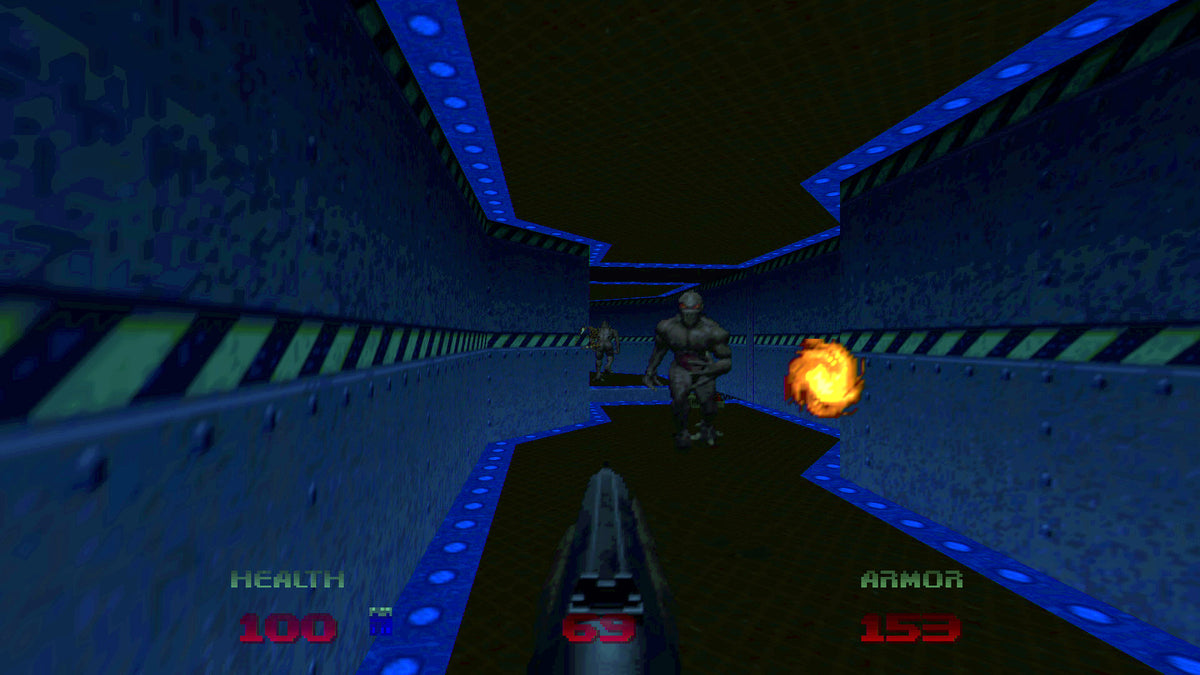
A blue corridor, a red doorway and a patch of apparently empty darkness can tell you as much as the demon standing in the middle. DOOM 64 puts a lot of its personality into the room around the gun. The familiar weapon view is there, but the places it points toward have a colder, stranger character.
Originally released for Nintendo 64 in 1997, this is a distinct campaign, not the first DOOM squeezed onto another cartridge. The 2020 enhanced release brought it to modern platforms. These official PC screenshots show that later release, preserving the game’s particular architecture and color rather than standing in for an original N64 capture.
Read the light before rushing the doorway
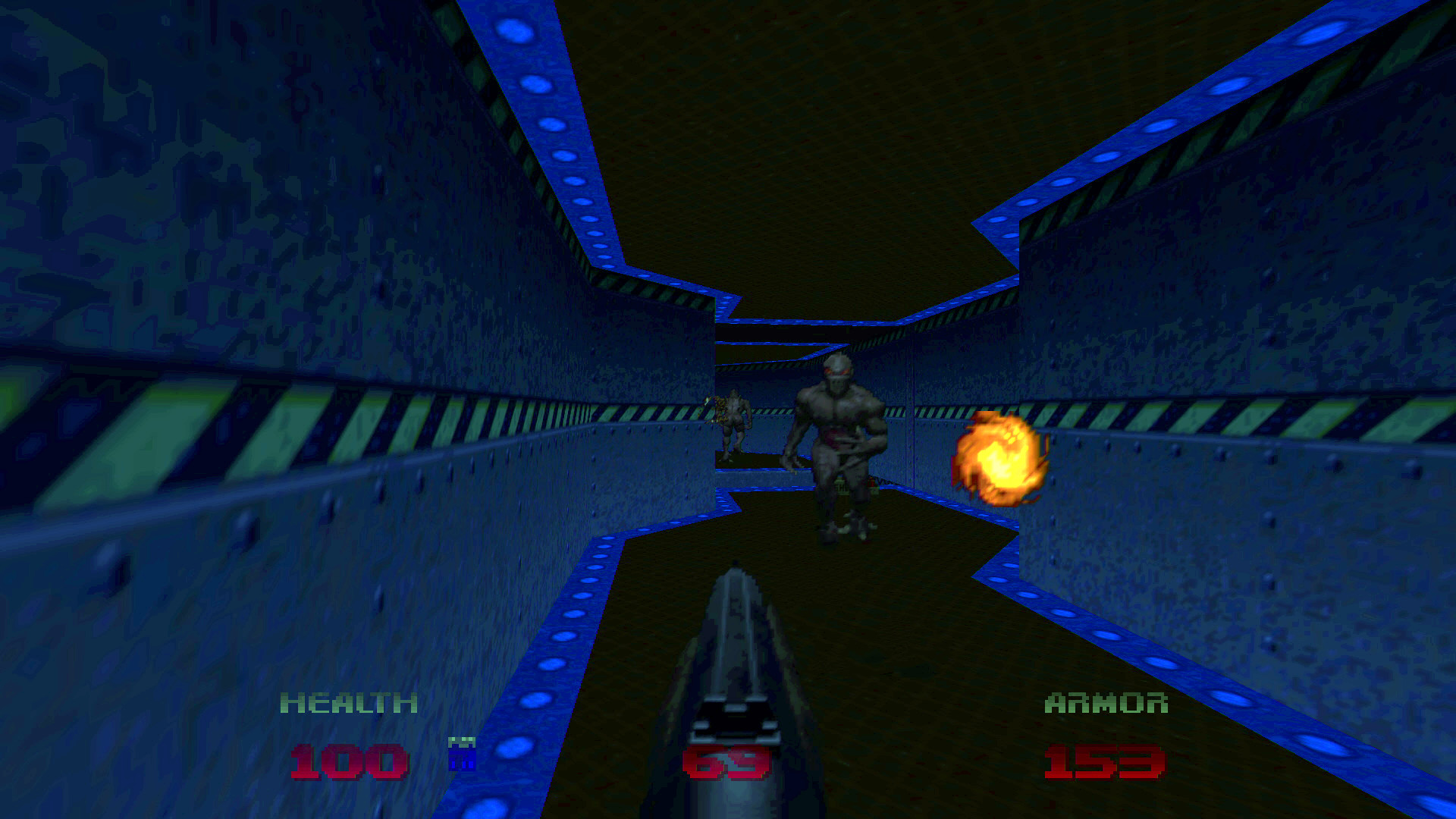
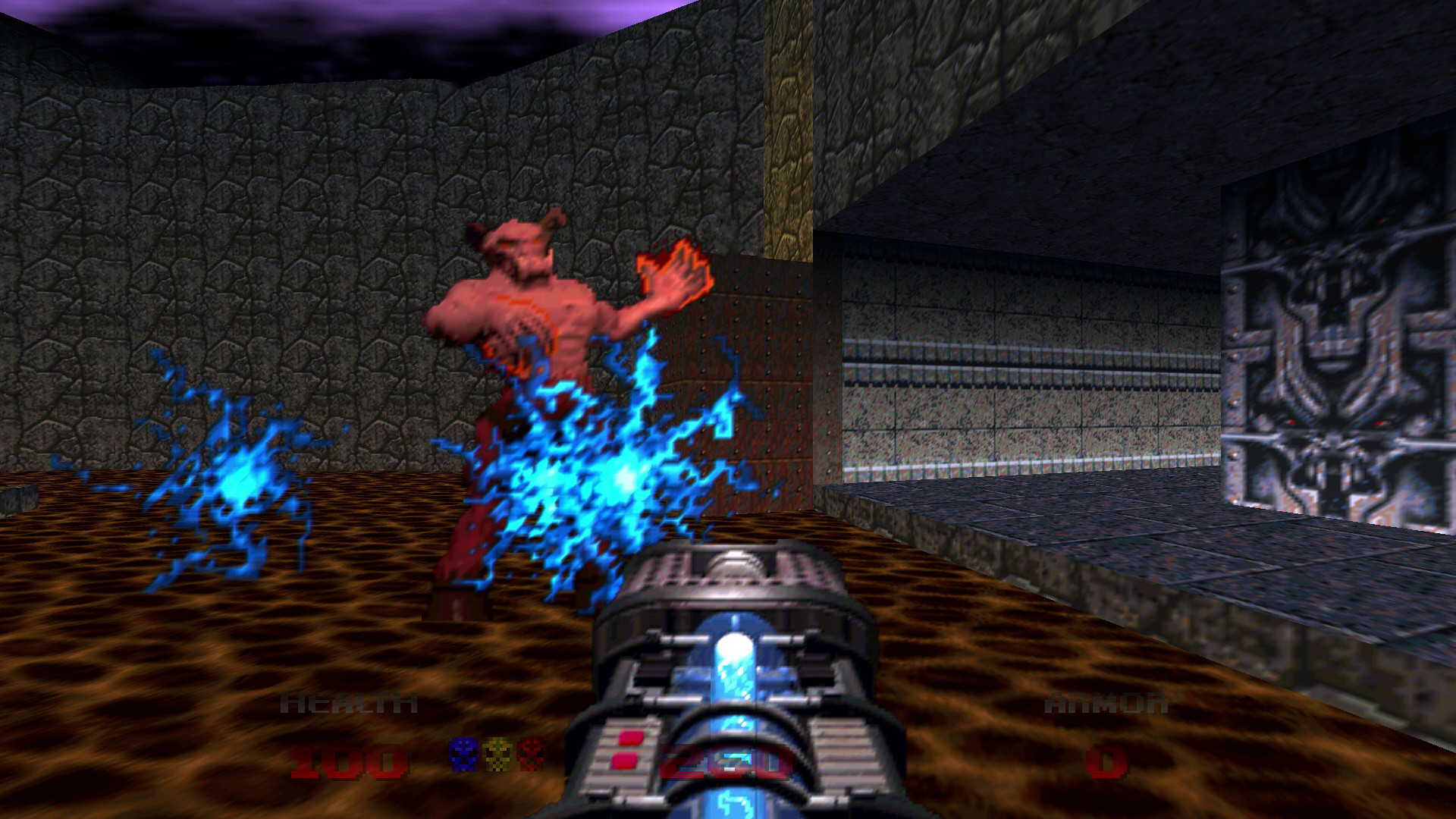
The images on this page make the lighting argument without needing a technical specification. A strip of blue separates the edge of one passage from the darkness around it; orange and red turn another opening into something much less welcoming. The colors give different spaces an identity even when their walls use a similarly limited set of shapes.
Our reading is that this helps a player remember a place as a scene. “The room with the red opening” is easier to hold in your head than another anonymous box of gray stone. When a route turns back on itself, that visual memory can be useful alongside your knowledge of where you entered.
For a first visit, give yourself a moment to look past the enemy. Notice the height of the ceiling, the shape of the nearest opening and which part of the room is difficult to see. Once the shooting begins, those are the pieces of the scene you will be moving around.
A familiar monster has a different amount of room
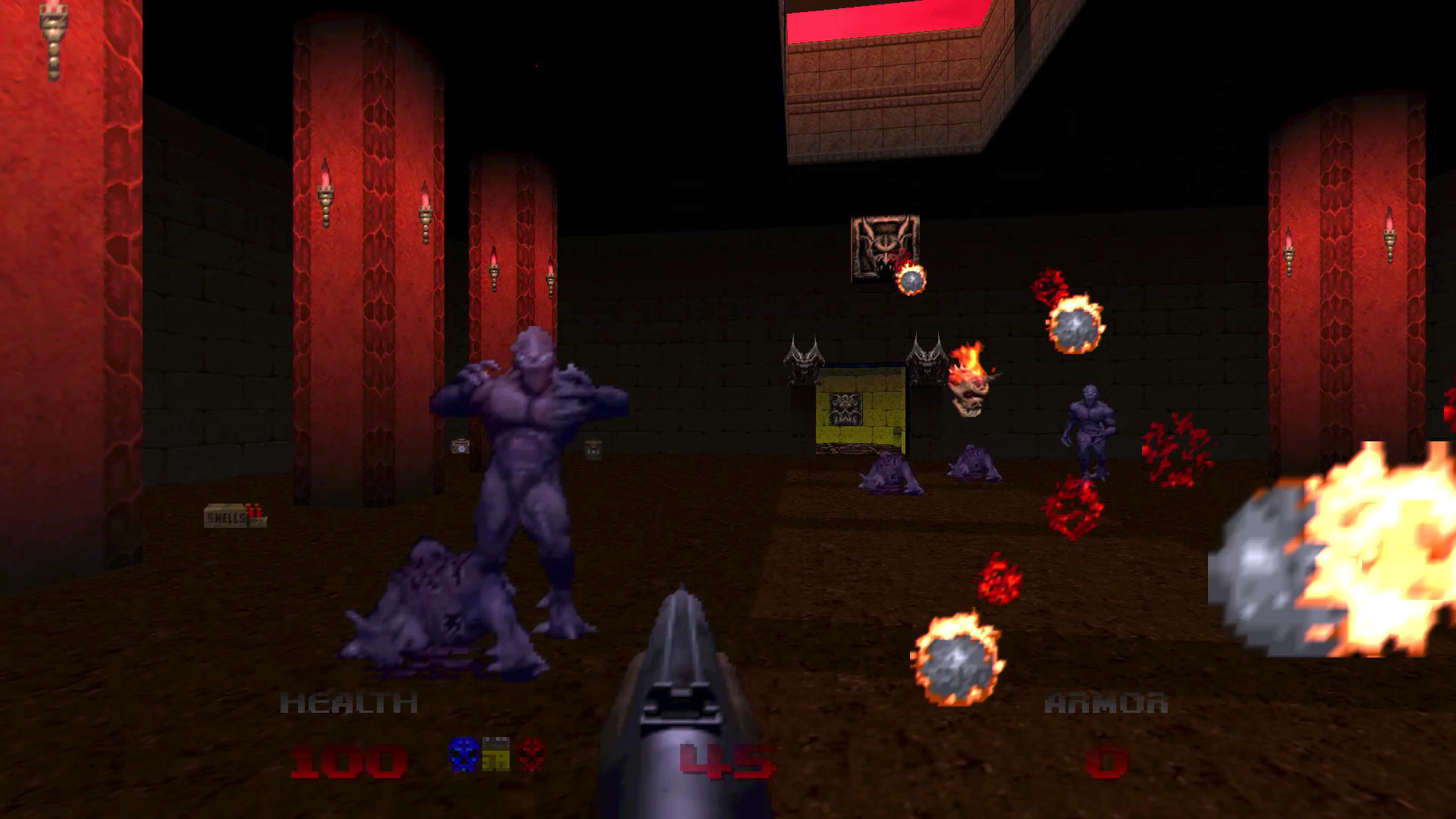
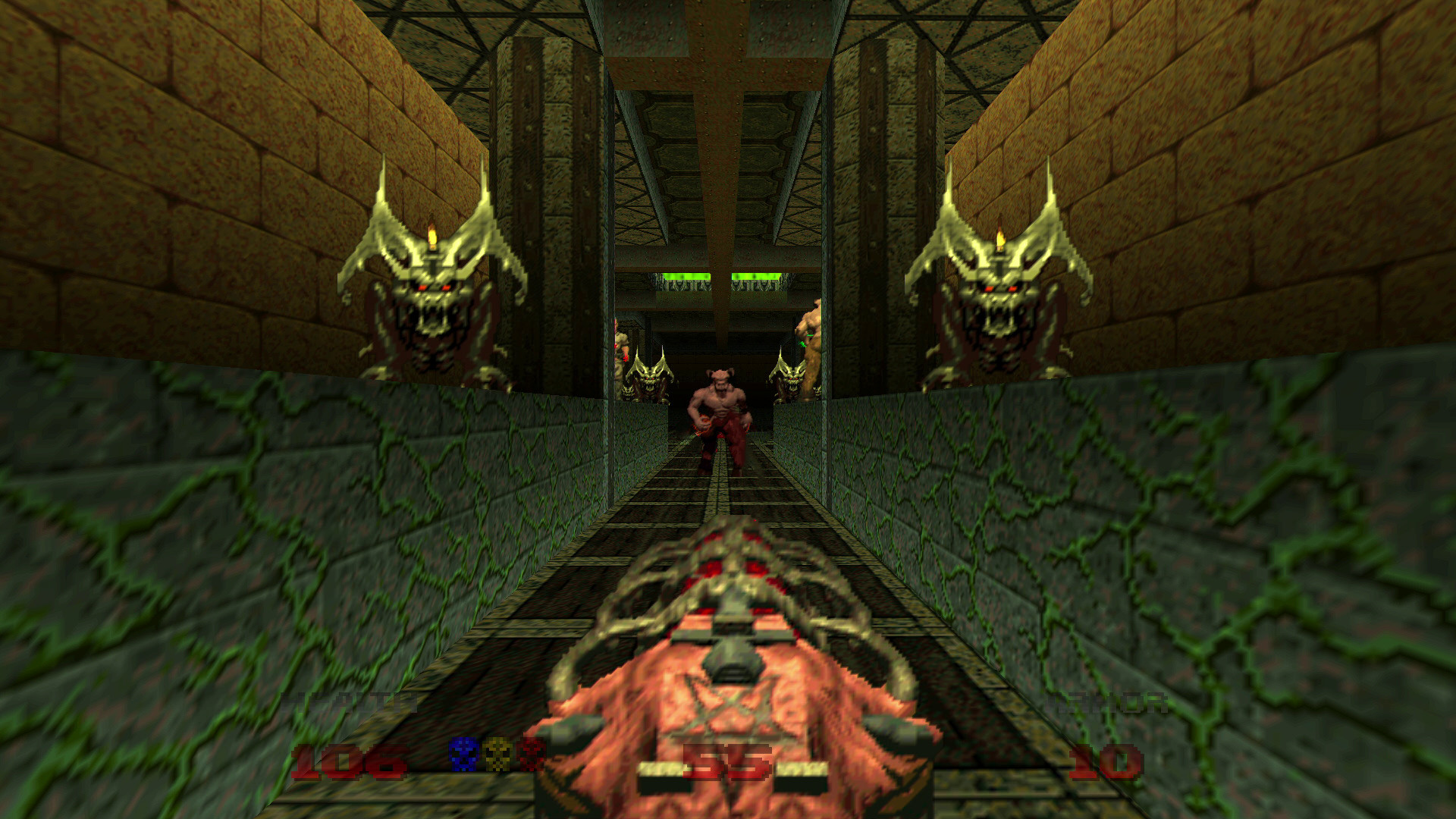
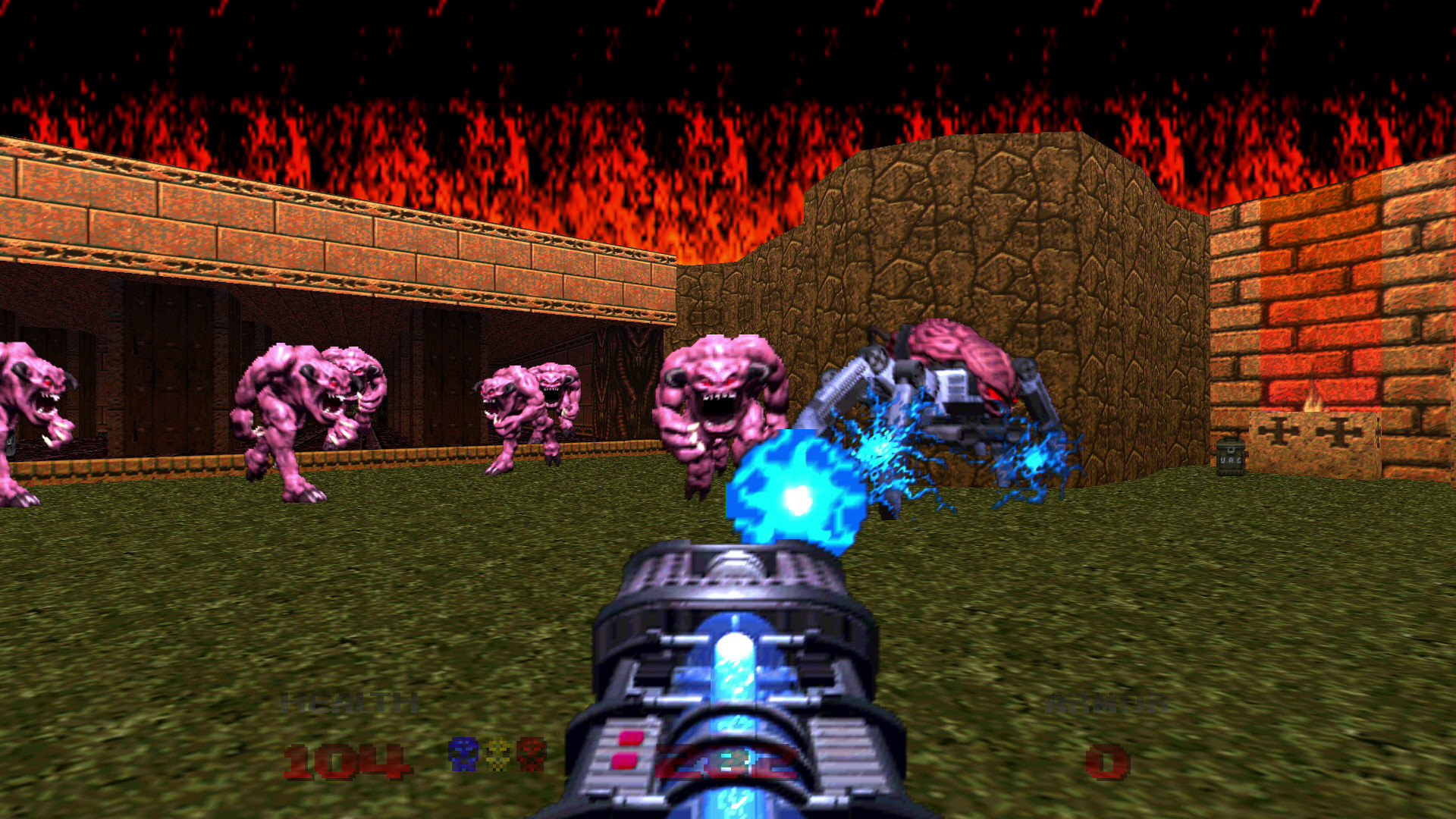
The supplied encounters range from narrow lanes to broad courtyards. That changes the practical question even when the weapon in your hands is familiar: where can you move while keeping the threat in view?
A corridor focuses attention forward. An open chamber gives you more room to reposition but also more space to monitor. In the screenshot with the large red demon and bright blue energy, the floor and walls make the distance between player and target immediately legible. It is a small visual example of why the room deserves attention.
We would resist treating every opening as permission to charge. Look for a useful stretch of ground and remember the route back to it. The point is not to turn a fast shooter into a walking tour; it is to stop the scenery from becoming something you only notice after it has trapped you.
Spawned Fear gives the approach a specific example
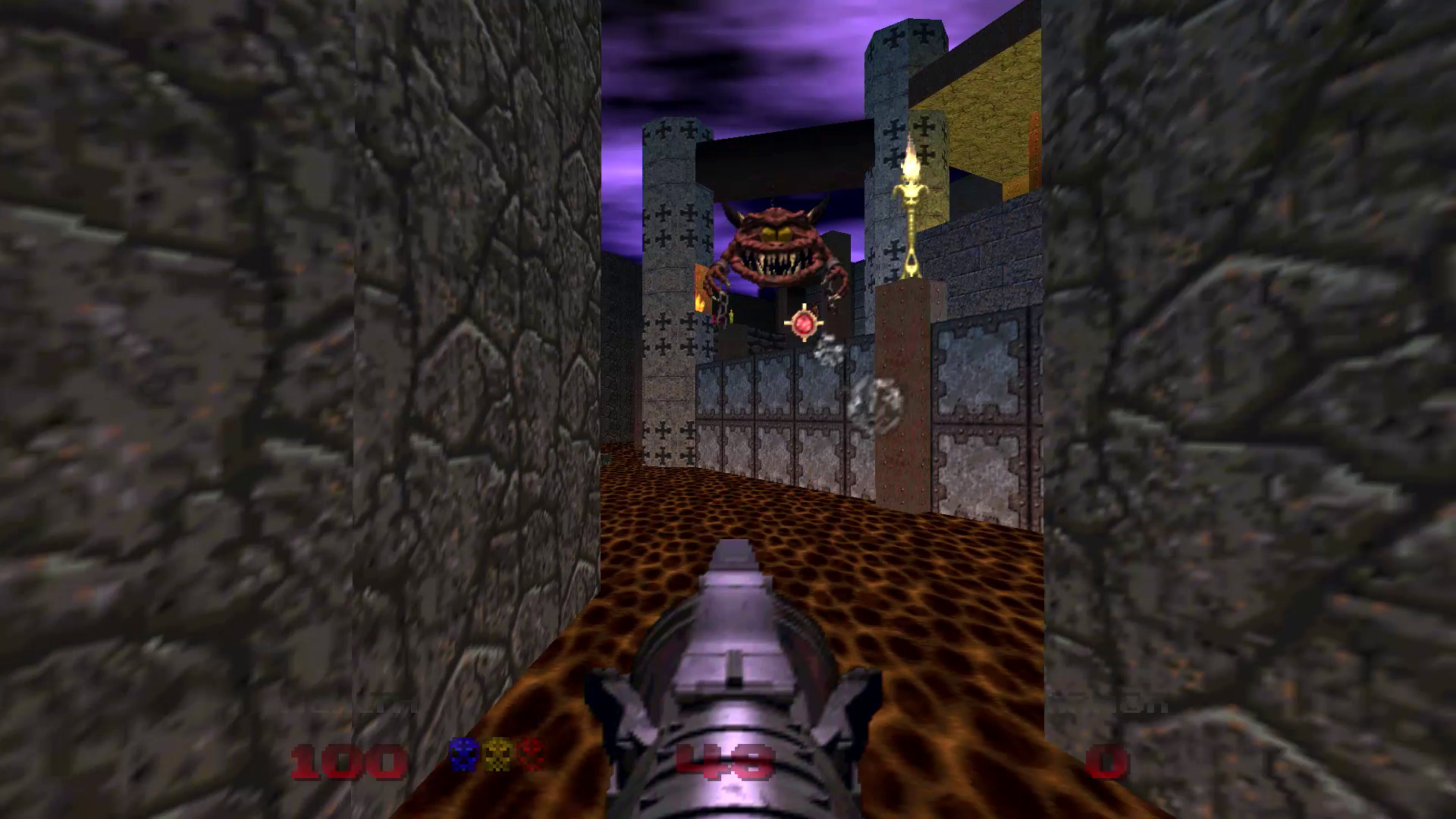
Bethesda’s retrospective highlights Spawned Fear, the campaign’s eighteenth map, for its library setting, winding corridors, traps and puzzles. That is a helpful example because it connects the atmosphere to things the player has to do, rather than praising darkness as a feature by itself.
A library suggests rows, recesses and interrupted sightlines. The publisher’s description places secrets and changing situations inside that framework. The useful appeal is a level that asks you to read its arrangement while handling the opposition, rather than a sequence of enemies laid out on a straight road.
Our interpretation is that DOOM 64 benefits from being approached as its own set of spaces. Familiarity with DOOM’s vocabulary can help, but it should not replace curiosity about the room you are actually in. A recognizable demon is not a reliable tour guide.
A secret exit can change the campaign route
Bethesda Support identifies alternate exits leading to secret maps: Holding Area leads to Outpost Omega, Altar of Pain to The Lair, and Spawned Fear to The Void. It also documents Hectic as a super-secret level reached from Staging Area through a particular barrel-destruction sequence.
The significance is larger than an extra supply hidden behind a wall. An alternate exit changes where the journey goes. If you enjoy inspecting a level, DOOM 64 gives that curiosity a campaign-level consequence.
Choose how much help you want before opening a detailed solution. The linked support page is useful when you want the destination names or the specific Hectic requirement. If discovery is the attraction, keep the broad idea in mind and investigate the environment before reading the exact sequence. Both approaches are legitimate ways to enjoy a return to an old shooter.
The Unmaker gives secrets another purpose
The publisher’s discussion of Spawned Fear connects its hidden route with an item used to strengthen the Unmaker, DOOM 64’s unusual laser weapon. Bethesda’s separate series feature explains that Demon Keys upgrade the weapon and can reduce the enemies faced before the Mother Demon encounter.
That gives the secret hunt a practical relationship to the campaign. You are not only collecting proof that you inspected the walls. What you find can change the equipment and opposition involved later.
For a returning player, that is a concrete reason to pay attention to routes you hurried past. For a newcomer, it is enough to know there is another layer to investigate. You do not need to memorize the complete secret-map chain before the first shot.
The modern release adds another campaign to reach
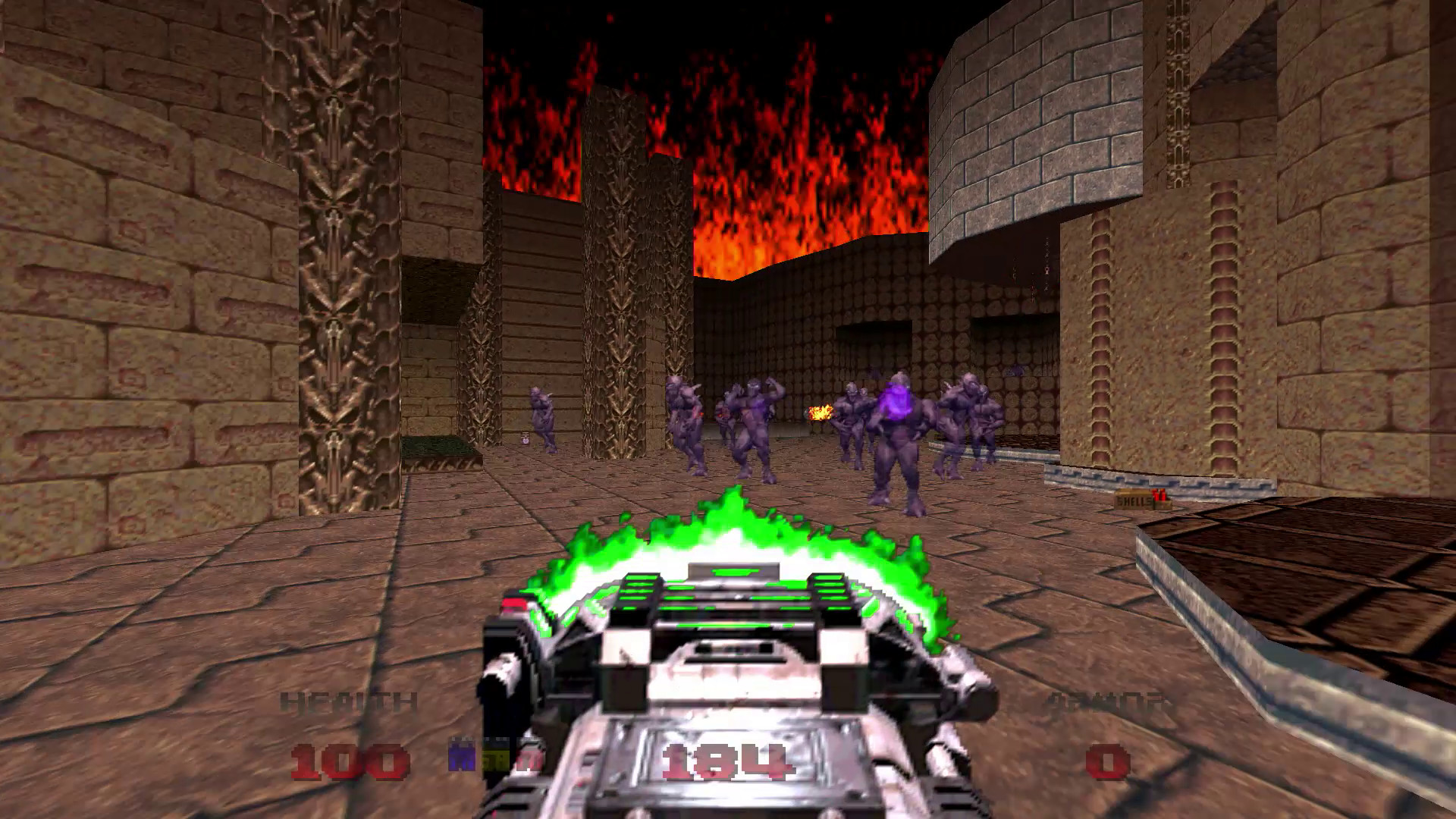
The enhanced release supports widescreen presentation, controllers, improved mouse-and-keyboard controls and native 60 FPS, according to its official PC description. Those conveniences let you explore the campaign on current hardware while keeping its distinctive spaces in view.
It also includes The Lost Levels. Bethesda Support describes these as a separate campaign with new maps, unlocked by beating the game or completing Hectic. After reaching the end-game character reel, return to the main menu and start a new game to choose between DOOM 64 and The Lost Levels; the support page also identifies access through the Features menu.
That distinction matters when choosing what to play next. Finish or explore the original campaign on its own terms, then deliberately select the additional journey. The Lost Levels are not another name for the ordinary secrets already sitting inside the main route.
Give the next room a second look
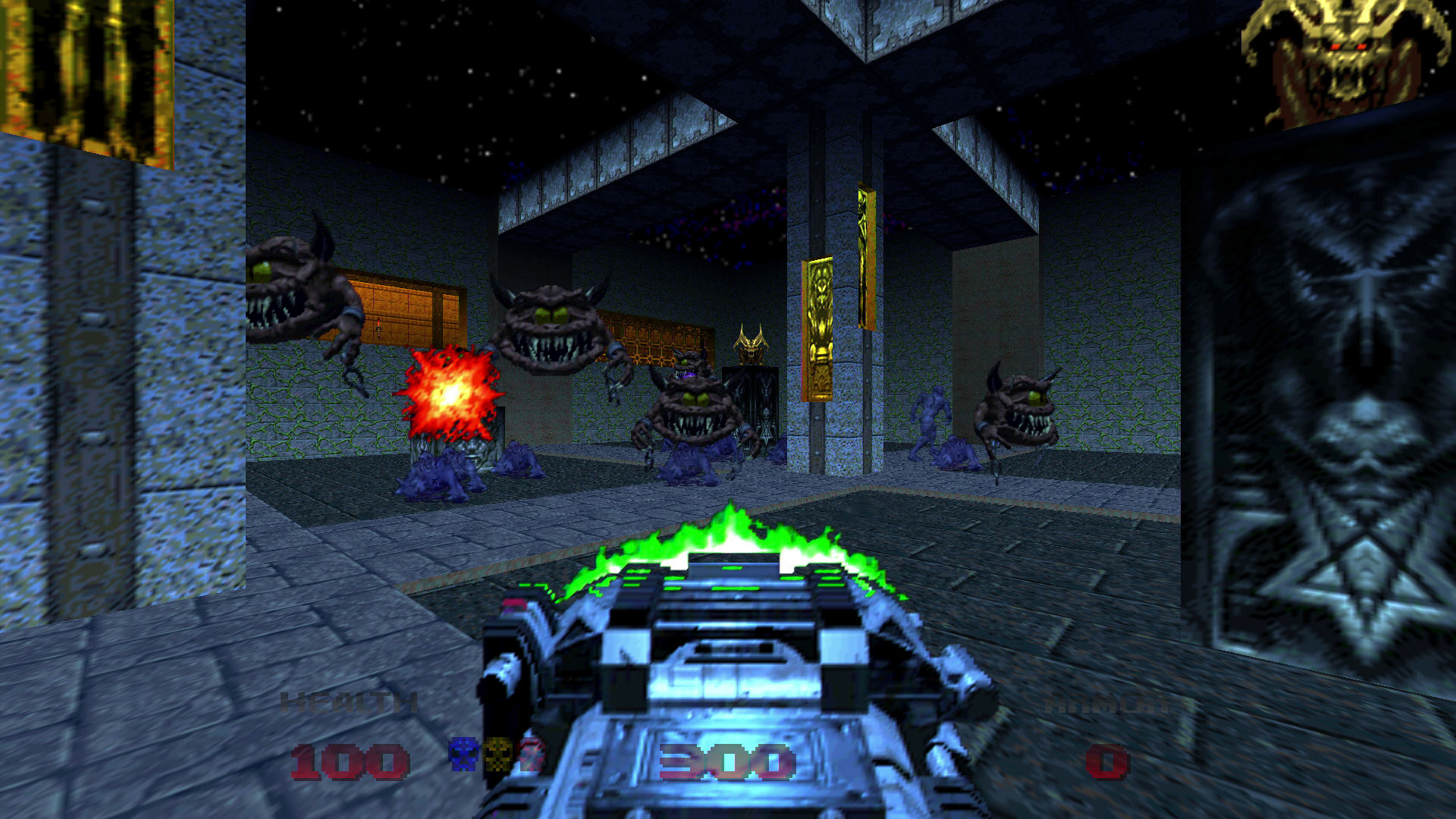
DOOM 64’s appeal is easy to miss if the only comparison is how many pixels a later release can draw. Its color, room shapes and alternate routes create a particular kind of journey. The gun remains central, but the environment keeps asking for some of the attention.
On a first run, let the visual identity help you remember where you have been. On a return, choose one secret route to investigate rather than trying to turn the whole campaign into a checklist at once. The goal is to come away remembering a place and the fight inside it.
Choose the exact edition for the hardware you intend to use. The original Nintendo 64 cartridge and the enhanced PC/console release are different products, and the additional Lost Levels discussed here belong to the modern release. For this feature, all eight images come from the official enhanced PC gallery.
Find your next game at Zypher
Browse Zypher’s game selection and check the platform, edition and listed contents before choosing a copy. Making room on your shelf? Visit our trading and selling page to see how selling to Zypher works.


