Building a car in Factorio does not necessarily mean driving it. You can put it on a conveyor belt and turn the whole vehicle into cargo. That is the kind of game we're dealing with here.
These ten facts cover unmodded PC Factorio mechanics and two explicitly historical changes from version 0.15. They are checked against the official Factorio Wiki and Wube's development notes. The mechanics discussed here apply to the base game; Space Age can change recipes and progression. The screenshots are archival factory reference images.
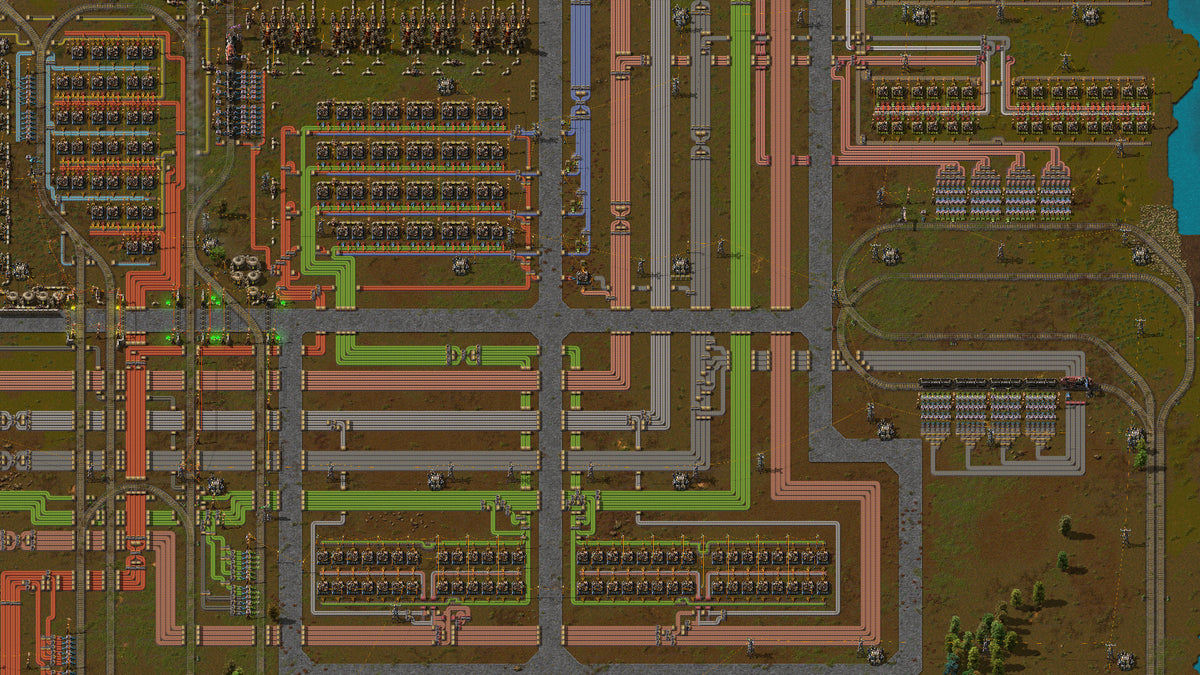
Featured image: belts, production lines and a rail station in Wube's official Factorio screenshot gallery. © Wube Software. Archival PC gameplay; exact build unspecified.
1. Spidertron's recipe includes a fish
The late-game walking vehicle requires raw fish as a crafting ingredient. The official wiki's Spidertron entry identifies it as the game's only item with that requirement. Steel, electronics, increasingly elaborate industrial supply chains, and then a fish on the shopping list.
You need the fish when making the vehicle, not as a continuing fuel supply. Spidertron runs without fuel once built. That is useful to know before adding a thoroughly unnecessary fish-delivery service to your plans.
2. A car can become a conveyor-belt container
Transport belts can move vehicles as well as loose items. Since inserters can load a car's inventory, you can use cars as containers carried by belts. The belt is moving the car, with the contents inside it, rather than laying each item directly on the belt.
That makes this a real logistics interaction, not just an engineer taking a silly shortcut across the factory. It also gives “car production line” a rather different meaning.

3. The passenger can shoot, but cannot steer
In multiplayer, the car separates the jobs of driver and passenger. The passenger can operate its weapons, while steering stays with the driver. Bringing a second engineer is therefore more than adding another person to the ride.
For a co-op trip, agree on the jobs before reaching the fight. The driver handles the route while the passenger handles the aiming. It gives two players separate things to do in the same vehicle, rather than making the second seat purely a lift home.
4. Nuclear fuel is not nuclear reactor fuel
The item actually named nuclear fuel belongs to the burnable-fuel side of Factorio, including vehicles. Nuclear reactors use uranium fuel cells instead. The names sound close enough to invite the wrong production order, but the items are not interchangeable.
When planning a fuel factory, start with the machine you intend to feed. Making nuclear fuel for a reactor does not produce an expensive alternative recipe. It produces the wrong item.
5. A reactor does not pause its fuel cell when demand drops
A nuclear reactor continues burning its current fuel cell regardless of how much of its heat you are using. Once it reaches its maximum temperature, additional heat can be wasted.
That makes low electricity demand a different problem from an empty fuel supply. A fuel cell already burning is committed. If you want to manage refuelling efficiently, think about heat consumption and storage before treating the reactor like a boiler that follows demand.

6. A storage tank can hold energy as steam
Steam can wait in a storage tank and later feed steam engines or turbines. The official wiki's electricity guide describes this as an alternative way to store energy. You are holding the hot fluid that can generate electricity later, rather than putting electricity directly into a tank.
The distinction matters when reading a power setup: a large steam reserve and an accumulator bank are storing energy through different systems. Temperature matters too, so a tank's fluid volume alone does not tell the whole story.
7. You can manually control a train from a cargo wagon
You do not have to sit in the locomotive to manually control the train. The locomotive documentation confirms that control also works while sitting in a cargo wagon.
That is handy to know when boarding a long consist: the nearest wagon can be enough, instead of walking all the way to the engine. It changes where you can operate the train, not the need to pay attention to what is ahead of it.
8. A burner inserter can feed itself
A burner inserter handling fuel can take some for itself. On a coal supply feeding boilers, that lets the inserter keep working without electricity, provided coal remains available.
There is a useful little dependency lesson in that early machine. An electric inserter needs the grid; the burner inserter needs fuel. Giving it access to the same fuel it is moving can keep that feeding job running during a power failure. It still depends on a working fuel supply.
9. Version 0.15 multiplied fluid amounts by ten
This was a historical rescale, not a tenfold power upgrade. Wube's October 28, 2016 development post explained that fluid values would grow tenfold for 0.15 to improve precision and rounding. Steam-engine consumption needed a corresponding change while power output stayed the same.
The 0.15 changelog records the fluid-amount change. It is a good reason to check the version before comparing numbers in an old factory guide with a newer one.
10. Alien science once depended on enemy-spawner loot
Alien artifacts used to drop from destroyed spawners and were used to make alien science packs. Both were removed in version 0.15. An old video telling you to collect those drops is showing a retired progression system.
Wube's development explanation describes how the research overhaul left artifacts with little useful work to do. This was a change to what combat contributed to progression, not merely a different name for today's research ingredients.
Make room for the next game
For your next console session, browse Zypher's video games and check each listing's platform, edition and included items. Clearing shelf space first? Use our general sell-your-old-games Buylist to see what we currently accept.


