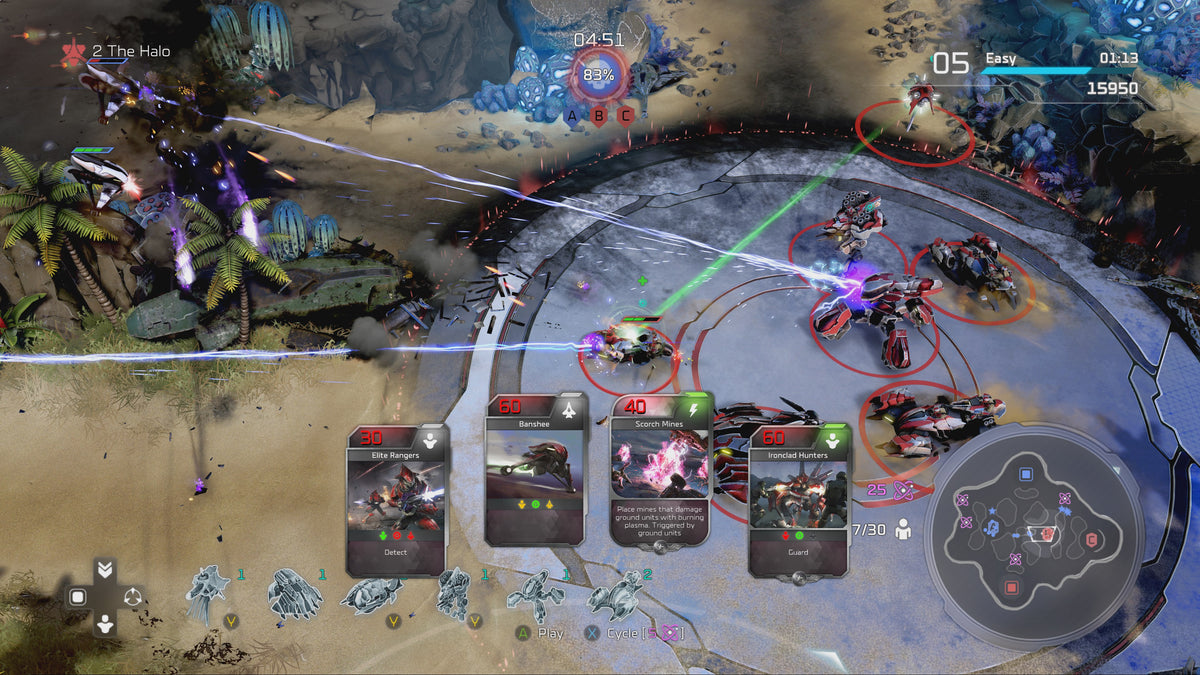
A tank in your hand is an option, not an army already on the field. Halo Wars 2 makes that distinction literal in Blitz, where cards and Energy replace the normal route through base construction and unit training.
The mode changes where preparation happens. You choose a deck before the battle, then decide what to play with the hand and resources available during it. Familiar Halo units still fight in real time, but knowing what a Warthog does is only part of deciding whether to deploy one now. Comparing Blitz with the game’s conventional strategy modes makes those choices easier to understand.
A deck moves part of the production decision before the match
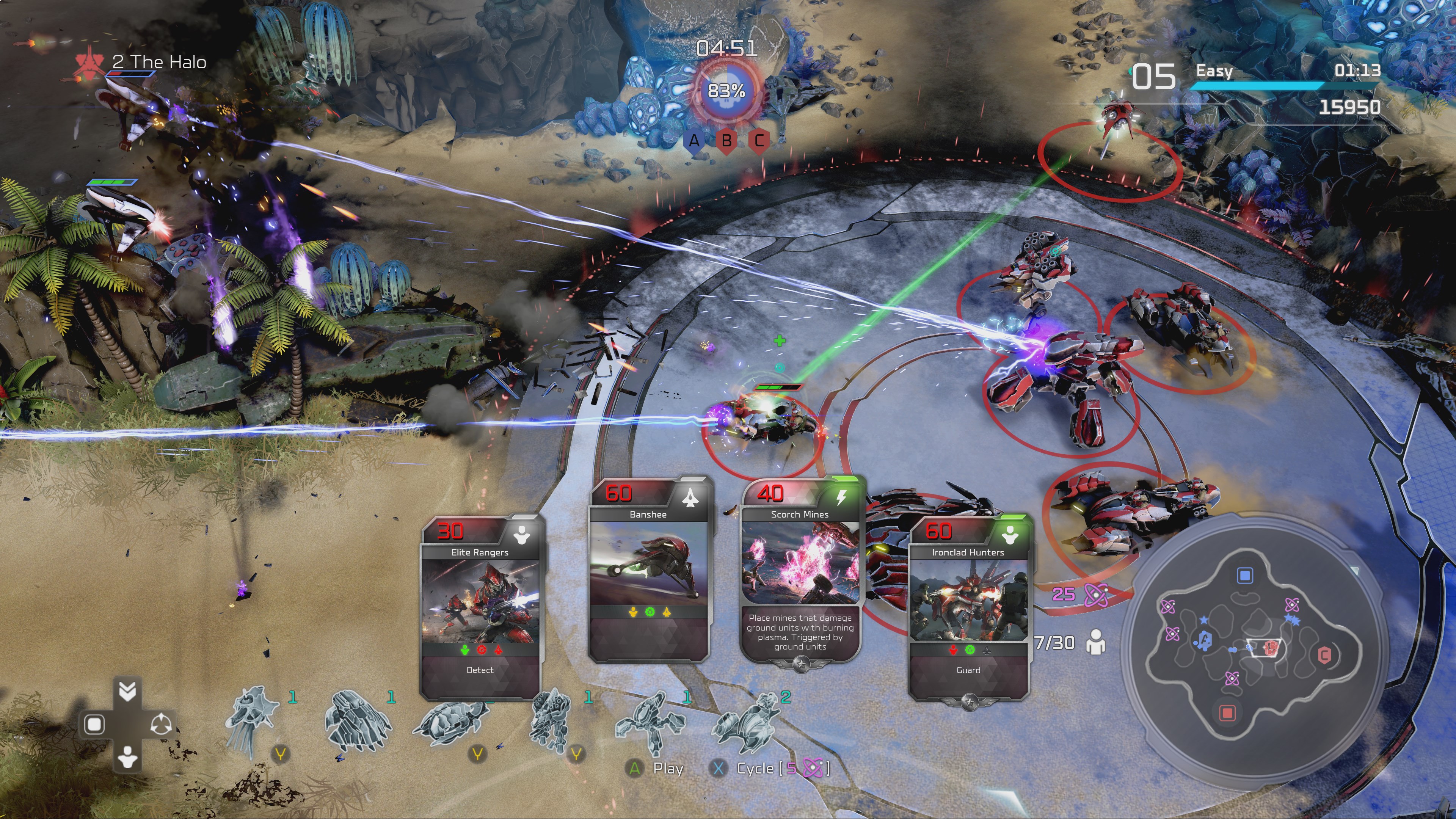
The official introduction describes a twelve-card deck. Prima’s licensed guide explains that the hand holds four cards, each with an Energy cost. Playing one summons its unit or activates its Power, sends that card to the bottom of the deck and draws a replacement.
That makes a deck a set of possibilities whose immediate availability is limited. You cannot treat every card you selected as if it were ready in the current hand. Read what you can actually play, then decide how it helps the battlefield in front of you.
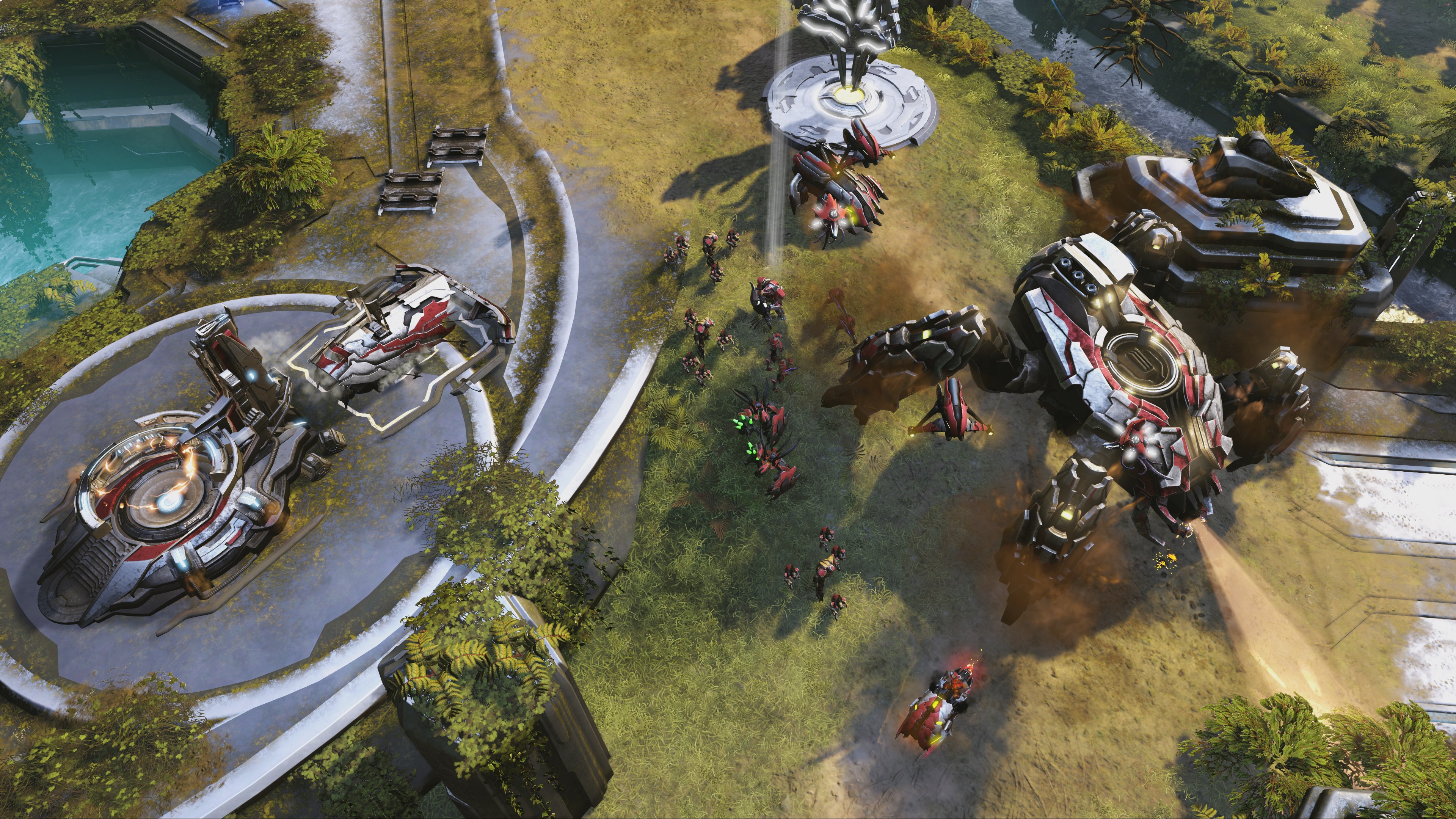
In the conventional modes, preparing an army involves bases, production and training. In Blitz, the deck has already carried some of that work into the match. The question shifts from “which production step comes next?” toward “which available commitment makes sense now?”
Energy is a budget for the next decision
A card’s Energy cost tells you what playing it will consume. The licensed guide also explains that cycling a card has an Energy cost. Changing the hand is therefore another resource decision, rather than a free way to browse until the perfect option appears.
Our recommendation is to decide what the next card needs to accomplish before spending. Are you trying to hold a position, support existing units or respond to a threat? The most expensive card in hand is not automatically the best answer.
Energy Crates also require follow-through. Prima explains that you first destroy the crate, then collect the released cells with ground units. An aircraft that breaks the crate has not completed the collection job by itself. Keep a suitable ground unit available when planning to claim that resource.
Read the card beyond its name
Prima’s Card Basics identifies the Energy cost, unit or Power type, combat effectiveness information and keywords. Leader restrictions also matter. A familiar unit name is a starting point, not a complete explanation of that particular Blitz card.
Inspect the Card Library when learning the mode. Compare what a card does with the role you want it to fill. If you want support, a recognizable heavy unit may be answering an entirely different question. If a card has a special property, understand that property before planning around it.
This is where deck-building becomes more interesting than choosing a dozen favorites. Favorites can give a deck an identity, but the battlefield still presents different jobs. A useful selection gives you ways to address those jobs with the options you can draw.
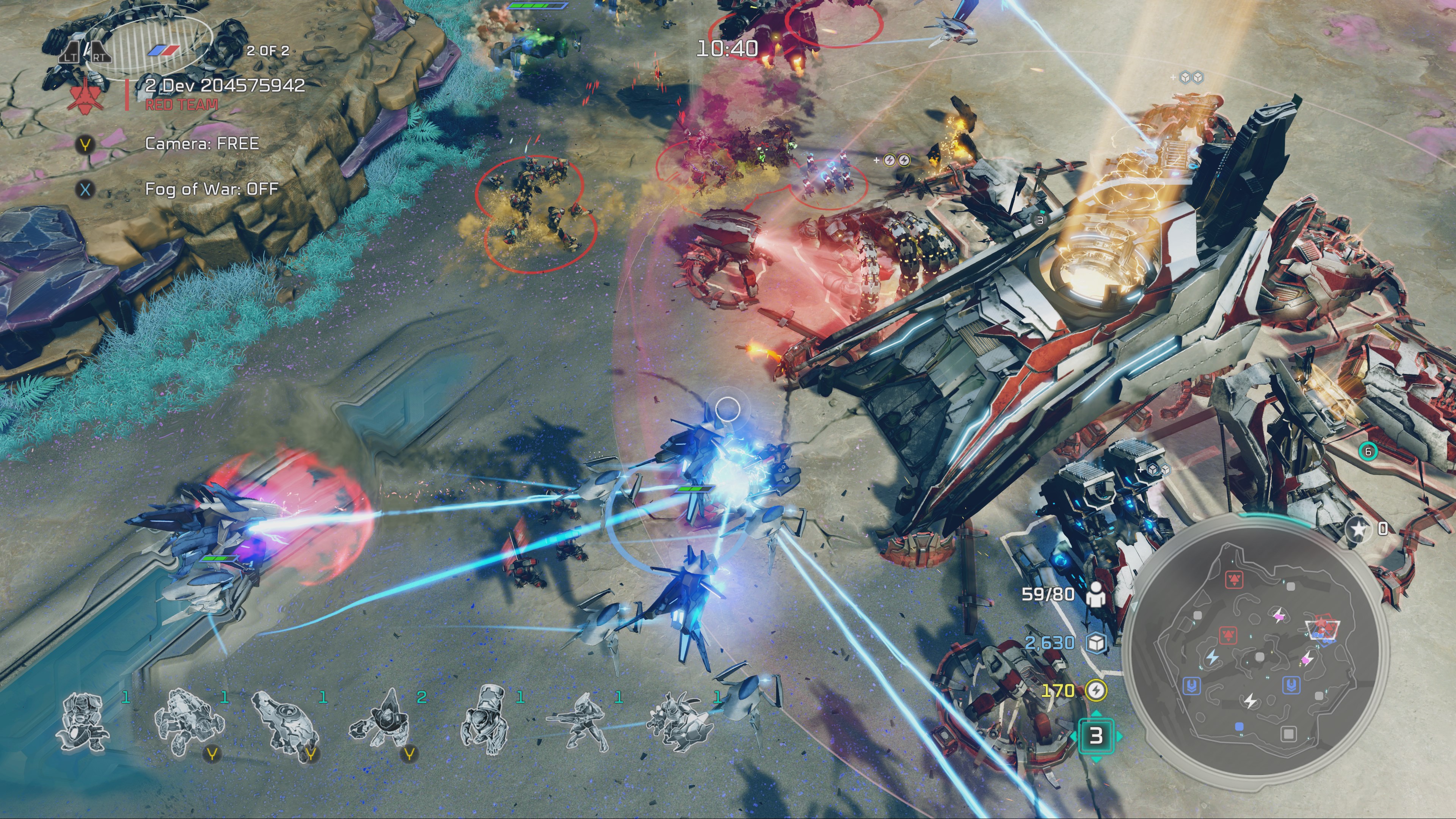
Summoning is not the end of commanding
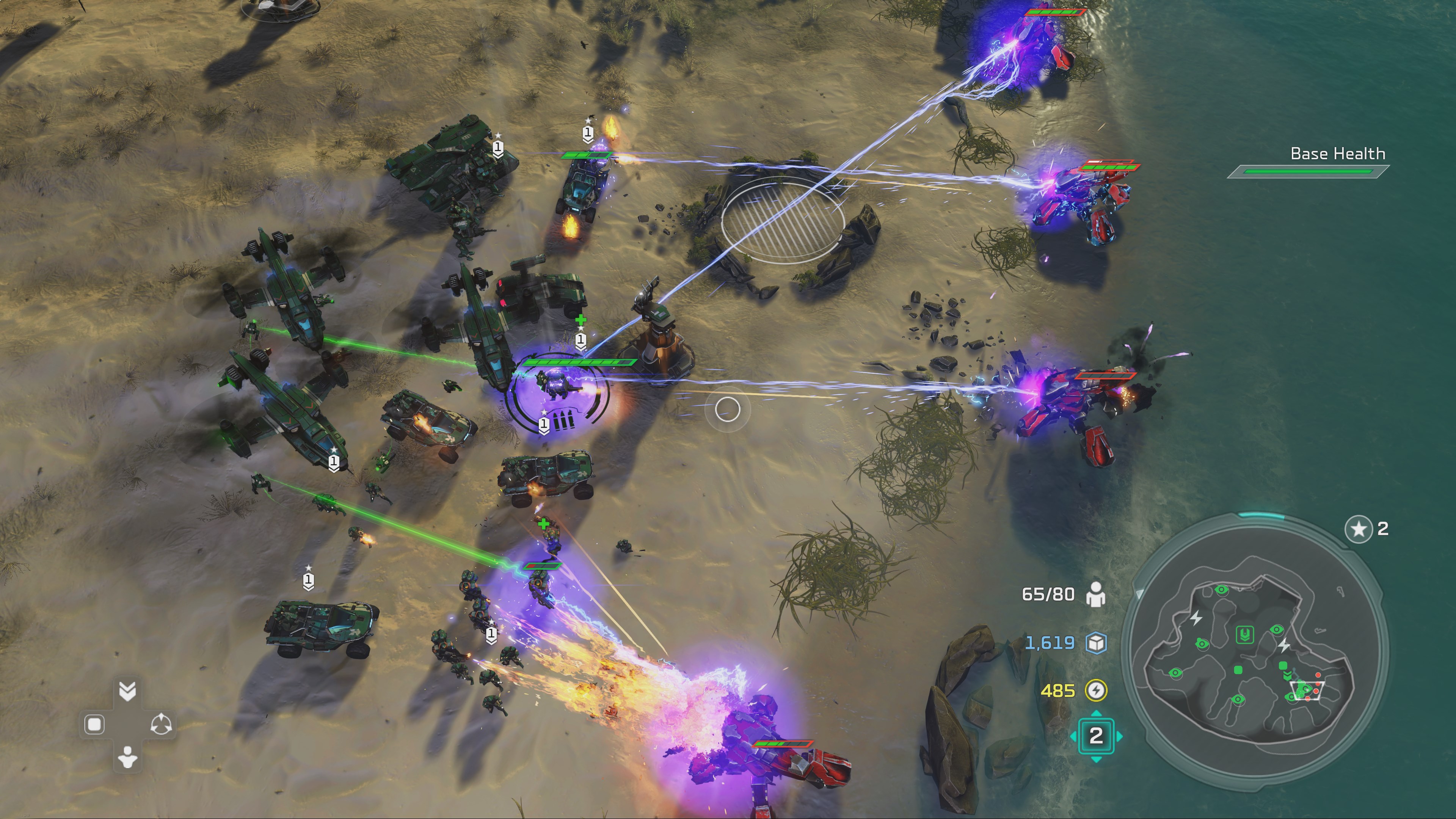
The licensed guide distinguishes playing the card from managing the unit afterward. Basic movement, selection and attack commands still matter in Blitz. The mode simplifies how the force arrives, not the fact that it needs orders.
Deployment location has a mechanical consequence, too. The licensed guide describes Deployment Fatigue when most units are summoned directly into the battlefield; deploying at the home base avoids that penalty. Its card reference identifies Rush as a keyword that ignores fatigue. Read the card and the landing position together before expecting an immediate full-strength reinforcement.
Control zones give that management a purpose. The guide emphasizes holding them, so judge a fight by what it lets you control afterward. Pursuing a retreating target can be attractive, but it deserves a second thought if the chase pulls the army away from the position you needed.
Check the mode and the package
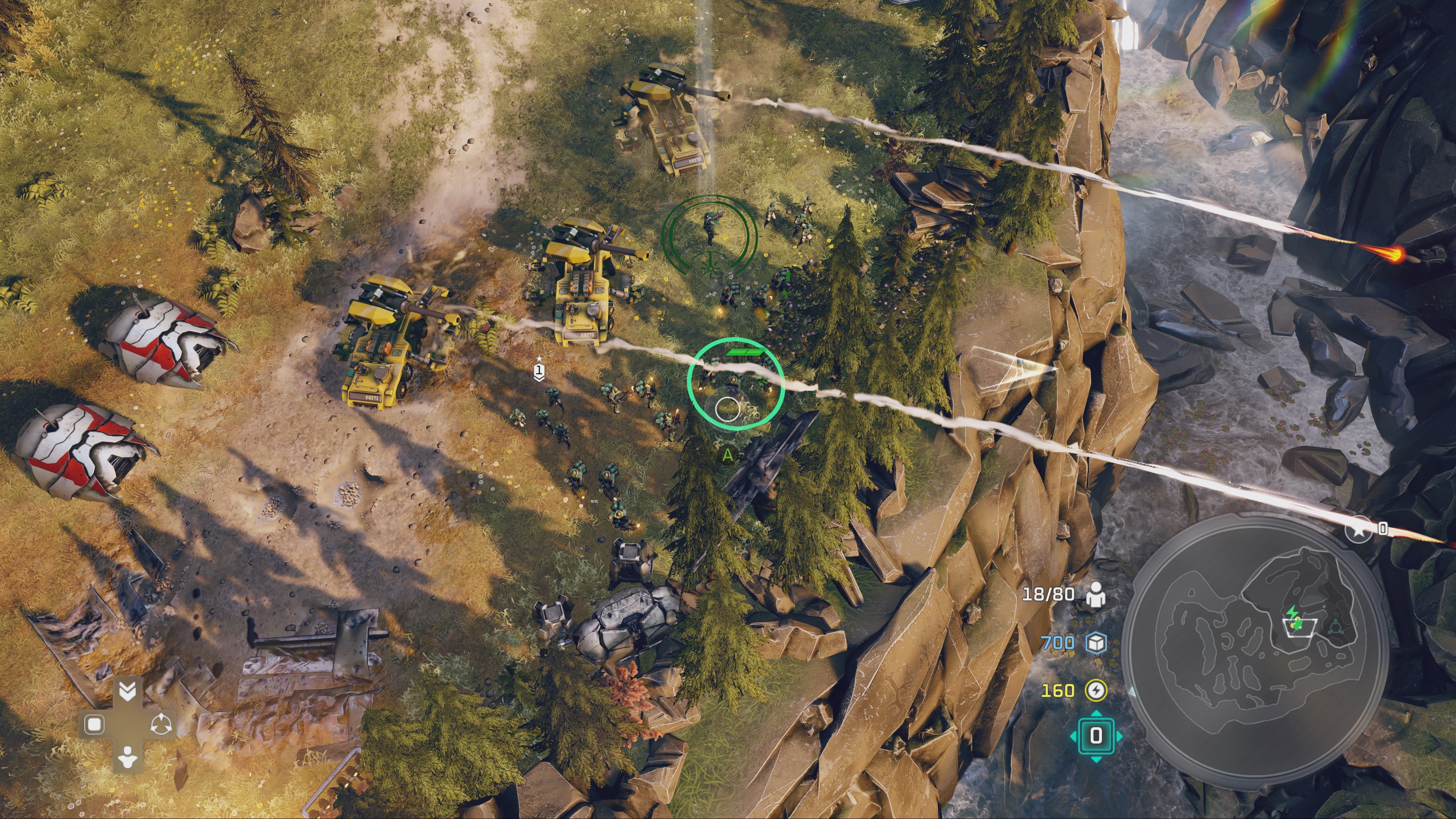
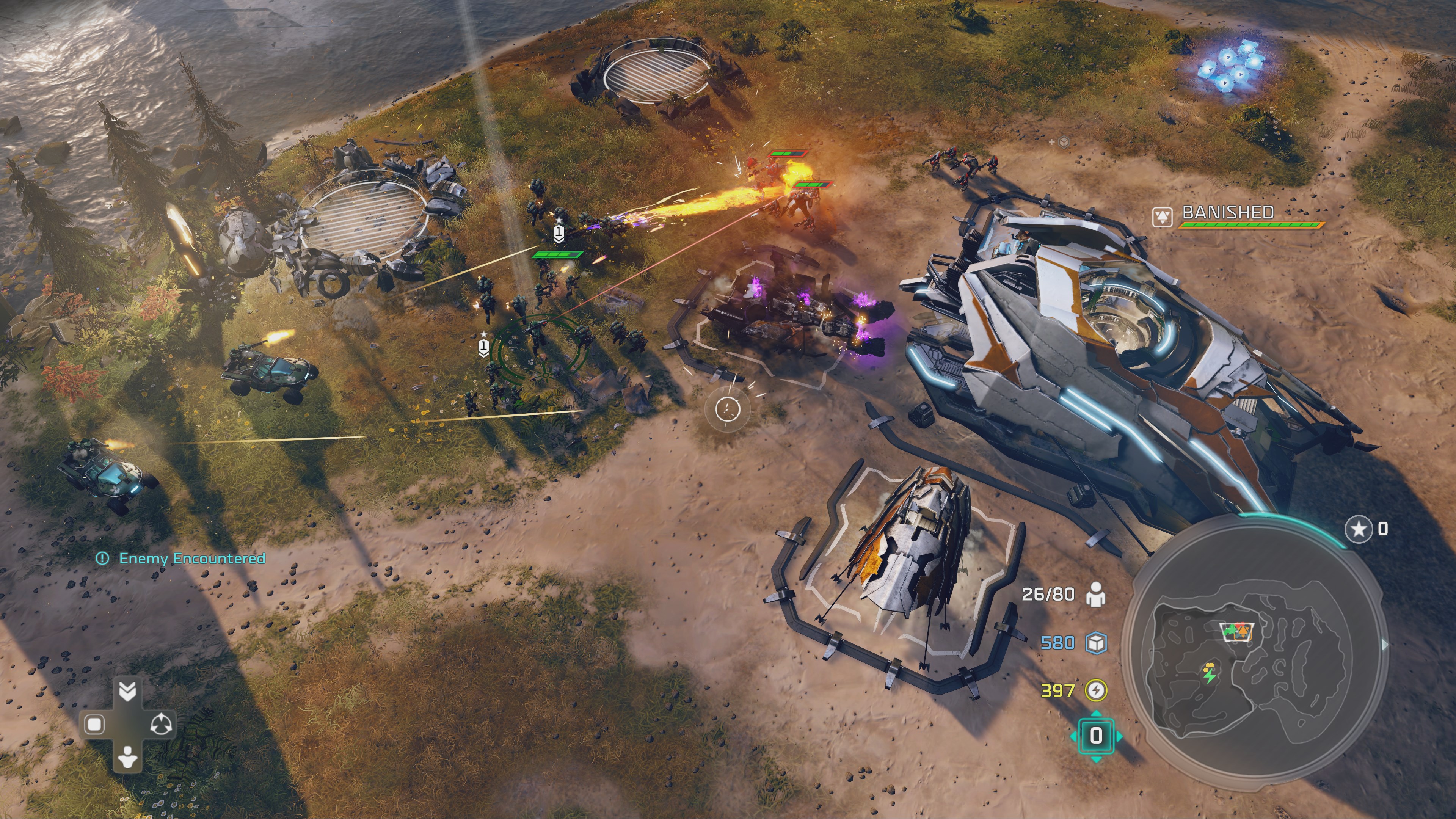
Blitz also has its own Firefight variant against waves of AI enemies, as the licensed guide explains. That is separate from treating every campaign or standard multiplayer screenshot as footage of the card mode. The captions here identify the Blitz hand and use conventional-mode scenes for the comparison with normal army production and command.
For buying, use the current official listing’s platform and edition information. It distinguishes the base game from packages with additional content, and says online multiplayer on console requires an eligible Game Pass plan. Do not assume a used physical copy includes unused add-on codes or the same entitlements as a digital bundle.
The appeal of Blitz is that it gives Halo Wars 2 a second way to ask an army-building question. Build the deck deliberately, read the current hand, and keep commanding after the card has been played. The unit appearing is the start of its job.
Find your next game at Zypher
Check the current Halo Wars 2 listing for platform and package details. The original Halo Wars is a separate earlier game with a different set of modes. Browse Zypher’s current games, or start with our trading and selling page to make room for your next pick.


