Prince of Persia makes a pit look like a serious proposal. There is a ledge on the other side, a small human figure on this side, and enough empty space between them to make enthusiasm a poor substitute for judgment.
This classic deep dive concerns Jordan Mechner's original 1989 Apple II game. Its appeal is the relationship between a readable room and a vulnerable moving body. The important question is wonderfully small: can you get this person safely across that floor?
Featured image: original Apple II gameplay, Jordan Mechner, via Wikimedia Commons, CC BY-SA 4.0. Unaltered image; display size may vary.
The person inside the platformer
On his account of the original game, Mechner describes creating and programming the Apple II release, which Brøderbund published in 1989. His animation reference began with footage of his younger brother running and jumping. His development library identifies the October 1985 footage and makes the reference material available to study.
That background gives a useful way to look at the character: as a sequence of bodily actions, rather than a marker sliding around a map. A jump has a preparation, a shape and a landing. The small figure becomes the center of attention because the surrounding architecture keeps asking what that body can do.
Zypher's take is that this is the game's strongest invitation. You do not need a huge character model to care about a person approaching an edge. Readable posture can sell danger more efficiently than a page of dialogue explaining that the dungeon is, in fact, dangerous.
The surviving sketch below makes the idea unusually tangible. It lays out standing and running jumps as different arcs, with a takeoff, a gap and a destination. That is a useful distinction for anyone examining why movement feels consequential in a platformer. The shape of the action and the space available for it have to agree. A beautiful animation would be much less interesting if the room never asked you to consider its reach.
Read the drawing as a design question: where should preparation end and commitment begin? That question is more revealing than counting animation frames for bragging rights. It connects the craft directly to the decision a player is being asked to make.

Learn the movement before racing the hourglass
The original Apple II user's guide distinguishes careful steps, standing jumps, running jumps and ledge grabs. It also explains sword strikes, timed blocks and retreating. These are different decisions, not interchangeable ways to move forward.
The story gives the Princess an hour before Jaffar's ultimatum expires. Death returns you to the current level's beginning while time remains a concern. Our suggested starting approach is to understand one movement at a time before chasing speed. Treat an early attempt as a lesson in positioning, rather than proof that faster button presses must eventually become competence.
For original hardware, the guide specifies an Apple IIe, IIc or IIGS with a 5.25-inch drive; the IIe needs an extended 80-column card. Saving becomes available at Level 3 and resumes from the saved level's beginning. Check those requirements before buying.
Swordplay gives positioning another purpose. Notice the space around a confrontation as well as the opponent. Reaching an enemy and getting past one are different problems.
Why the rooms are worth reading
Mechner's October 1989 technical documentation describes screens arranged from ten blocks across and three blocks high, with up to 24 screens in a level. Its examples include floor pieces, pressure plates, spikes and solid blocks. It also separates dungeon and palace background image sets.
That construction suggests a useful way to study the design. Look at a room as an arrangement of relationships: a surface, an opening, a hazard and somewhere you might reach. The graphics can establish the problem without turning every surface into a paragraph of instructions.
Our interpretation is that the compactness strengthens attention. When the screen contains a limited set of visible possibilities, the placement of one opening can become interesting. The room does not need to be enormous to make its distances matter.
This is also why the development documents are more useful than a vague claim that the game was ahead of its time. You can inspect the actual building blocks. The achievement becomes something specific enough to discuss: how much tension an arrangement of simple pieces can carry.

The version is part of the collecting question
Put the Apple II featured image beside the Macintosh screenshot above and the SNES screenshot below. Their different visual presentations are immediately visible. A familiar title on the box is a starting point for identification, not permission to treat every release as the same object.
The Apple II image uses stark contrast and a small palette to separate the figure from the masonry. The Macintosh capture adds more surface detail and color; the SNES capture presents another treatment again. Those are observations about these particular images, not a performance ranking. More detail is not automatically the answer to which version belongs in your collection. A collector interested in the original computer's presentation has a different goal from someone following memories of a console port.
For a purchase, write down the platform you actually want before browsing. Ask for photographs of the offered media and packaging, then compare the listing's stated contents with your goal. Someone seeking a working game, someone seeking its printed instructions and someone building a boxed platform collection are making different purchases.
Keep a simple record of what the seller promises and what arrives. Separate an included manual from a downloaded reference, and separate a demonstrated working copy from an untested one. Attractive packaging answers the appearance question. It cannot answer every other question by looking especially confident on a shelf.
When comparing offers, keep condition and included materials beside the price in your notes. Otherwise, a tidy boxed copy and an untested disk can end up in the same mental bucket simply because both listings say Prince of Persia. Decide what you want to own first; evaluate the particular offer second.

Preservation has a paper trail
Mechner's public Apple II source archive identifies the original program as 6502 assembly and credits Jason Scott and Tony Diaz with recovering it from a 22-year-old floppy archive. He explains that the extraction preserved material that might otherwise have been lost.
For collectors, that is a useful reminder to distinguish a game's survival from the survival of a particular physical copy. Source, working media, packaging and development notes preserve different information. One does not make the others meaningless.
The archive is also specific about rights: publishing the source does not grant general Prince of Persia rights. Treat the repository as a documented historical resource, not a blanket license for distributing your own game release. Reading the creator's explanation is a better starting point than assuming that an old game has somehow aged out of ownership.
Explore Prince of Persia with Zypher
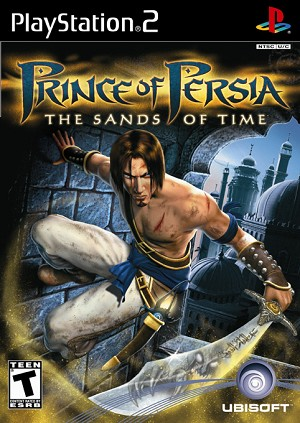
Buy your next Prince of Persia adventure from Zypher Trading Video Games. For a later, separate game, browse The Sands of Time on PS2 or GameCube. Those listings concern the 2003 adventure, not the 1989 Apple II game covered here. Our Sands of Time feature explores that different design.
Check the selected listing's condition and included contents before ordering. You can also shop Zypher's games or sell your old games to Zypher.
Sources, image permissions and store listings checked November 5, 2026. Design interpretation and buying suggestions are Zypher editorial judgment; no firsthand playtest is claimed.