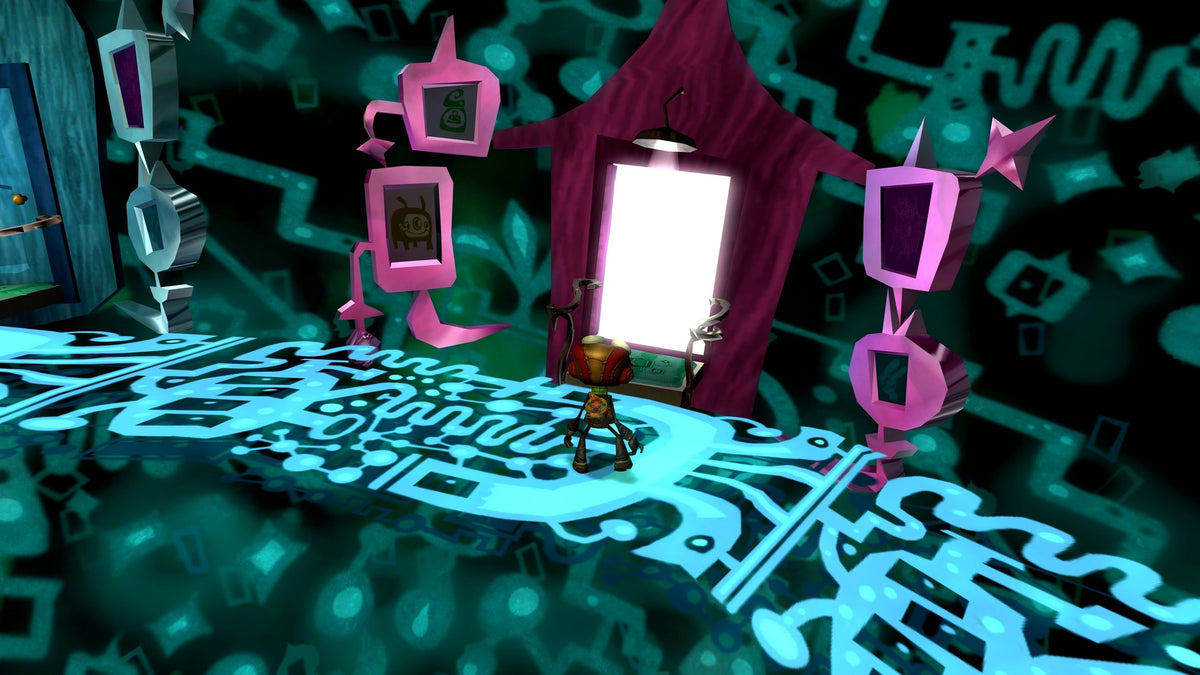
Raz can pick up a floating sketch, find a suitcase’s missing tag, and buy something at camp. Those are three different sorts of progress in the original Psychonauts. Treating every collectible as the same shiny object makes the game harder to keep track of than it needs to be.
Double Fine gives the collecting a sense of place: thoughts appear inside minds, while the camp supplies its own errands and equipment. The practical trick is knowing which reward you are pursuing before you start another lap around a level. This guide concerns the first game, rather than Psychonauts 2’s separate systems.

Figments measure points, not just objects
The original PC manual says collecting 100 figment points earns a PSI Cadet Rank. Individual figments can be worth different point values. That means “I picked up another figment” and “I gained one point” are not always the same event.
Use the Journal and the game’s figment information to understand what you have collected. A visible gap in a collection is a reason to examine the relevant area, not to assume the entire game has somehow lost track of you. It is a much more useful starting point than revisiting every place you remember in no particular order.
Our suggestion is to separate a story pass from a cleanup pass when exploration starts to feel aimless. On the first trip, notice the route and take the items you can reach comfortably. On a deliberate return, give yourself a specific collection goal. That turns a vague search into a question you can actually answer.

Cards and Cores belong to another route
Nine PSI Cards combined with a purchased PSI Core can be redeemed at Ford Cruller’s Sanctuary for a rank. A PSI Challenge Marker packages a rank reward more directly. These are reasons to pay attention to what you found, rather than assuming every rank requires another 100 figment points.
The useful planning distinction is between having the pieces and finishing the exchange. Finding cards does not mean a purchase and a visit have already happened. If the expected rank has not arrived, inspect the steps you have completed before deciding the collectible was pointless.
It also gives the camp a role between mental adventures. Returning there can be part of converting exploration into an upgrade. The hub is not merely the corridor you pass through on the way to the next strange level.

Emotional Baggage has a different payoff
Bags need their matching luggage tags. Reuniting the baggage in a mind unlocks Primal Memories accessible through Raz’s Journal, as the manual explains. That reward belongs to understanding the mind, rather than simply accumulating spendable money.
This is a particularly good reason to read the Journal after a successful search. Finding the last tag and immediately sprinting onward can bury the payoff beneath the next objective. Take a moment to see what that collection revealed.
For a player who usually ignores optional pickups, the distinction matters. Some collecting supports progression, some reveals more about a character, and some supplies a purchase. You can choose what interests you, but the choice is better when you know what kind of reward is on offer.

Cobwebs connect equipment with cleanup
Mental Cobwebs require the Cobweb Duster from the Camp Store. Collected cobwebs can be redeemed for PSI Cards at Ford Cruller’s Sanctuary. A blocked cleanup job may therefore be an equipment question, not a difficult jump you have failed to discover.
Before spending ages circling an obvious obstacle, inspect the relevant tool and your inventory. That is a general habit worth learning in Psychonauts: identify whether you need a route, a power or an item. Moving the camera for another five minutes cannot supply a tool you have not obtained.
Avoid turning a collecting session into an obligation to solve everything at once. A note about an unfinished task is useful precisely because it lets you leave it until you have a reason to return. Progress is easier to follow when “later” has a concrete meaning.

Make the next return purposeful
Before revisiting a mind, decide whether you are looking for figments, matching baggage, inspecting memories or dealing with cobwebs. Then use the Journal to keep that purpose in view. Those tasks can share a level without sharing a reward.
The distinction also protects the atmosphere. Psychonauts has wonderfully odd spaces, and reducing them to an undifferentiated percentage can make exploration feel like paperwork. A specific goal gives you a reason to look closely at a particular part of the world while leaving room to enjoy what is around it.
If you are buying the original, check the platform and copy details. The PC screenshots here show the first Psychonauts, not its sequel, and the physical Xbox product is its own listing. The correct title matters more than a familiar pair of goggles on the box.

Find your next game at Zypher
The original Psychonauts for Xbox is a separate purchase from Psychonauts 2; inspect the listing’s condition and included contents. Browse Zypher’s current games, or start with our trading and selling page to make room for your next pick.


