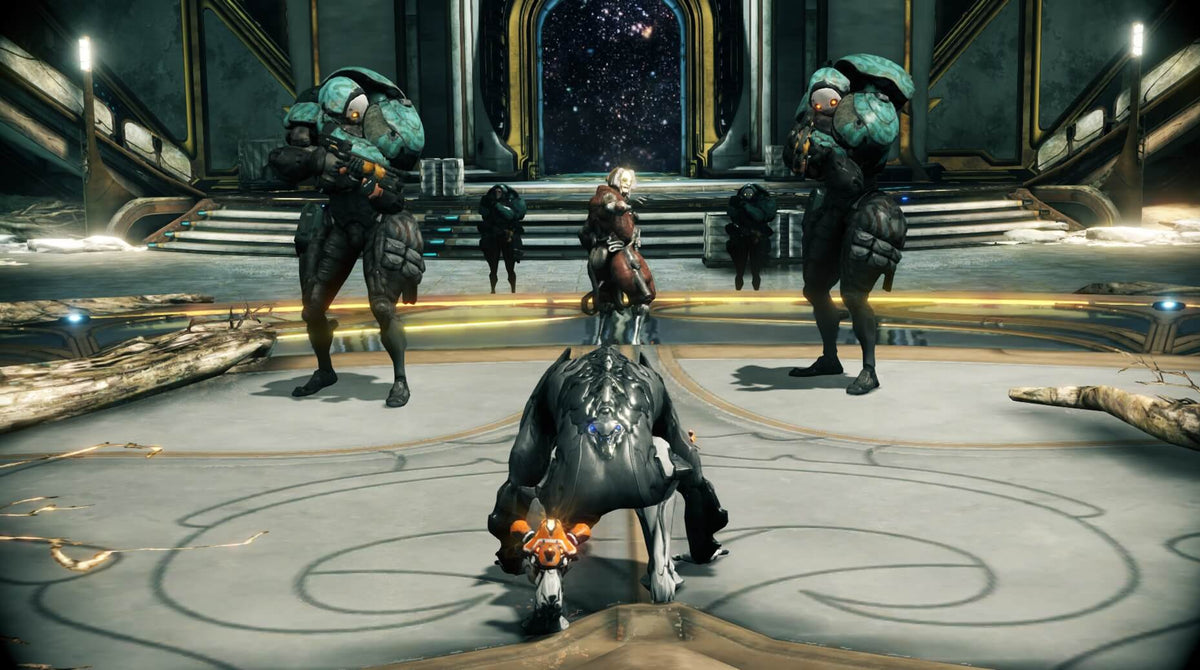
Warframe can make a new player feel as though the rest of the squad has been fired from a cannon. The useful response is to learn what your movement and mission information are telling you, rather than sprinting after the nearest disappearing name.
This beginner guide focuses on basic movement and reading a mission, not an endgame build or a route through a time-limited event. The images are archival examples supplied in Digital Extremes' official Quick Start Guide. Their older interface should not be mistaken for a screenshot of the current 2026 client.
Give the Bullet Jump a deliberate direction
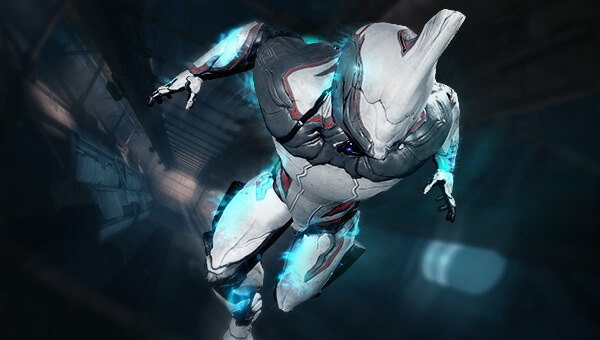
Digital Extremes' newer ten-tips guide describes the Bullet Jump as crouching and then jumping. It also explains that aiming the camera upward before the move sends the jump upward. That is an important difference from simply pressing movement inputs faster and hoping the floor cooperates.
Find a short stretch where you can see the landing. Try one jump aimed along the route, then another aimed higher. Notice where the camera was pointing and where the movement carried you. The immediate goal is a reliable arrival, not keeping up with a veteran's uninterrupted chain.
A clean landing is a useful success on its own. Once you can reach the spot you intended, add the next jump instead of trying to imitate an entire fast route at once.
Use a slower descent when it solves a problem
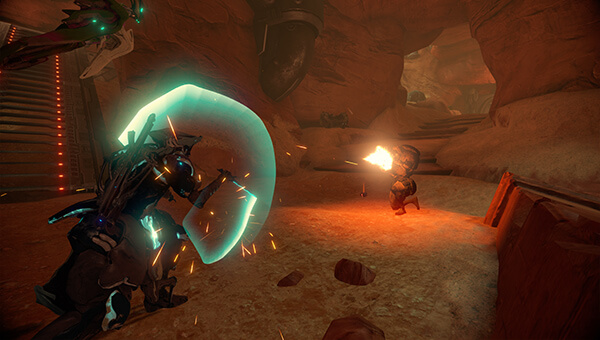
The official guides identify the double jump and Aim Glide as additional movement tools. Aiming in the air slows the fall, giving you more time to aim or judge a descent. The Quick Start Guide also describes Wall Dash and Wall Latch.
It is tempting to turn that list into one long input recipe. Start smaller. Use a glide because you need another moment to see the landing, or a double jump because a specific adjustment would help. A movement chain becomes easier to understand when each action answers something visible.
If a maneuver keeps failing, repeat a shorter version. Change the direction or timing deliberately so you can tell what made the difference. You do not need to solve every wall and ledge in the same attempt.
The screen is giving you more than a target
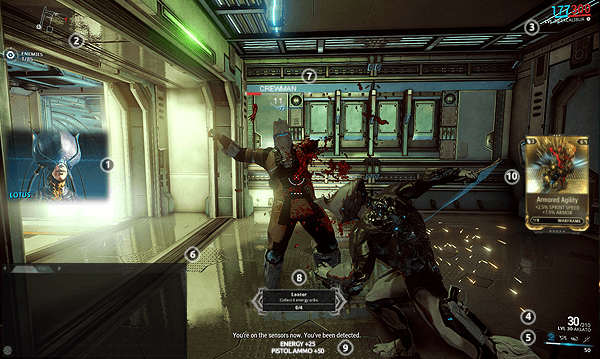
Warframe's official beginner material breaks down the mission interface as well as the controls. Use that as a reason to identify the objective and your character's condition before treating every redirection as another instruction to follow the quickest teammate.
Our advice is to build a small habit at the start of an unfamiliar room: find the route, locate the immediate threat and check whether you need supplies. That takes attention away from blind pursuit and puts it back on the job the mission is asking you to finish.
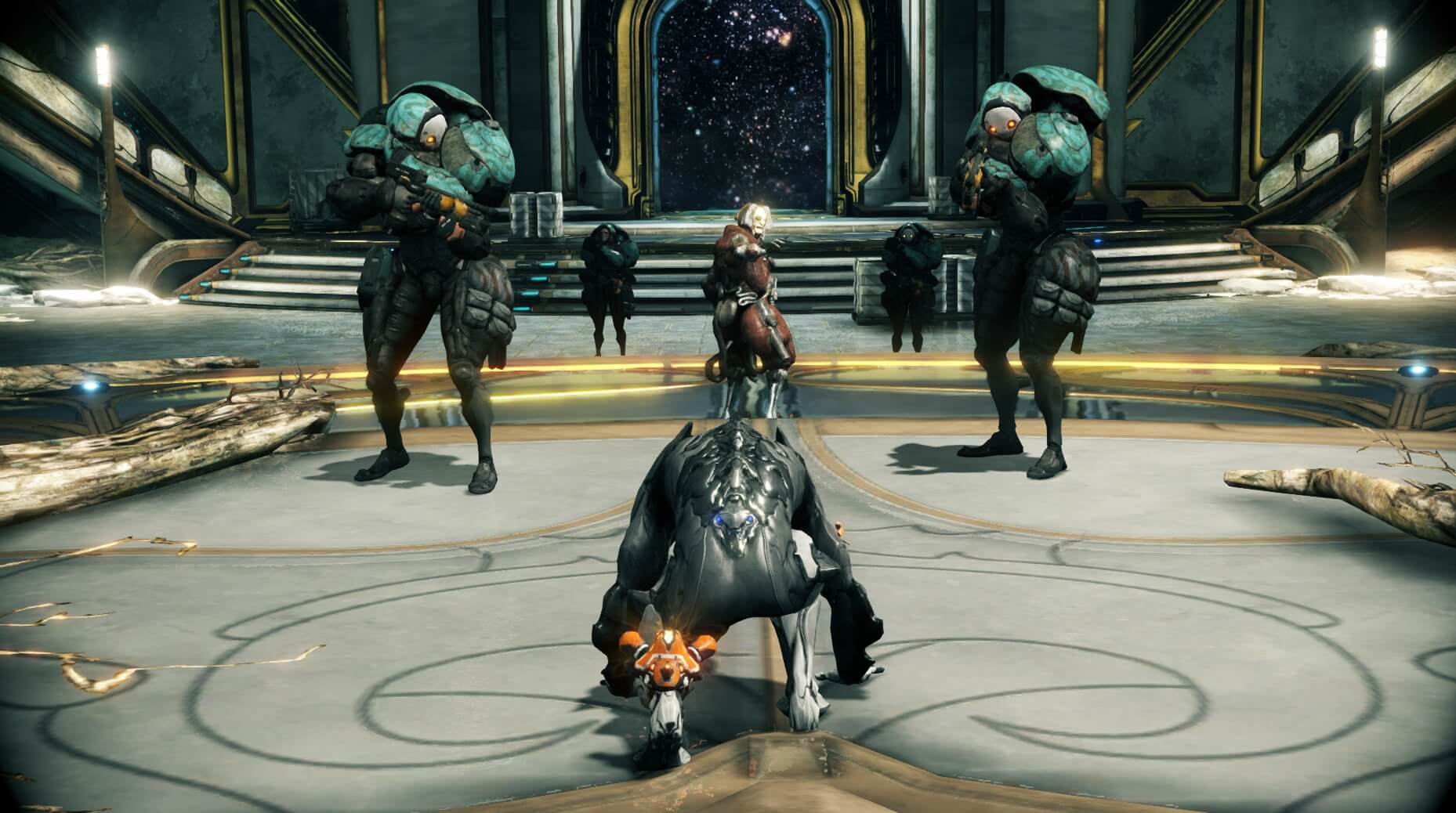
The interface capture below is historical. It illustrates the density of information in a mission, not a promise that every icon or location is unchanged in the current build. For present control bindings, check your own settings rather than copying a button from an old screenshot.
Notice supplies without turning every room into a detour
Digital Extremes identifies lockers and breakable loot containers as sources of mission supplies and longer-term resources. Its current tips also encourage exploring and collecting useful materials. That gives you a reason to notice the room around the fight.
In a group, communicate if you need a moment to orient yourself. Explore with a purpose: look for something you need, then return to the objective. A beginner does not have to choose between ignoring the environment completely and inspecting every corner while everybody else wonders where the fourth player went.
Supply awareness and movement practice support each other. If you can reach a visible pickup and return along a route you understand, you are learning something more transferable than simply following another player's exact path.
A security terminal can interrupt the rhythm
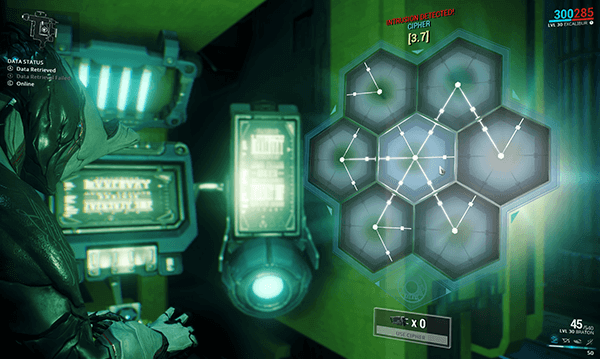
The Quick Start Guide includes hacking as a way to continue when a security lockdown blocks progress. Its pictured example uses a hexagonal tile puzzle. Treat that image as an example of a particular hacking interface, not a claim that all factions and terminals use the same puzzle.
When a mission stops moving, look for the actual objective or terminal prompt before assuming the route is broken. Slow down long enough to read what is on screen. Movement is useful for reaching the problem; it does not replace understanding the interaction once you arrive.
If the terminal is unfamiliar, read its prompt before rushing the first input. You have changed from moving through a space to solving an interaction, and the screen deserves a fresh look.
Leave yourself room to help
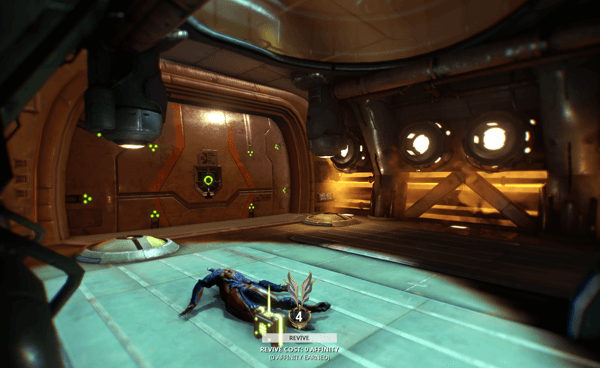
A fallen teammate changes the immediate priorities of a room. The official beginner guide includes revival among the things a player needs to recognize. Look at the surrounding enemies and your approach instead of charging directly into the same dangerous position without a plan.
Tell the squad what you are doing. Someone covering the approach can matter more than two players arriving at the same danger without noticing each other.
Once the route, objective and movement start making sense together, the squad's pace becomes less mysterious. You have more than one way to cross the room, and a better reason to choose among them.
Find your next game at Zypher
Browse games at Zypher Trading Video Games for your next shelf addition. Check the platform, edition, selected condition and included items on each listing before buying.
Making room on the shelf? Check Zypher’s Buy List and sell your old games.
Sources and image credits
- Digital Extremes: Quick Start Guide and archival illustrations
- Digital Extremes: ten tips, including Bullet Jump
- Digital Extremes: content-use policy
Warframe images remain © Digital Extremes and are used for this free guide under its linked content policy. Zypher is independent and is not sponsored by Digital Extremes.
Sources checked November 16, 2026.


