King Knight can turn an impact into an upward spin. He can also turn a promising card position into a lost gem if you stop looking one move ahead. Shovel Knight: King of Cards asks for two kinds of spatial thinking, and neither is helped by assuming the crown has already done the work.
This guide covers King Knight's campaign and its Joustus card game. It is separate from Shovel of Hope and Plague of Shadows, with moves and rules checked against Yacht Club Games' two instruction manuals.
Bash toward a useful collision
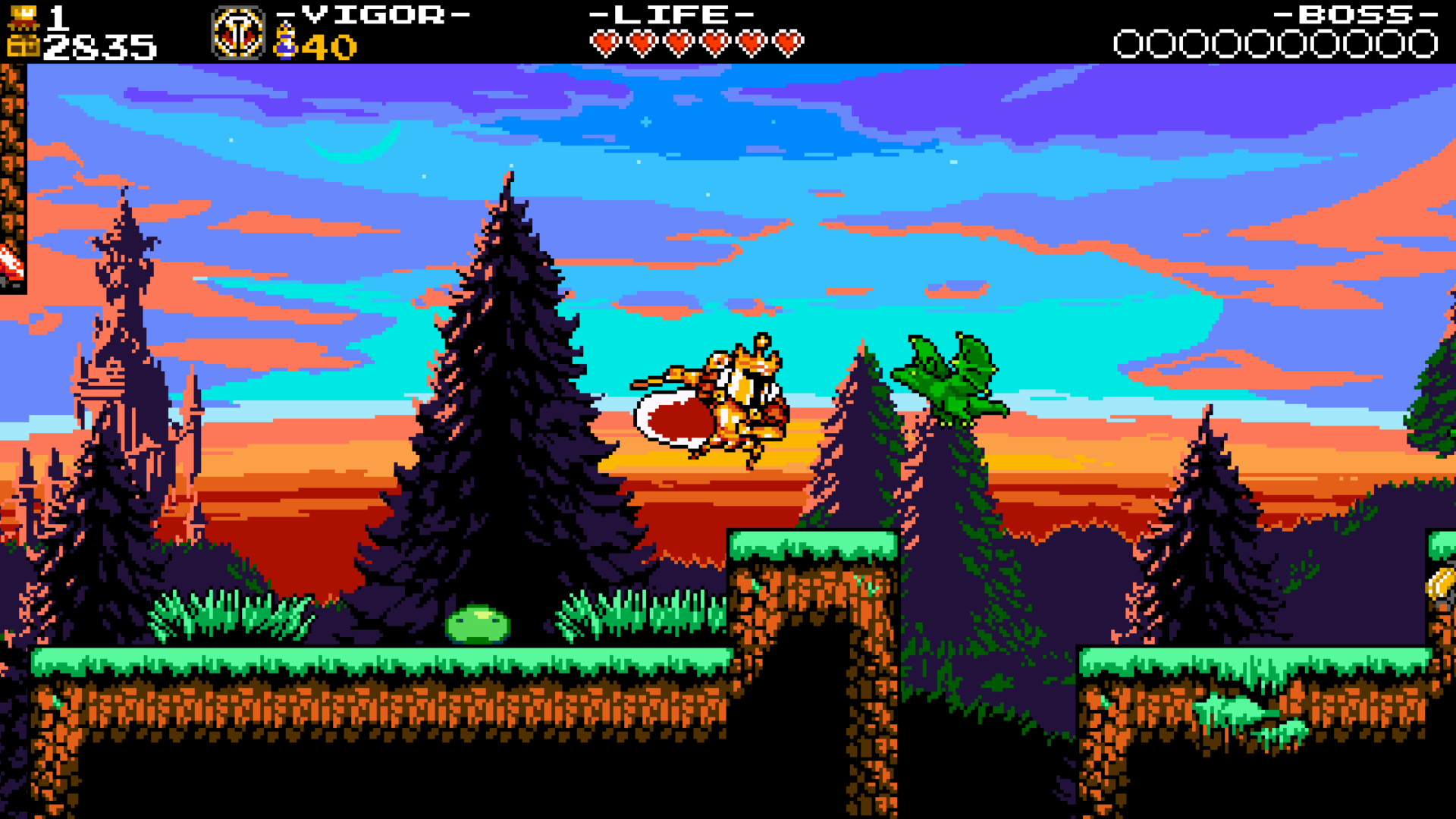
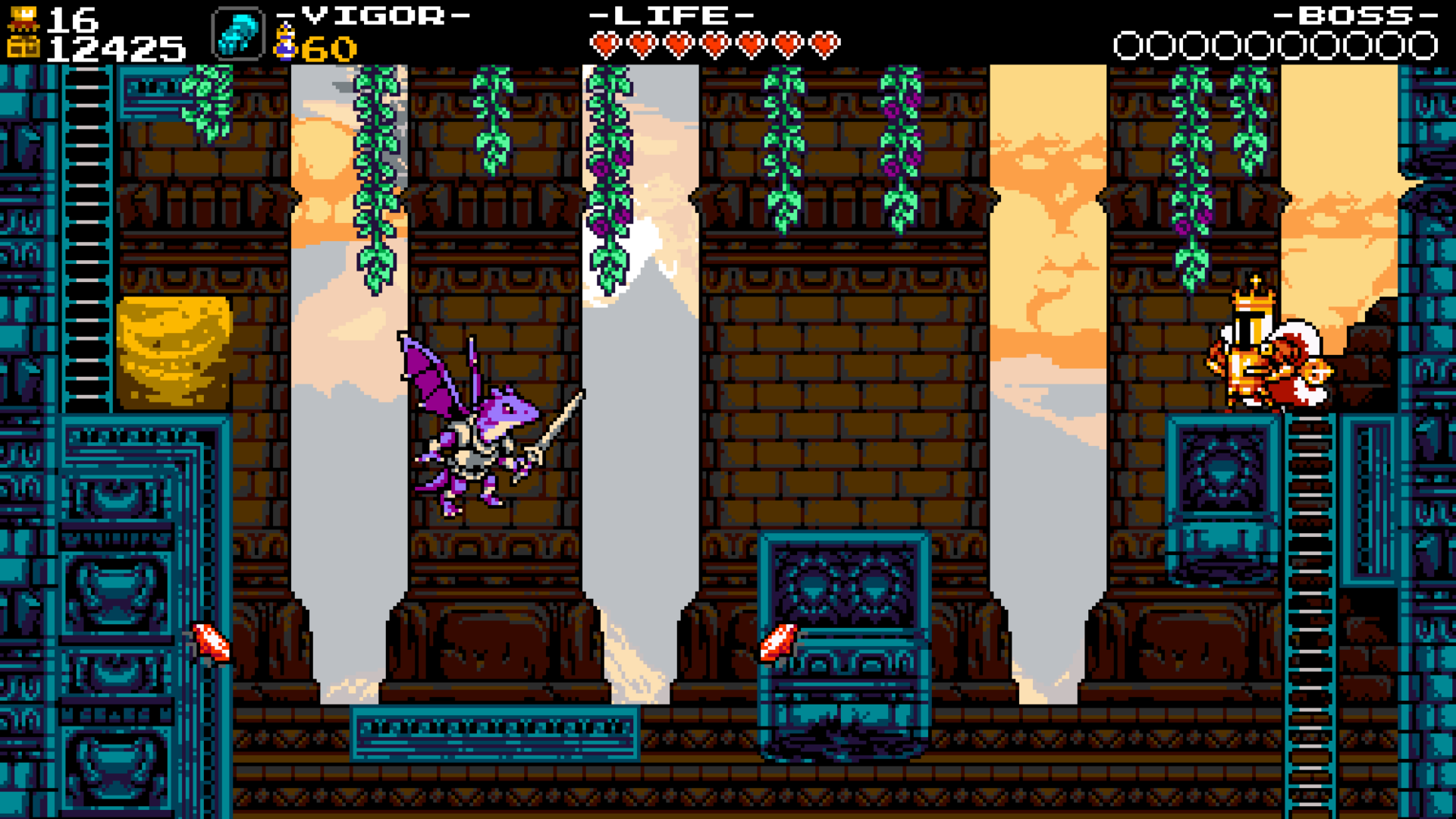
The Shoulder Bash works on the ground or in the air. Bashing into most enemies, walls or objects sends King Knight upward into his Spin. While spinning, he can damage enemies and break blocks beneath him; bouncing on an enemy restores the ability to Bash.
That makes the target of the bash part of the route. Before committing, look beyond the impact: where will the upward movement put you, and what is underneath the descent? A wall can be a tool for gaining height, but it does not automatically provide a safe landing.
Start with a short, visible sequence: jump, bash toward a useful surface, read the spin and settle on the next platform. Once that movement is predictable, the same idea can cover a more elaborate path. There is no need to audition every pit at full speed.
Roll when you want to keep the route low
The manual gives the bash another outcome. Pressing the action again during it produces a roll, letting King Knight pass through dirt or enemies without stopping and entering the spin. It also warns that the roll needs a little runway.
The choice is therefore about what the next section requires. If you need upward movement, an impact and spin can be useful. If the route needs a low continuation, a roll may fit the situation better. Look at the obstacle before deciding which version of the move you meant to perform.
Practice that distinction where you can see the ground. Repeatedly changing direction, timing and target in the same attempt makes a mistake harder to diagnose. Give yourself a recognizable collision and watch whether the result matches the path you wanted.
Use the full space around the character
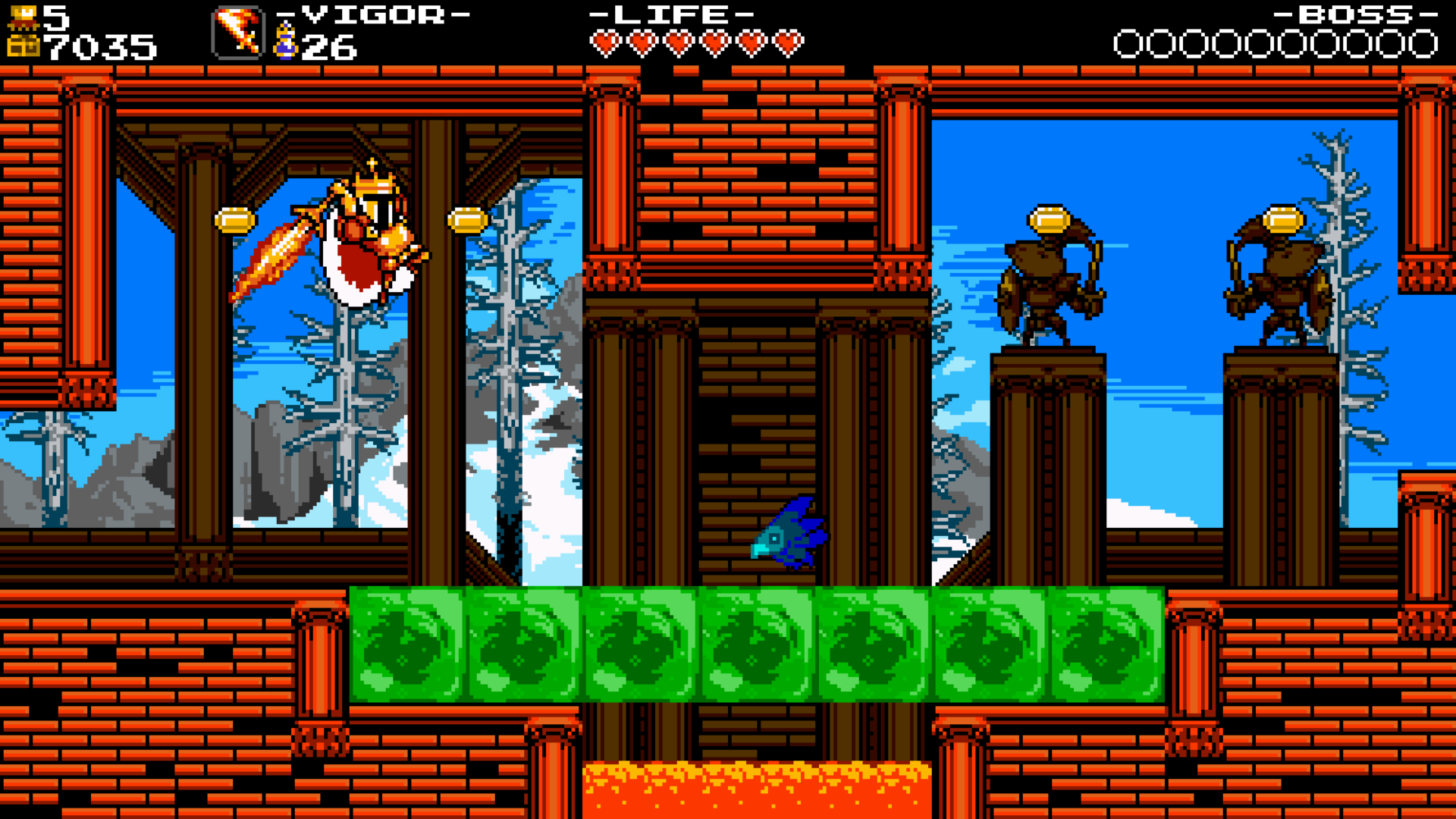
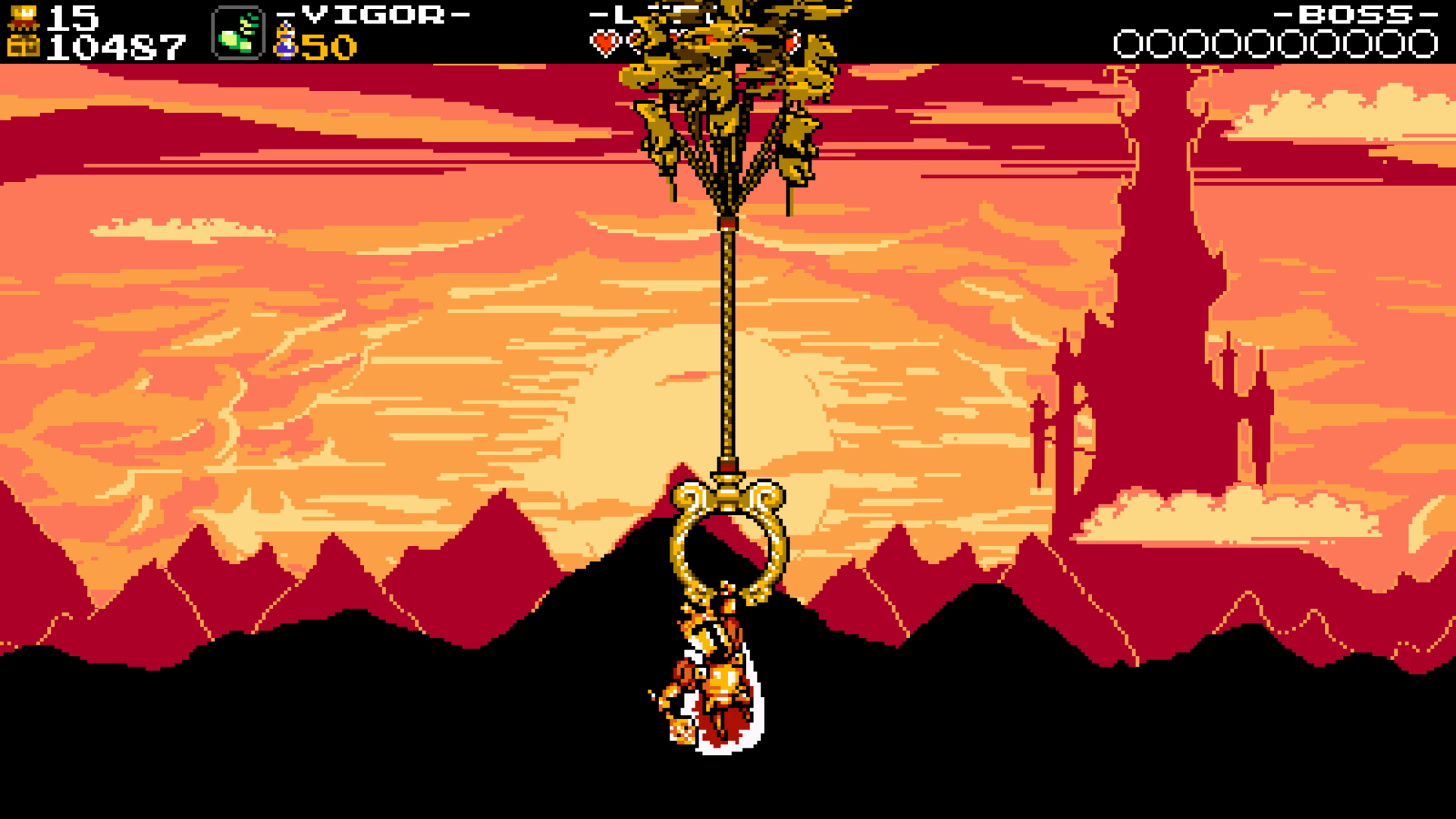
The official screenshots show rings, ladders, open gaps, narrow ledges and enemies at different heights. That is a reminder to read the entire immediate route, rather than watching only King Knight's armor and the nearest threat.
The manual also allows a bash from a ladder. That connection is worth remembering when an area seems to offer several movement tools at once. You do not have to turn every transition into a fresh leap from the floor.
Heirlooms provide additional options and use Vigor. Try a new one with a particular problem in mind, then watch its cost. An extra tool is most useful when you understand which gap in your ordinary movement or combat it is meant to cover.
Joustus begins with the gem, not the portrait
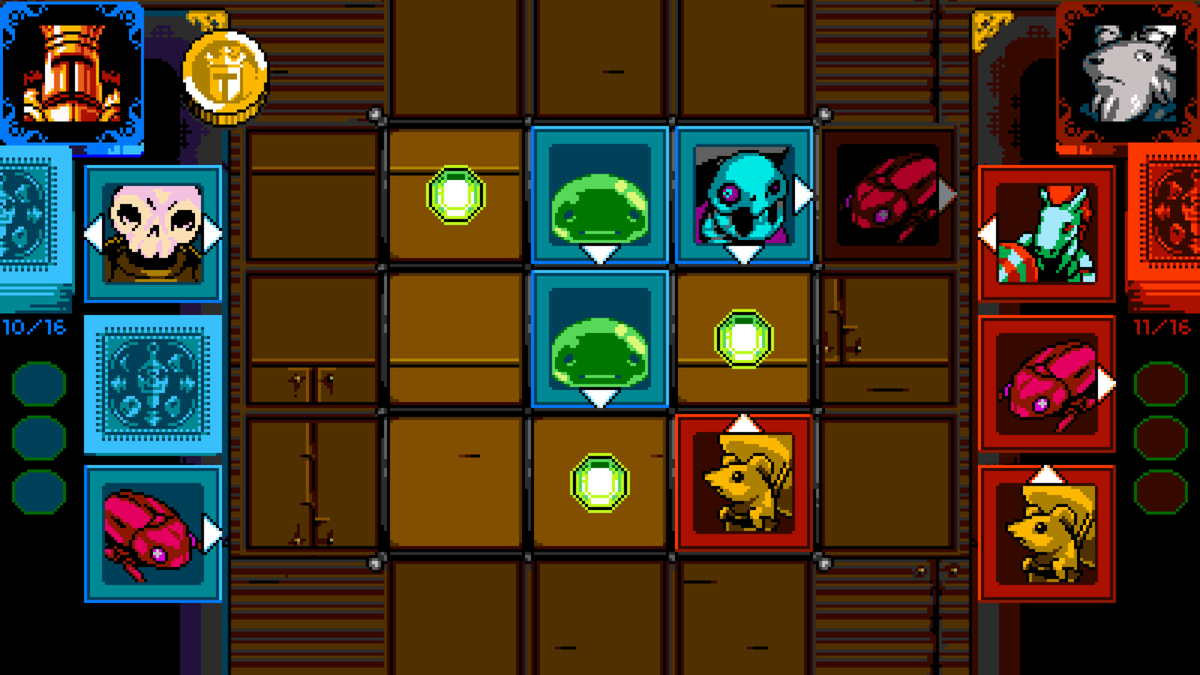
In Joustus, the goal is to finish with more gems claimed than the opponent. A card claims a gem by covering it, but you cannot simply place a card directly onto the gem: it must be pushed there. Arrows show the directions a card can push, and opposing arrows can block that push.
That changes how to read an attractive position. Look for the square a card would need to occupy before the push, and ask whether the required direction is available. The route onto the gem matters as much as the card sitting there afterward.
You can push your own cards or the opponent's. Treat every nearby card as part of the board's geometry before deciding it is merely an enemy piece. A move can open a useful approach, close one, or leave the opponent an obvious reply.
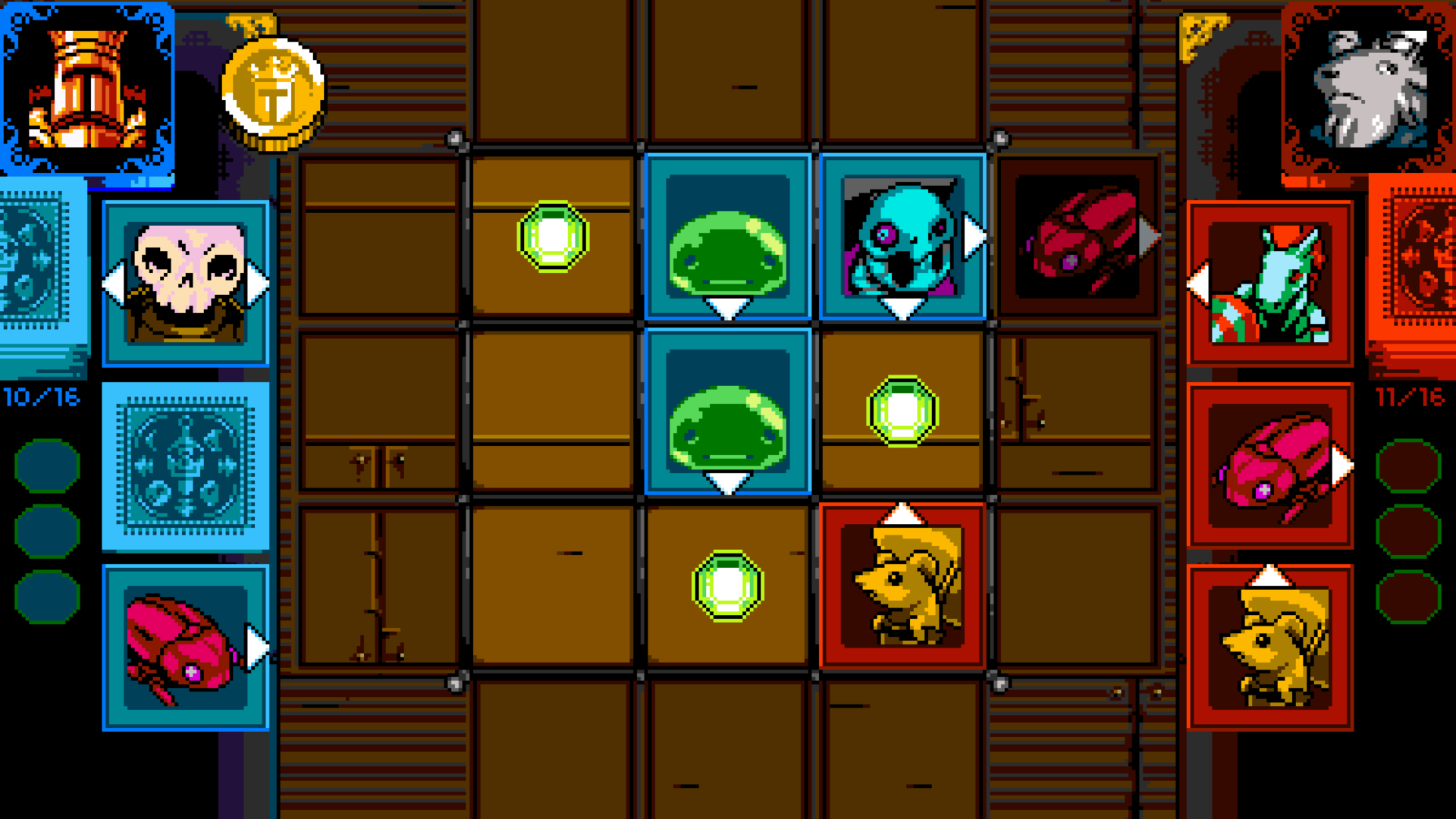
A claimed gem is not a locked result
The opponent can push a card off a gem and take its place. The manual also rules out passing when a valid move is available. A position that looks comfortable now may force an unpleasant move later.
Before taking a gem, examine the likely answer. Is the claiming card protected in the direction an opponent would want to push? Are you leaving an easy insertion point? Would a less dramatic placement reduce the opponent's useful options?
Use Card Info when unfamiliar properties appear, including cards in the opponent’s hand. Special abilities can change what looks safe on the board. Read the actual card before building a plan around an ordinary arrow rule.
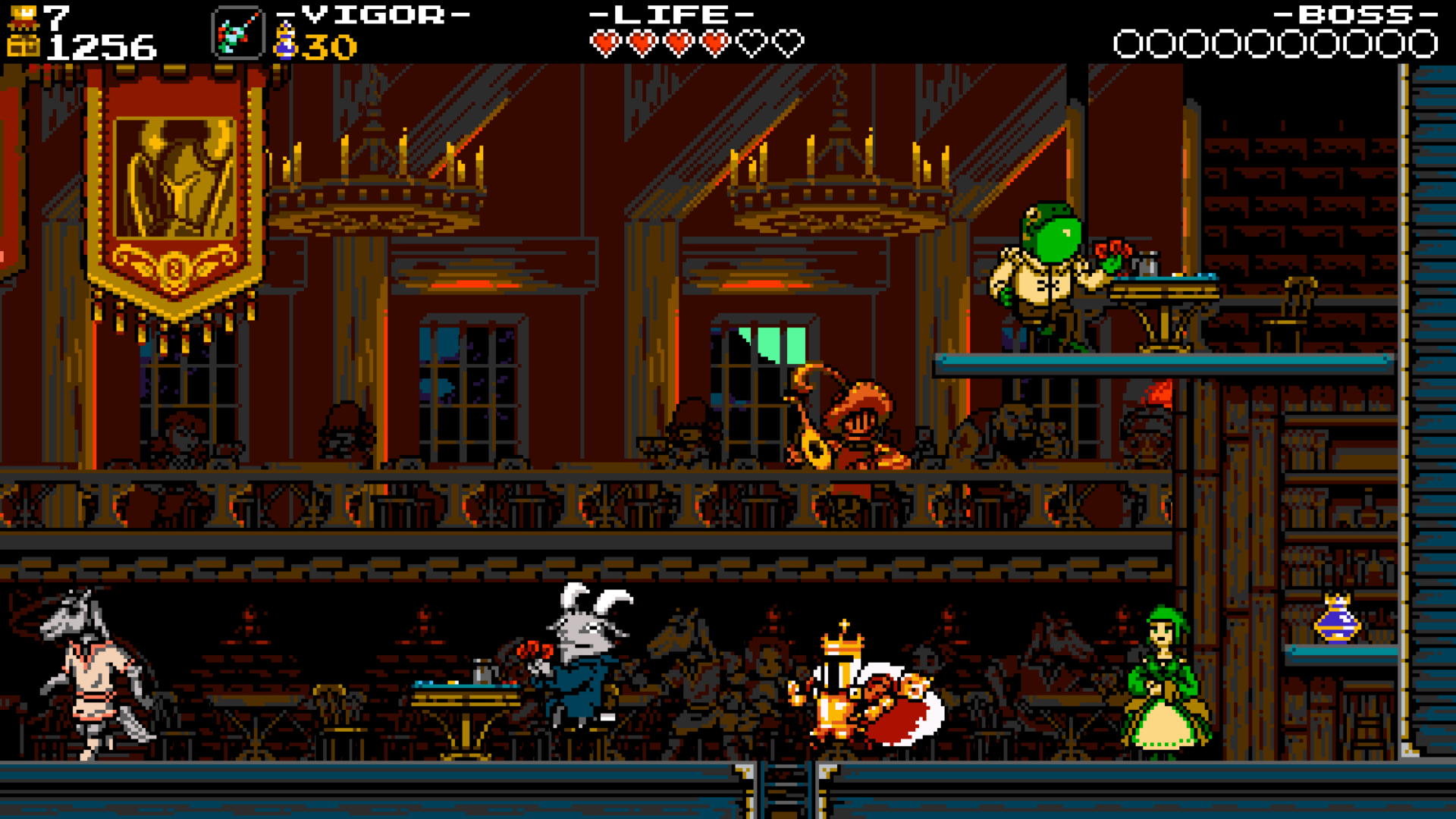
Know what a loss actually costs
Winning normally lets you choose an opponent's card from the board; losing costs one of yours. Yacht Club's manual says lost cards can be reclaimed from Chester for a fee. A setback is a reason to reconsider the deck and the board, rather than assuming the collection has vanished beyond recovery.
The game also rewards a Gem Sweep when you win while claiming every gem on an eligible multi-gem board. That is an optional ambition, not a requirement to make every match respectable. A narrow win can be a useful result while you learn.
For the platforming and the cards alike, positioning gives the next action a purpose. Notice the collision that sets up the landing, or the push that sets up the claim. King Knight has enough confidence for the whole room. You can supply the planning.
Find your next game at Zypher
Browse games at Zypher Trading Video Games for your next shelf addition. Check the platform, edition, selected condition and included items on each listing before buying.
Making room on the shelf? Check Zypher’s Buy List and sell your old games.
Sources and image credits
- Yacht Club: King of Cards instruction manual
- Yacht Club: Joustus instruction manual
- Official King of Cards press kit
Sources checked November 16, 2026.


