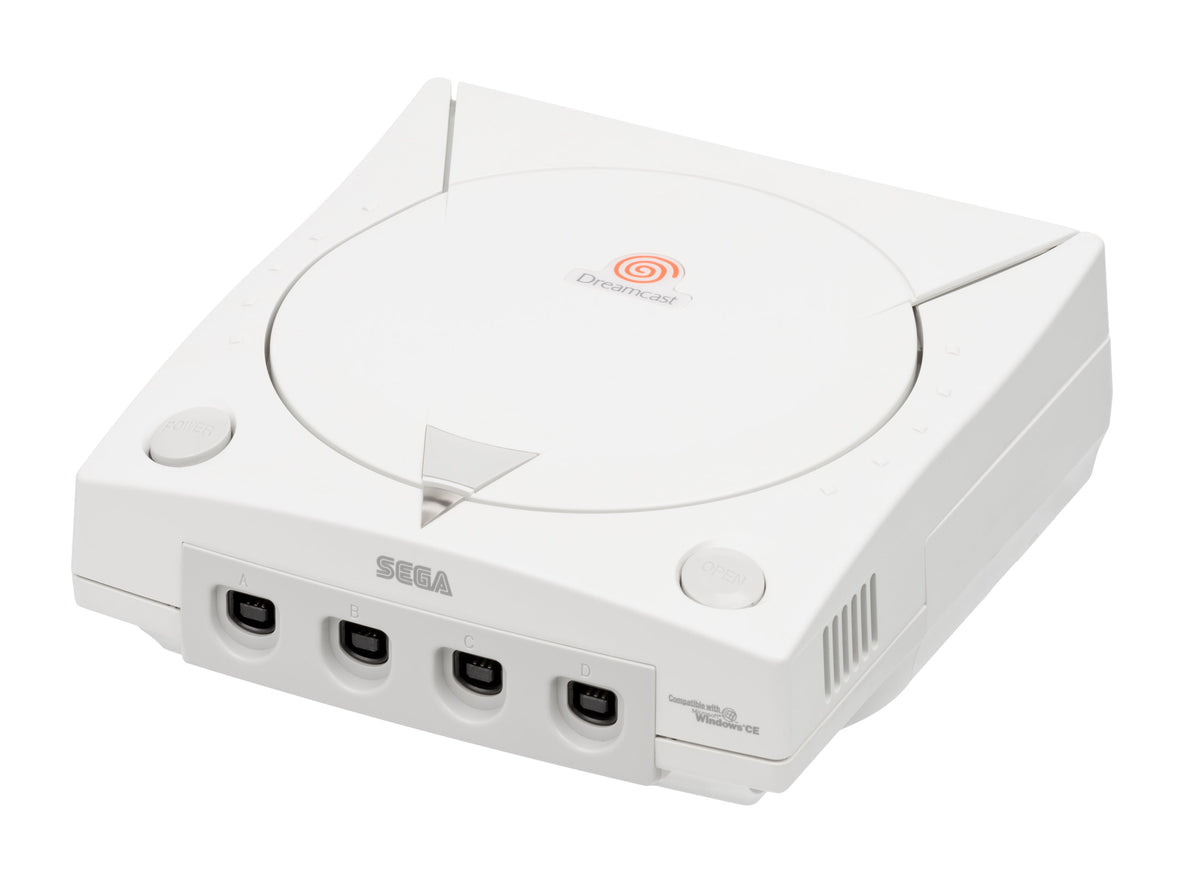
A modem on the side, a screen in the controller and four sockets across the front: Dreamcast wears its ambitions where you can see them. That makes Sega's retreat from consoles feel especially abrupt. The company built a machine with several ideas about where home gaming could go, then stopped manufacturing it in March 2001.
But the factory shutdown, the end of new games and the usefulness of a surviving console are different questions. Dreamcast becomes much easier to understand when those dates stop getting squeezed into one obituary.
Featured photograph: North American Sega Dreamcast console by Evan-Amos, public domain.
The ambition was built into the hardware
Dreamcast launched in Japan on November 27, 1998. Sega's hardware history describes a standard modem, web browsing and chat alongside networked games. Online access was part of the machine's identity, rather than an idea waiting for a later console generation.
The Visual Memory Unit, or VMU, made another promise tangible. Your save device could have a screen of its own. Taken together, those features suggest a company trying to expand what happened around a game: communicating, carrying information and looking somewhere other than the television.

A distinctive console still had to pay for itself
Sega's 2018 Dreamcast retrospective gives a more complicated explanation than one bad feature or one rival. It describes initial component shortages, too few hits capable of driving hardware sales, PlayStation 2 competition and a shortage of third-party releases.
It also identifies the financial squeeze: heavy advertising, an early price reduction that delayed recovery of development costs, and spending on network infrastructure and the provider business. This is Sega's retrospective account, not a claim that every factor carried equal weight.
On January 31, 2001, Sega announced the restructuring that ended Dreamcast production and its home-console hardware business. The useful conclusion is narrower than “innovation failed.” Distinctive features did not generate enough momentum to sustain the business Sega had built around them.
Sega changed the business, not its entire identity
The exit from home consoles did not mean Sega stopped making games or abandoned every kind of hardware. Its arcade history of 2001 onward places the home-hardware withdrawal alongside continuing arcade releases, including Virtua Fighter 4 and Virtual On Force.
That distinction matters when describing the loss. Sega gave up the attempt to sell the home platform on which its games competed. The creative teams, arcade activity and software business were a different matter. Calling this simply “Sega dying” hides the particular gamble that ended.

March 2001 is not the last page of the game library
Sega's Japanese software catalog records Sonic Adventure 2 on June 23, 2001, Shenmue II on September 6, 2001, and Sakura Wars 4 on March 21, 2002. These are Japanese release dates, not a worldwide calendar. All three nevertheless show why production ending and software ending cannot be treated as the same event.
The Japanese third-party catalog stretches further. It lists Under Defeat on March 23, 2006, followed by Triggerheart Exelica on February 22, 2007, and Karous on March 8, 2007. That is evidence of a long commercial tail, not evidence that every year had the breadth or support of the launch period.
For collectors, region and release history therefore belong in the description of a copy. “A Dreamcast game” tells you the platform; it does not tell you when that version arrived or which market it was sold into.
Keep the way of playing with the game
Sega's peripheral archive explains that the controller has two expansion slots and that the upper one exposes the VMU display. The VMU can store data and transfer it directly to another unit. It is worth keeping track of both the physical device and the saves already on it.
The keyboard offers an even clearer example of hardware shaping software. Sega identifies it as required for The Typing of the Dead. A game collection can look complete on a shelf while still lacking the input device needed for the intended experience.

What should an owner check now?
Start with the exact console, game version and intended setup. Our model-first video-cable guide explains why identifying the machine and display comes before choosing a connection. Then check the game's own packaging or manual for its controller and save requirements.
Ask for a demonstration of the functions you actually need, including loading a game and saving and reloading progress. Preserve existing saves before experimenting; our history of game saves explains why the storage medium deserves attention alongside the disc.
Finally, treat an old network-support mark as historical information. Sega's catalog records what a release supported, not a current service guarantee. This article does not establish present-day server availability or promise that connecting the original modem will restore an online mode.
Dreamcast's business ended sooner than Sega intended. A surviving collection tells a less tidy story: a console, games released on different sides of the shutdown, and specific devices that shaped how those games were played. Keeping those distinctions intact is more useful than either dismissing the machine as a failure or pretending its problems never mattered.


