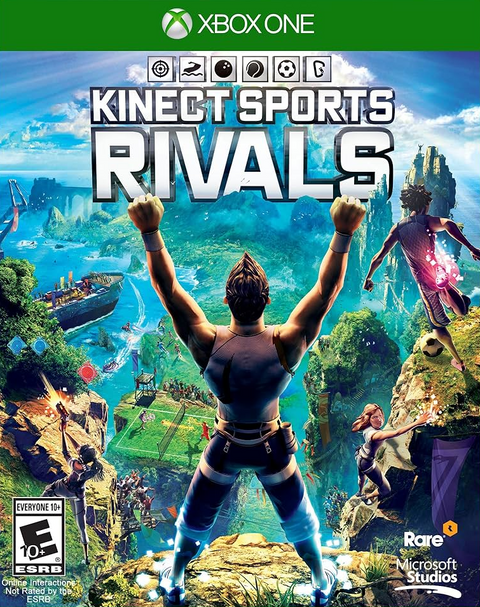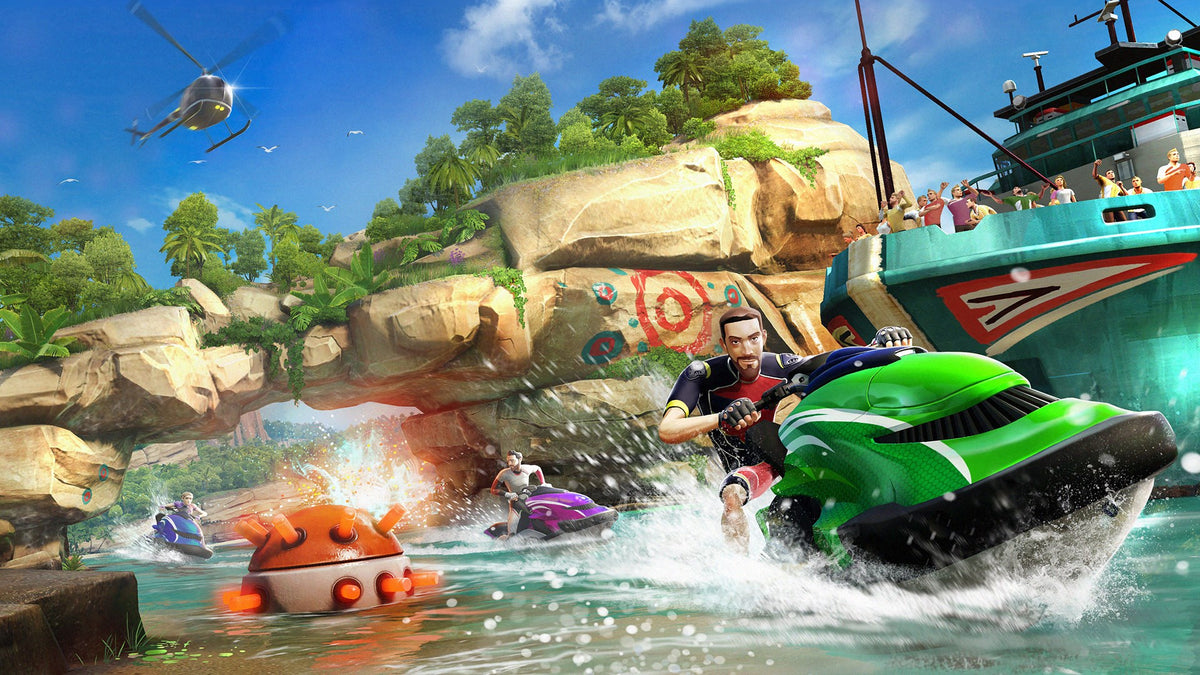
Kinect Sports Rivals asks a wonderfully specific question: what if your sports-game character looked like you, and the controller was mostly your body? Rare built an entire island of competitions around that pitch. The catch is that the game still needs the Xbox One Kinect setup it was built for. Owning a newer Xbox does not solve that part.
That makes Rivals an interesting stranded showcase. Its six sports and personalized Champions belong to a particular moment in Xbox history, when a camera was supposed to be a normal part of the console. Here is what the game actually offered, what changed around it, and what a used copy means now.
A sports island built around your Champion
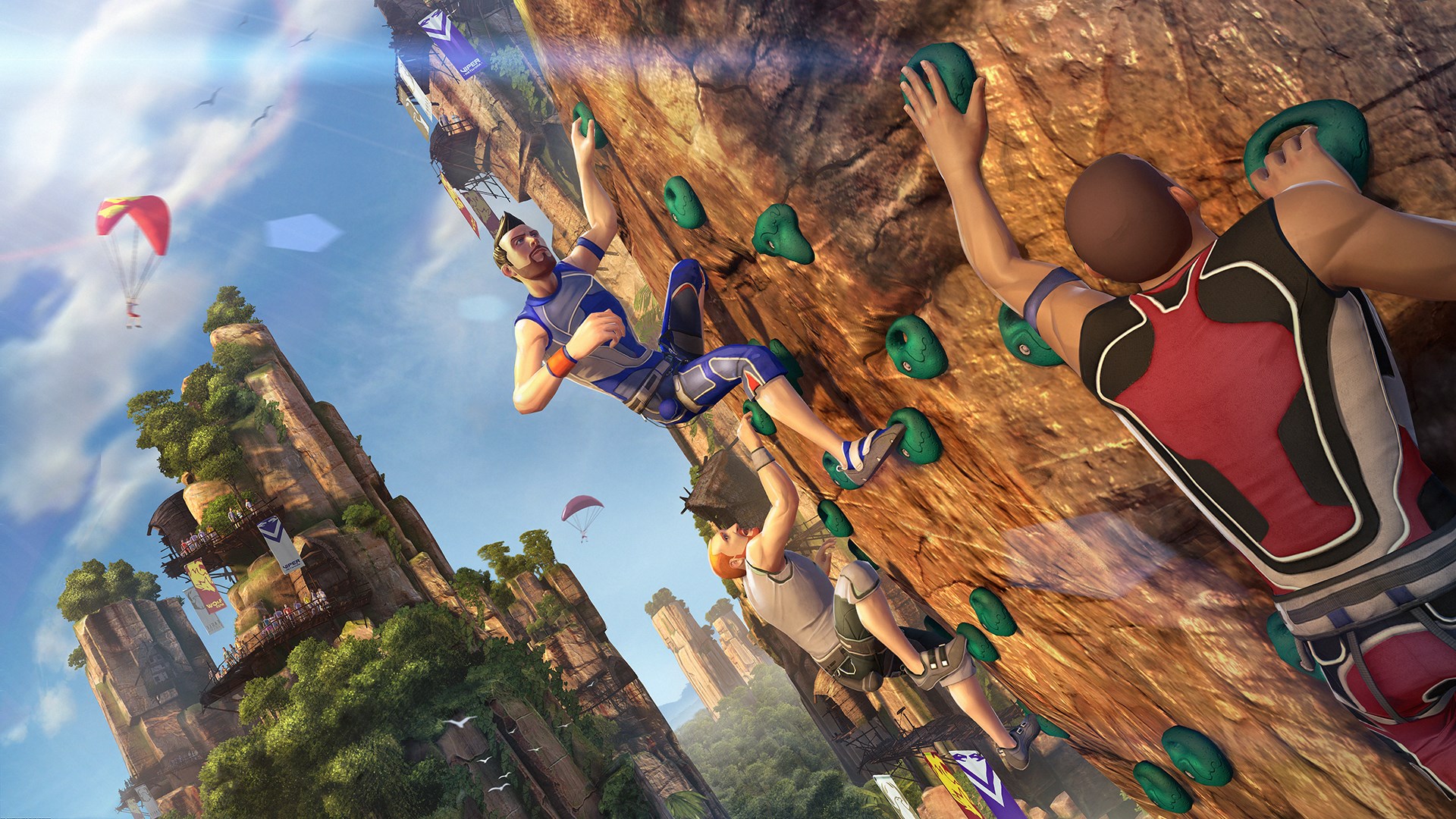
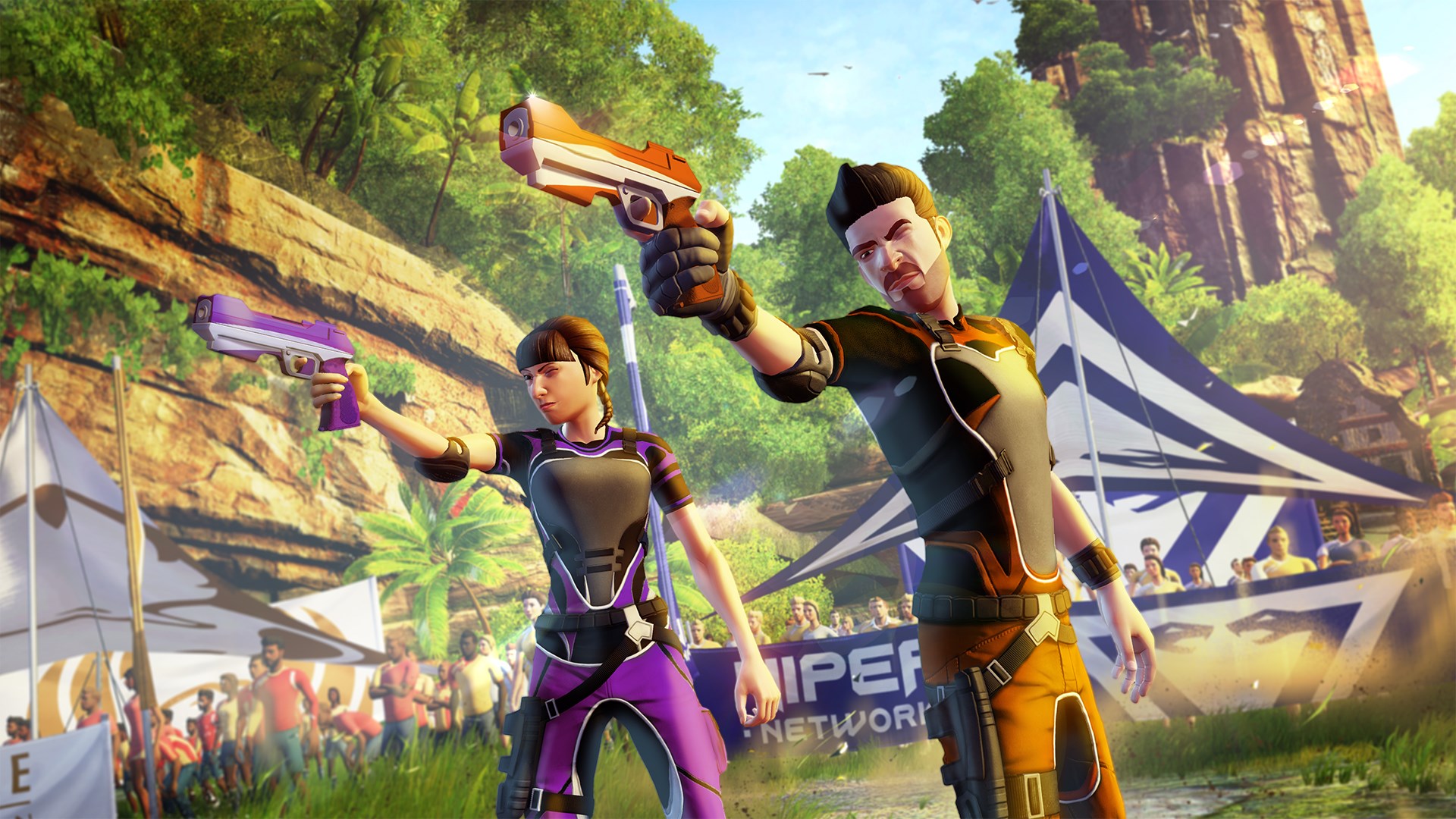
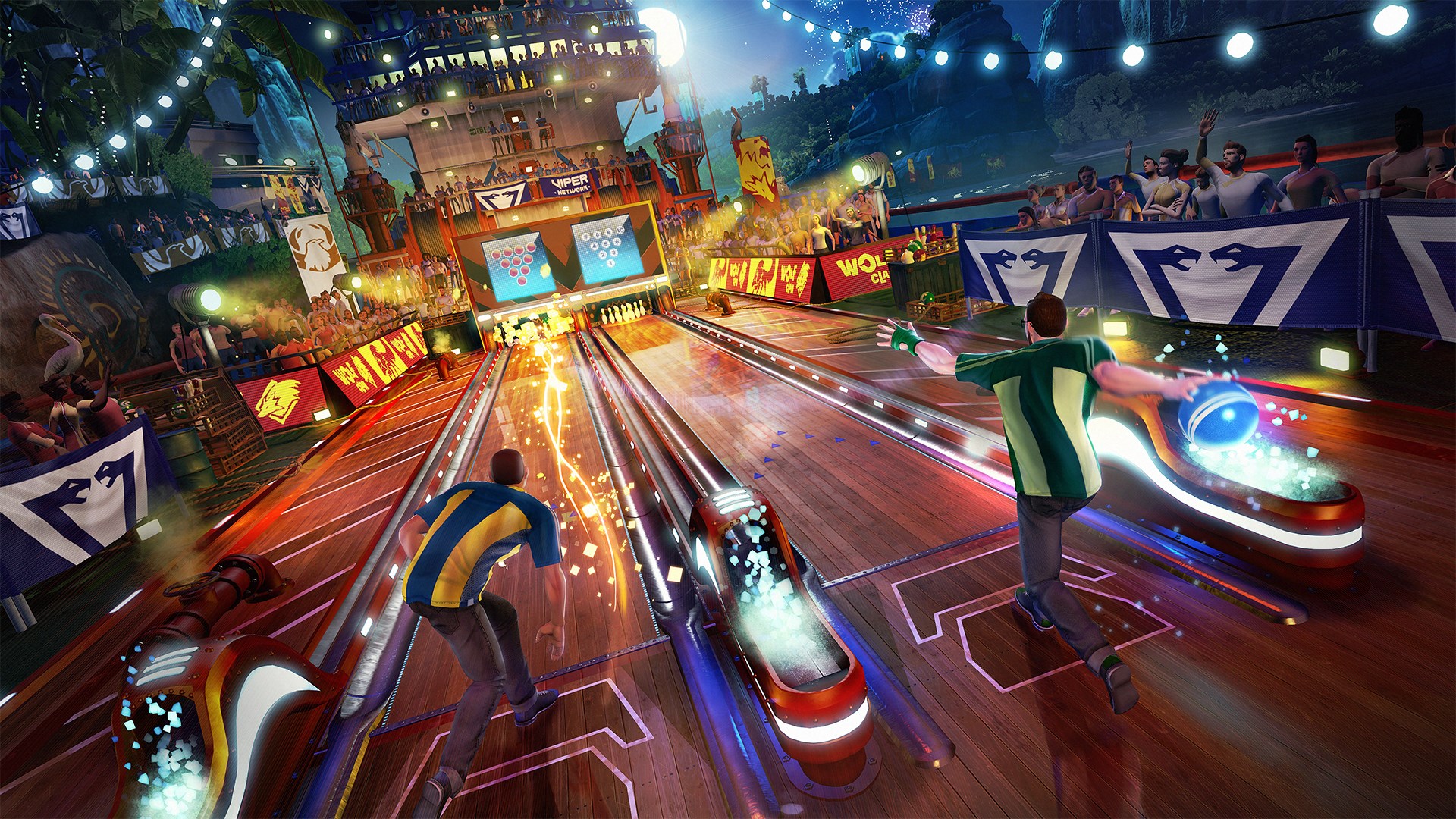
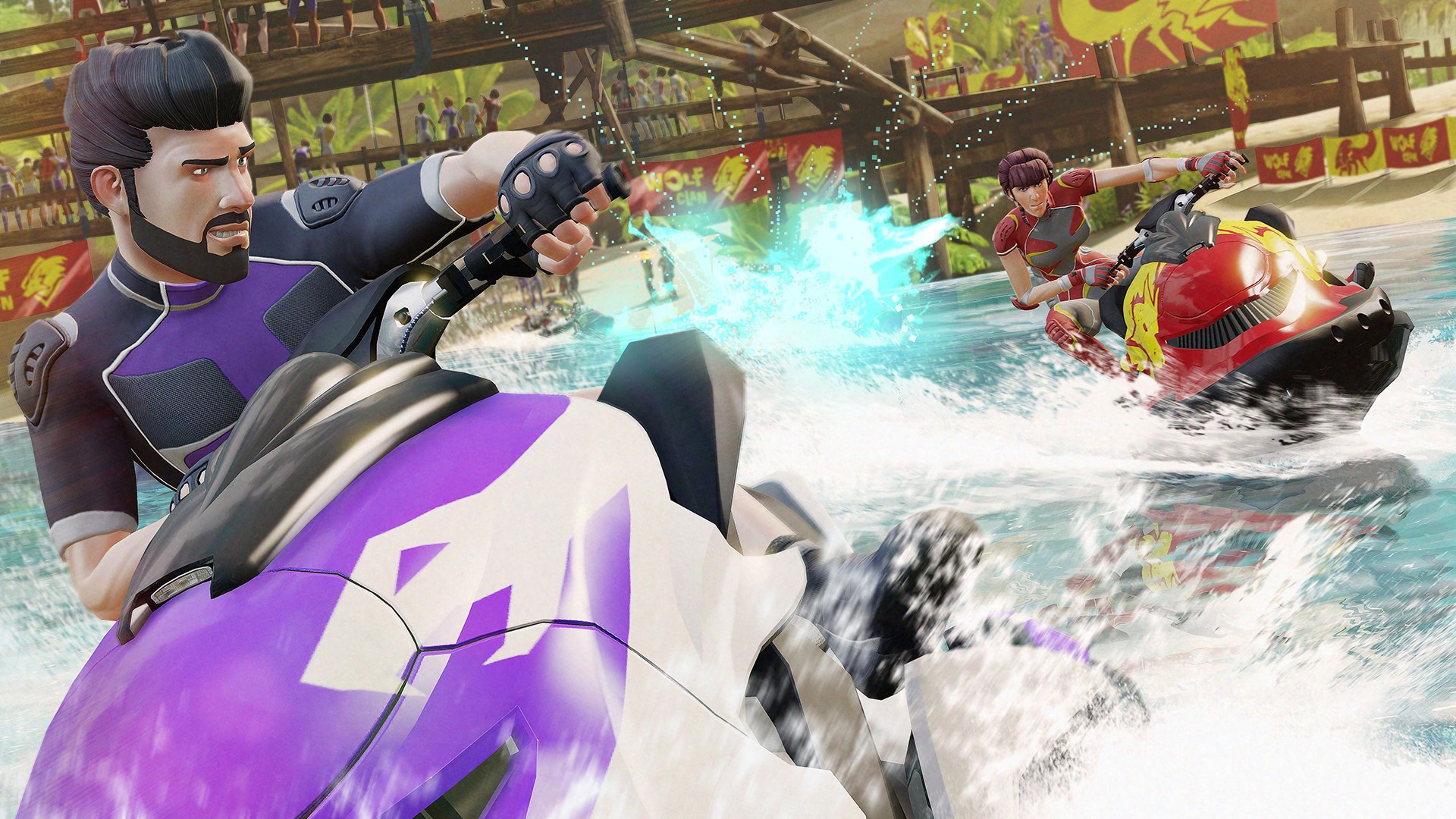
Microsoft launched Kinect Sports Rivals in North America on April 8, 2014; Europe followed on April 11. The developer was Rare, and the six-event lineup was Wake Racing, Climbing, Tennis, Bowling, Soccer and Target Shooting. This was a full game built around motion input, rather than a little camera extra tucked into a conventional controller game.
The personal hook was the Champion. Kinect scanned a player's likeness and turned it into a stylized competitor. That matters to the design: the avatar was meant to make a race or climbing contest feel like your character's rivalry, rather than a generic athlete's afternoon. The full game's three teams, Eagle Legion, Wolf Clan and Viper Network, gave that competition an identity beyond a disconnected sports menu.
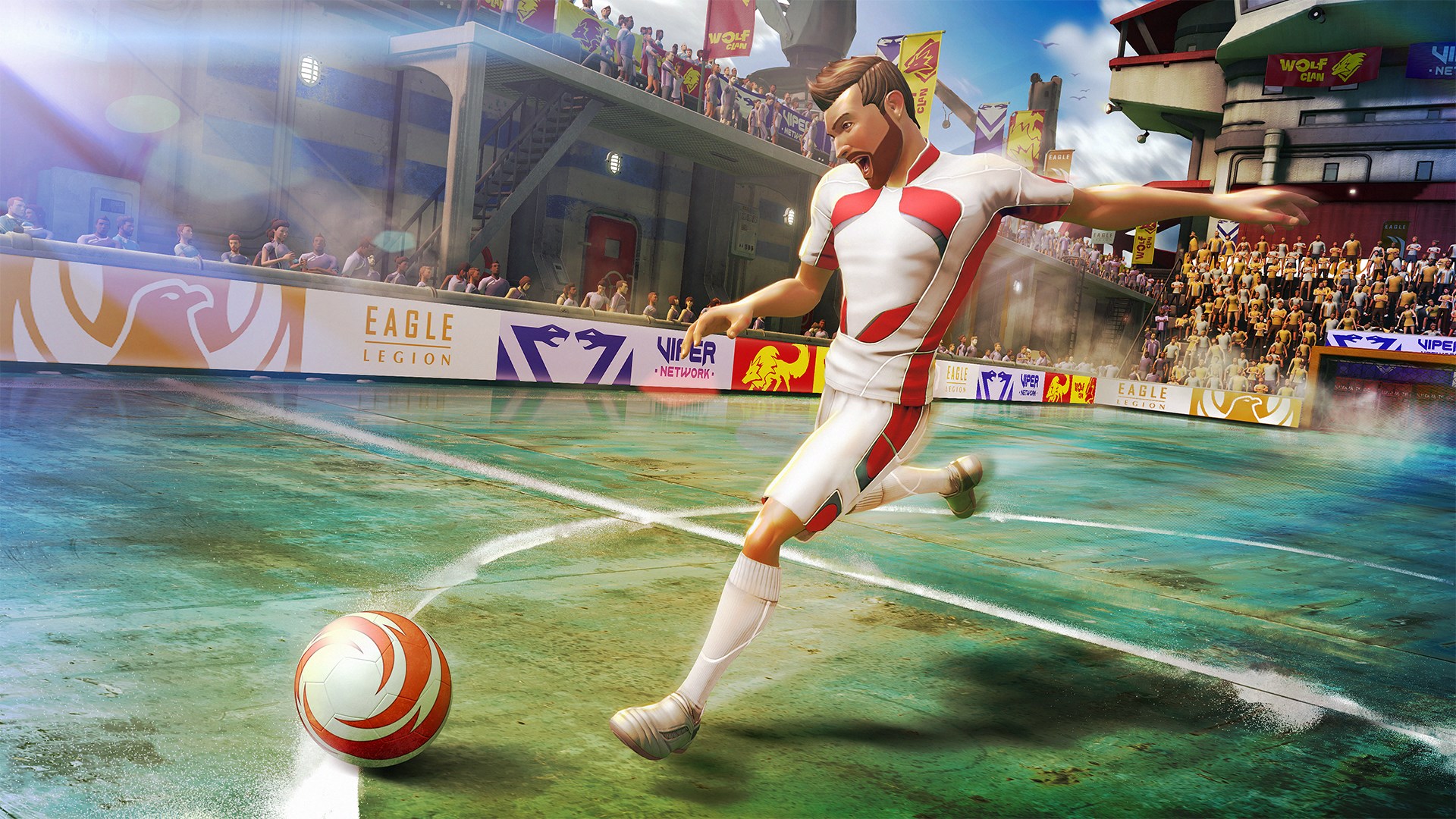
As an editorial proposition, that is more coherent than simply asking people to wave at a television. The sports, the character and the input method all support the same idea. It also makes the game unusually dependent on a piece of hardware that a box on the used-game shelf cannot provide.
The hands are the controls, with some important specifics
The official Wake Racing demo manual gives a useful concrete example. You hold your arms as if gripping handlebars. Closing the right hand accelerates; opening it slows or stops. Steering involves pulling one hand back while pushing the other forward, rather than turning an imaginary car steering wheel. Leaning adds a sharper turn.
Those distinctions are the whole point of a motion game. A gesture can look obvious and still be the wrong instruction. Rivals expects a particular physical vocabulary, so learning the intended movement matters more than enthusiastic arm flailing. The manual also explicitly allows seated play for Wake Racing. That statement concerns that event, and should not be stretched into a promise that every sport uses the same seated setup.
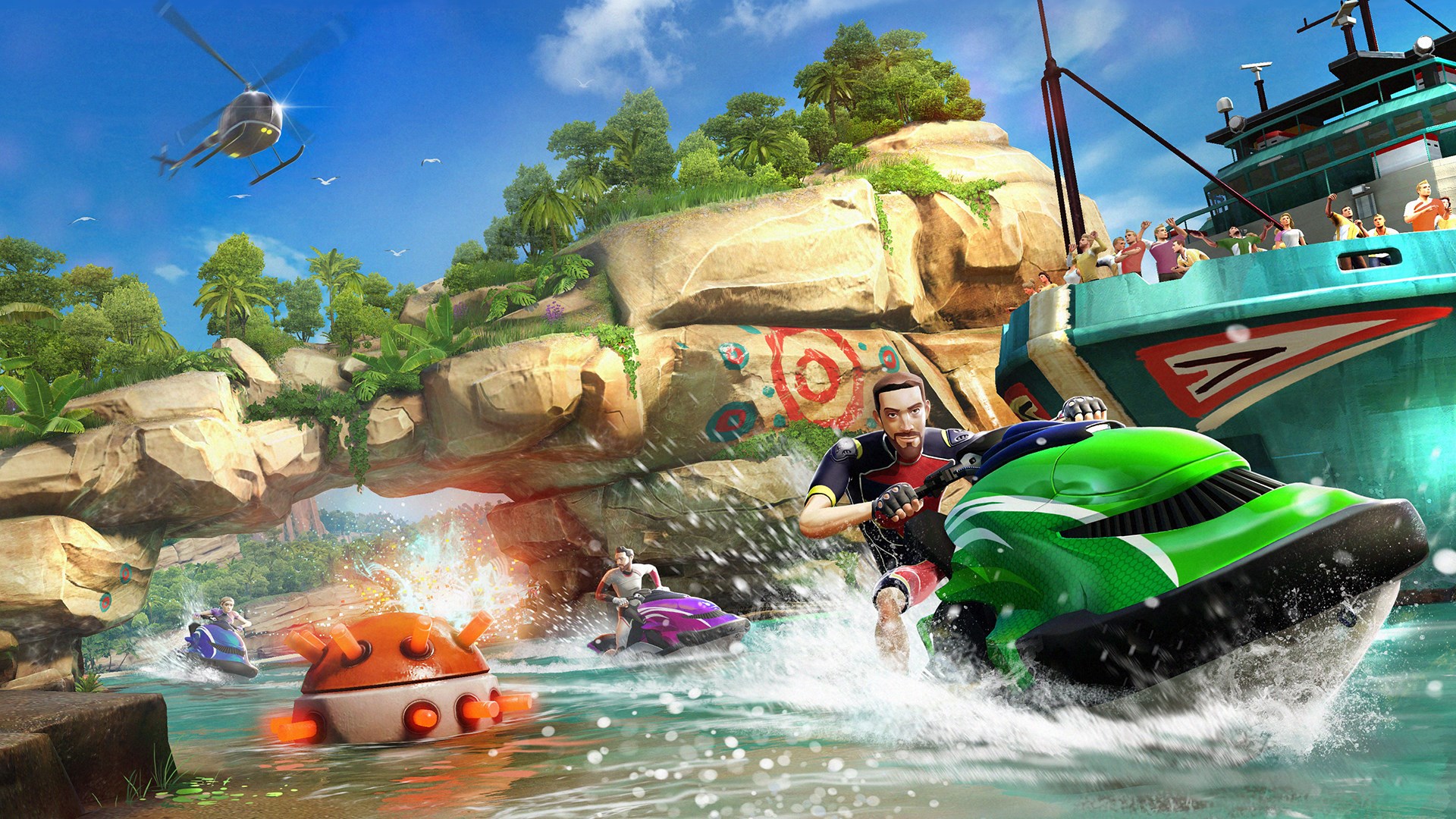
The demo is evidence for those Wake Racing controls, not a substitute manual for every retail sport. A controller can handle functions such as pausing; that does not turn the sports themselves into a normal gamepad experience. If the appeal is “a sports game I can play with the pad already on my sofa,” the Kinect requirement is a purchasing issue to settle first.
The console changed its default setup
On May 13, 2014, Microsoft announced an Xbox One option without Kinect, arriving June 9. That announcement came just over a month after Rivals launched. Microsoft described the change in terms of customer choice and feedback.
That timing matters, but it does not prove Rivals caused the decision. What it does establish is a change in the game's surroundings: a new Xbox One purchase would no longer necessarily put the required sensor in someone's living room. A showcase for included hardware had become a game for an optional accessory.
Our reading is that this is the game's central historical problem. The island, teams and body controls were designed to make Kinect feel like the main attraction. Once buying the console and buying the sensor became separate decisions, Rivals had to justify a more specific setup. A software disc could not lower that hurdle on its own.
A newer Xbox does not carry this game forward
The compatibility boundary is clearer than any argument over whether motion games were a fad. Microsoft's 2020 Xbox Series X compatibility announcement excluded Xbox One games that require Kinect. The current Rivals store listing identifies Xbox One as its playable console, rather than Xbox Series X or Series S.
For a collector, that changes the shopping question. First identify the Xbox One hardware and compatible Kinect connection you actually have. Then check the game and sensor requirements together. Do not buy an Xbox One copy on the assumption that the usual newer-console compatibility will take care of it.
When assessing a used bundle, check the console model, the sensor and the necessary connection hardware as separate items. Ask what is actually included rather than treating a photo of the game case as proof of a complete motion-control setup. The right software with the wrong hardware is still the wrong purchase.
What is worth preserving
Rivals is worth discussing as a specific Rare game: an island sports competition with a personalized athlete, competing teams and inputs that deliberately replace button presses with physical actions. Reducing it to “that Kinect game” loses the details that made its pitch distinctive.
Its present value is equally specific. A complete working setup preserves an interaction style that an ordinary controller and a later console do not automatically reproduce. For someone assembling that setup intentionally, Rivals is a relevant part of the Xbox One's history. For someone buying a loose disc and hoping the rest will sort itself out, the homework comes before checkout.
For the wider hardware story, read our Kinect retrospective. If you are shopping for Rivals, check the current Xbox One listing and its stated contents. Software does not include a sensor unless the listing explicitly says so. Browse Zypher's games, or use our trading and selling page when it is time to clear room for a different setup.