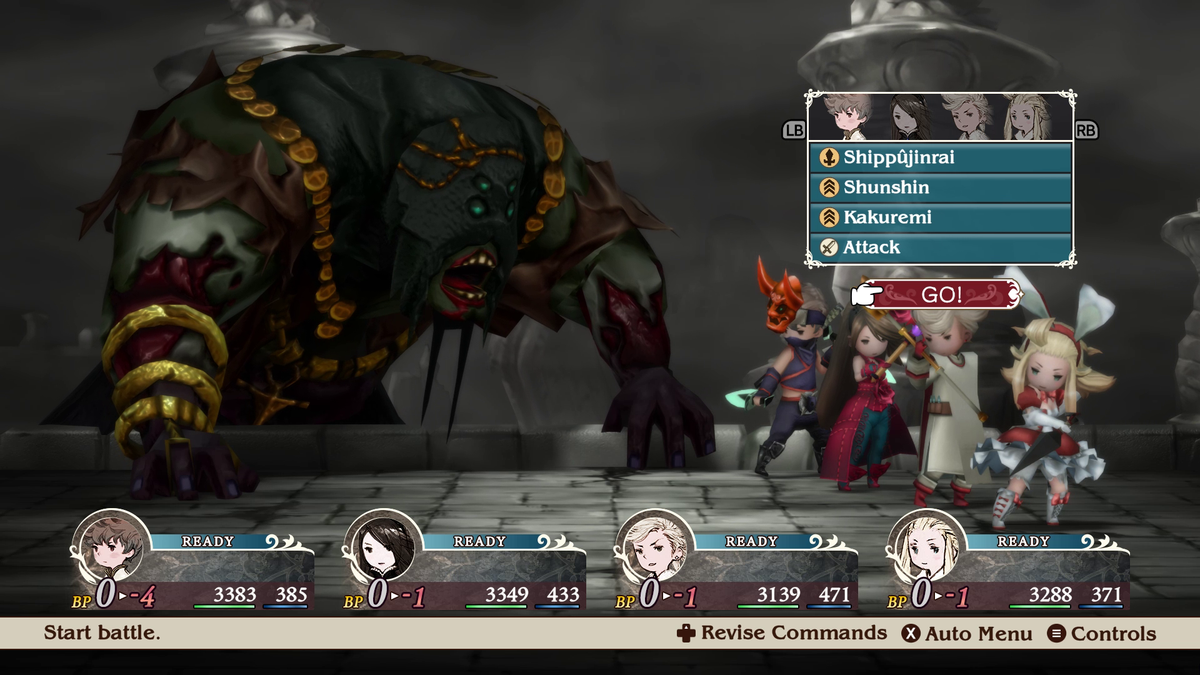
Default is a defensive command with a second job. In Bravely Default Flying Fairy HD Remaster, it also accumulates BP for later. Brave spends those points to increase how many actions you take in a turn. The useful decision is not simply whether to attack, but when several actions would accomplish more together.
This guide covers the remaster of the first Bravely Default, following Tiz and Agnès in Luxendarc. It is a separate game from Bravely Default II. Start by deciding what you need the next few actions to achieve, then match your commands and jobs to that goal.
Featured image: a battle in Bravely Default Flying Fairy HD Remaster. © SQUARE ENIX. Official publisher screenshot, unaltered; capture platform unspecified.
Give the saved actions a purpose
A bank of BP is useful because of what you plan to do with it. Before repeatedly choosing Default, identify a reason to save. You might want to concentrate attacks, prepare a recovery sequence or leave yourself a more flexible response to the next problem.
The defensive benefit means a Default turn is doing something now as well as preparing for later. That changes how we would judge a quiet-looking turn. An action without an attack animation can still improve the situation. The points are part of the result, not a consolation prize for missing a chance to swing a sword.
There is a limit to that logic: preparation is not automatically the correct answer. If an immediate action would solve the problem in front of you, delaying it merely because the BP system exists can be unnecessary. Decide what the saved actions are for before making saving your whole strategy.

Think in sequences instead of isolated commands
The publisher's PC description gives an instructive example of Brave's uses: combining resurrection and healing actions to recover from trouble. That is a different purpose from spending every extra action on damage. A character with the relevant abilities can be valuable because several actions work together.
For a simple planning exercise, describe the desired outcome in plain language before selecting the commands. Perhaps you need a fallen ally back and healthy enough to contribute, or a dangerous enemy removed. Then inspect the actual abilities and resources available to your party. The goal gives each selected action a job.
The right sequence depends on the enemy and the skills you currently have. Read the battle situation and your command descriptions. A clever-looking combination is not useful if the party cannot perform it.
Separate having options from spending them
Brave makes several actions possible in one turn. It does not require you to treat every opportunity as an instruction to use the largest sequence available. We would consider whether the additional actions are likely to change the outcome, rather than spending points simply to produce a busier turn.
That is particularly useful when learning the system. Try a deliberate sequence, notice what it achieved, and use that information for the next decision. If concentrating actions solved an immediate threat, you have learned something practical. If it produced little useful change, reconsider the objective before repeating it.

Jobs change what a burst of actions can achieve
The remaster includes more than twenty jobs, with abilities that can be mixed and matched. That gives the BP decision a second layer. What you can do with several actions depends on how you built the character performing them.
Instead of selecting a job only for its most attractive attack, consider what role it should serve in the group. Then look at how its available abilities work together. A setup meant to handle recovery should be judged by whether it can deliver that recovery, while an offensive setup needs a useful target and a reason to concentrate its actions.
When experimenting, change a manageable part of the setup and pay attention to the result. It makes it easier to understand which decision helped than replacing every job and ability at once and then trying to explain the outcome.

Use the remaster's conveniences deliberately
This version updates the interface and offers conveniences such as fast-forwarding event scenes. Square Enix also describes battles that players can speed up. Those options can make a return visit more comfortable, but we would leave enough time to read the information that matters while learning a new setup.
For PC, check the current listing's system requirements before purchase. It lists Windows 11 and specific graphics requirements; the game's roots on Nintendo 3DS do not establish compatibility with any older computer. The publisher also says original networking features have been retooled, so avoid assuming every feature behaves exactly as it did on the handheld.
Choose the turn you are preparing for
The Brave and Default loop becomes more interesting when a saved point represents a future decision. Defend with a purpose, spend on a sequence that does useful work, and let the jobs determine what that sequence can be. That gives the battle menu a plan beyond choosing the most expensive-looking move.
For your next physical adventure, browse Zypher's current game listings and check the exact platform and included items. You can also sell your old games through Zypher's general Buy List. The Steam link above identifies this PC remaster specifically.
Sources checked November 11, 2026: Square Enix's PC product description and requirements, March 2026 PC/Xbox announcement, and original remaster announcement. Tactical suggestions are Zypher's editorial recommendations. Images: official remaster press gallery, used under Square Enix's editorial press terms.


