A fight can end before you have worked out what went wrong. In Hades, that is a good reason to consider God Mode. Supergiant’s built-in option makes Zagreus more resistant to damage and becomes more forgiving after deaths, giving you more room to understand the next encounter.
The useful question is what you want that extra room to accomplish. Maybe you want to follow the story at a steadier pace. Maybe one boss keeps ending the evening. Maybe you enjoy experimenting with a weapon but spend most attempts paying for unfamiliar timing. Those are concrete reasons to adjust the experience in the original Hades.

Resilience changes the cost of a mistake
Supergiant’s FAQ describes God Mode in terms of damage resilience, with an additional increase after deaths. That is a meaningful distinction from making every threat disappear. The option is designed to let more players progress through an action game that can otherwise be demanding.
Our recommendation is to connect the setting to a particular frustration. If you repeatedly lose track of an attack during a crowded encounter, extra resilience can give you another opportunity to notice it before the attempt ends. The point is to make the feedback readable.
You do not need to justify the choice by promising to switch it off later. A setting that makes the game worth returning to has already done useful work. Treat it as a choice about your own playthrough and the kind of evening you want.

Name the problem before replacing the build
Separate the weapon from the situation in which you are using it. If Zagreus is taking damage while chasing an enemy across a hazardous part of the room, another boon may help, but the route is also worth examining.
Use the next attempt to watch one repeatable moment. Notice where the enemy begins its attack, where Zagreus is standing and whether you are still committed to an animation when the danger arrives. That is a practical exercise, rather than a requirement to memorize an entire boss encounter at once.
The extra margin from God Mode is most useful when you can notice something inside it. Afterward, describe the observation in a sentence: the attack reached farther than expected, the safe floor was elsewhere or you kept attacking after the opening closed. A specific observation gives the following attempt a purpose.

God Mode and the Mirror solve different problems
PlayStation’s official Hades overview identifies Darkness spending, health upgrades and Death Defiance in the Mirror of Night as useful progression choices. These sit alongside the difficulty option, giving you more than one preparation decision between attempts.
Inspect what the Mirror currently offers before leaving the House. Extra resilience through God Mode and the persistent upgrades you have chosen are different parts of the setup. Knowing which one changed helps you understand why the next encounter feels different.
If the goal is to survive long enough to recognize a boss’s next phase, consider that goal while preparing. You can spend attention on the opening you want to reach, rather than treating every upgrade as an abstract contest for the highest number.

The story is a valid reason to make progress easier
The publisher describes Hades as a single-player game built around recurring characters and an ongoing story. God Mode belongs in that same design. It gives players who want more of the narrative another way to get through the action.
That matters because different people can be returning for different reasons. One wants to see what a new combination does to a familiar boss. Another wants the next conversation with a character. Both are engaging with things the game deliberately contains.
Our earlier Hades feature about returning to the House looks at that larger rhythm. Here, the practical recommendation is narrower: use the difficulty option that lets you keep participating in the parts you enjoy.

A difficult encounter can have a smaller goal than victory
Pick a modest target for an unfamiliar fight. Stay aware of the second enemy. Recognize one attack before it lands. Reach the next phase with enough attention left to see what changed. These are things you can observe even when the full escape attempt ends unsuccessfully.
This is especially useful when frustration has made every loss look identical. Extra resilience does not have to turn into a longer version of the same frantic attack. You can spend the additional opportunity on a different decision.
Then let the observation stand on its own. You do not need to call every defeat progress. Sometimes the useful conclusion is that the approach still feels unpleasant and you want a different weapon, another setting or a break. A single-player game gives you room to make that choice without organizing a committee.

Hell Mode points in the other direction
The official PlayStation overview also describes Hell Mode as an option for players seeking greater difficulty. It serves a different preference from God Mode’s more forgiving approach. Choose the kind of challenge you actually want rather than assuming the toughest label is the correct starting point.
For a player mainly interested in the characters, a steadier route through combat can be the sensible choice. For someone enjoying the pressure, extra challenge can be part of the attraction. The game supplies both reasons to return.
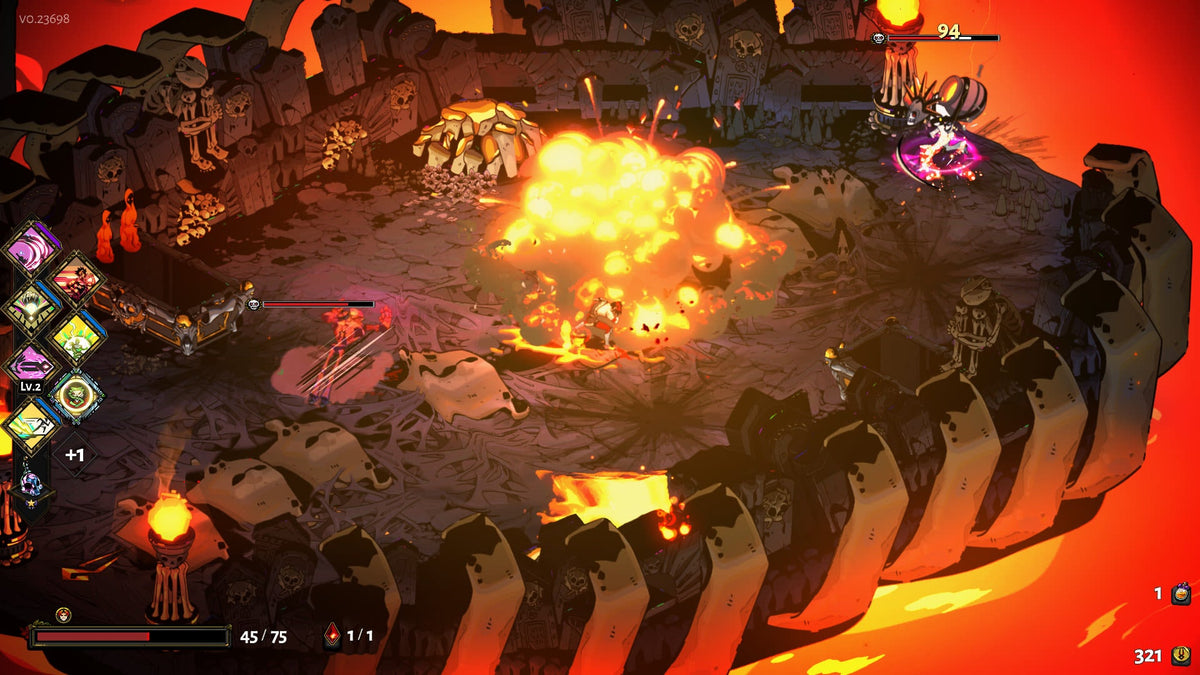
These are official promotional captures of the original Hades, including dated pre-1.0 scenes where identified. They illustrate combat and character encounters; none is presented as a capture of the God Mode settings screen.
Make room for the next game
Find your next play at Zypher Trading Video Games, or sell your old games to Zypher when your shelf needs room.
Sources: Supergiant’s current Hades FAQ and difficulty explanation; PlayStation’s official Hades overview; Official publisher media bundle. Gameplay recommendations and design interpretation are Zypher editorial judgment. Screenshots retain their original proportions. Zypher is an independent retailer.


