Finding a Spirit Shard in Ori and the Will of the Wisps gives you a new option. It does not mean you have finished improving that option, or expanded the room available in your loadout. Those are separate parts of the sequel’s progression, and the distinction is useful before the next detour through Niwen.
The system gives you choices about how Ori moves, fights and handles danger. Understanding those choices is more useful than treating every new pickup as a permanent instruction to replace whatever you were using.

Three goals with three different names
Xbox’s official achievement list makes the separation unusually clear. Shard Hunter concerns unlocking all shards, Shard Specialist concerns upgrading them, and Fully Slotted concerns upgrading the shard slots.
| Goal | What to check |
|---|---|
| Find more options | The shards you have unlocked |
| Improve an option | That shard’s upgrade status |
| Expand the loadout | Your available shard slots |
That gives you a better way to describe what you want next. If an effect you like is already available, more collecting is a different goal from improving it. If you want room for another equipped effect, a longer list of owned shards does not answer the slot question by itself.
Why this replaced following an ability-tree path
In a May 2020 developer interview, Moon Studios’ Thomas Mahler described shards as an evolution of Blind Forest’s ability tree. Collecting them directly let players assemble a custom loadout without first investing through a path of skills they might not want.
That changes what a new discovery means. An option can be interesting without being compulsory. You can consider how it fits the way you play, rather than assuming the game expects every pickup to become part of the next encounter.
The useful question is specific: what would this effect let you do differently? Keep the answer tied to a situation you recognize. An effect that sounds powerful in isolation may be less valuable to you than one that makes a familiar movement or encounter more comfortable.

A movement effect and a damage tradeoff solve different problems
The same published interview discusses examples ranging from wall-clinging and damage reduction to exchanging health and energy. Those are substantially different kinds of customization. One changes how you hold a position; another changes how you absorb a mistake; another changes the resources behind your choices.
Start with the problem that is interrupting the attempt. If reaching and holding a surface is the issue, inspect the movement-related effects you own. If you reach the fight comfortably but lose too much health during it, look at effects relevant to damage and resources.
Read any tradeoff in full. An adjustment involving health and energy is not simply another way to say that everything has improved. Consider which resource your intended actions need and what you are accepting in exchange.
Spirit Trials and Spirit Shrines ask for different skills
The current Xbox description distinguishes Spirit Trials, which are speed-run challenges, from Spirit Shrines, which involve timed waves of enemies. They are different reasons to care about Ori’s toolkit.
A route-focused challenge puts the sequence of movements in the foreground. A wave encounter puts pressure on how you handle opponents and the space they occupy. A loadout you enjoy while exploring is a starting point, rather than proof that you have already chosen what suits both activities.
Before changing anything, decide which activity you want to improve at. Then inspect the effects with that activity in mind. You can enjoy collecting options without turning every session into an attempt to maximize every category.
Difficulty is another decision, outside the shard collection
The launch announcement identifies Easy, Normal and Hard modes alongside the customizable combat system. A difficulty choice and an equipped shard are different controls over the experience.
Choose the broader challenge you want, then learn what the available shards contribute within it. If you are interested in a demanding route, keep enough of the setup familiar to recognize your progress. If the priority is seeing more of Niwen, choose around that goal without turning the menu into a referendum on your skill.
Neither a longer inventory nor a harder setting explains a missed landing. Keep room for the straightforward part: recognizing a surface, understanding the next movement and arriving where you meant to arrive.
Give the next detour a name
Before setting off again, decide whether you are seeking a new shard, improving an owned one, expanding the slots or practicing a particular challenge. That is a more useful plan than vaguely trying to make Ori stronger.
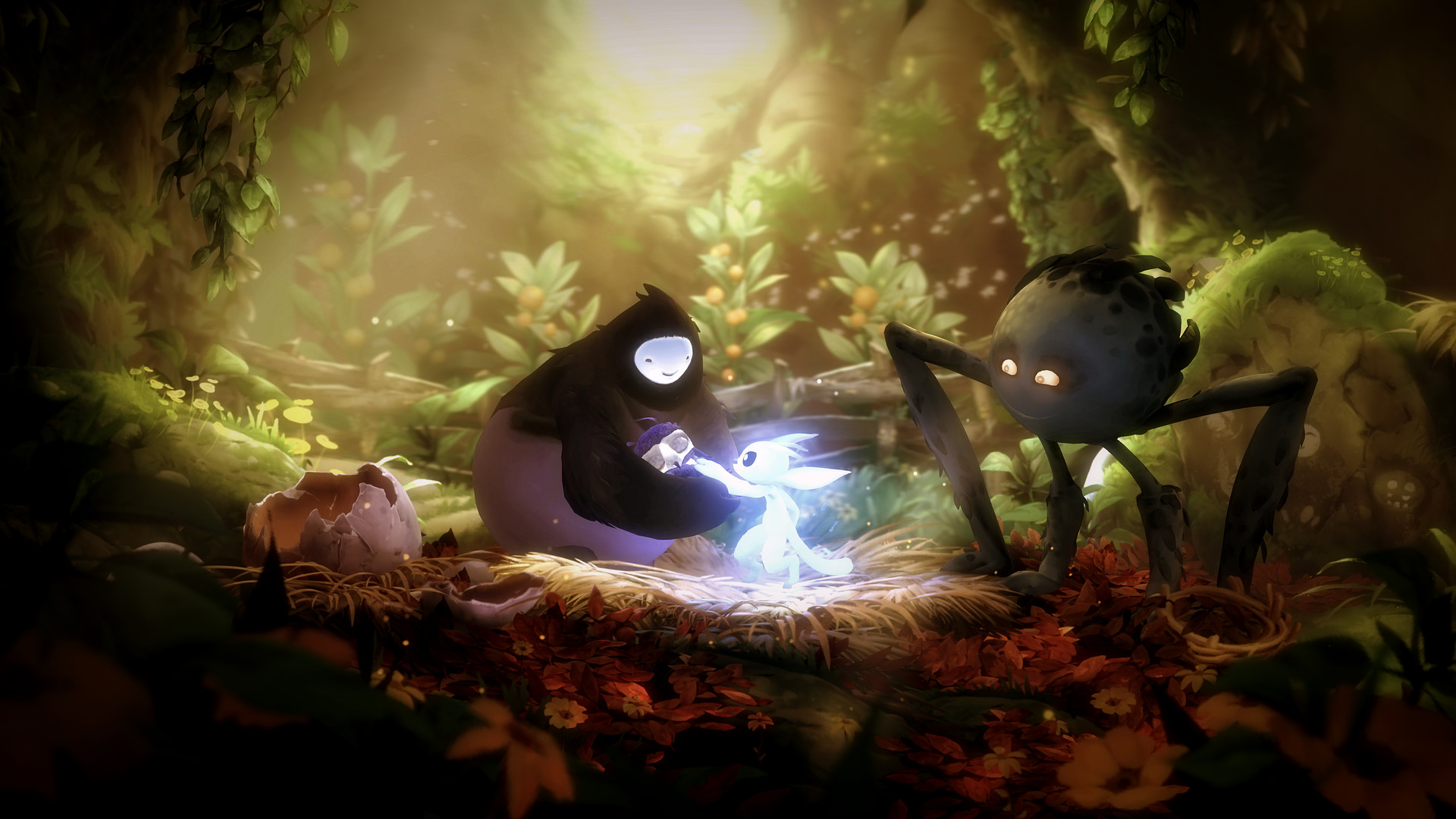
This guide concerns Will of the Wisps, and the images are official PC captures of that sequel. Browse Zypher’s current games for your next platform adventure, checking the exact title and platform before ordering. To clear shelf space, visit our sell-your-old-games page.


