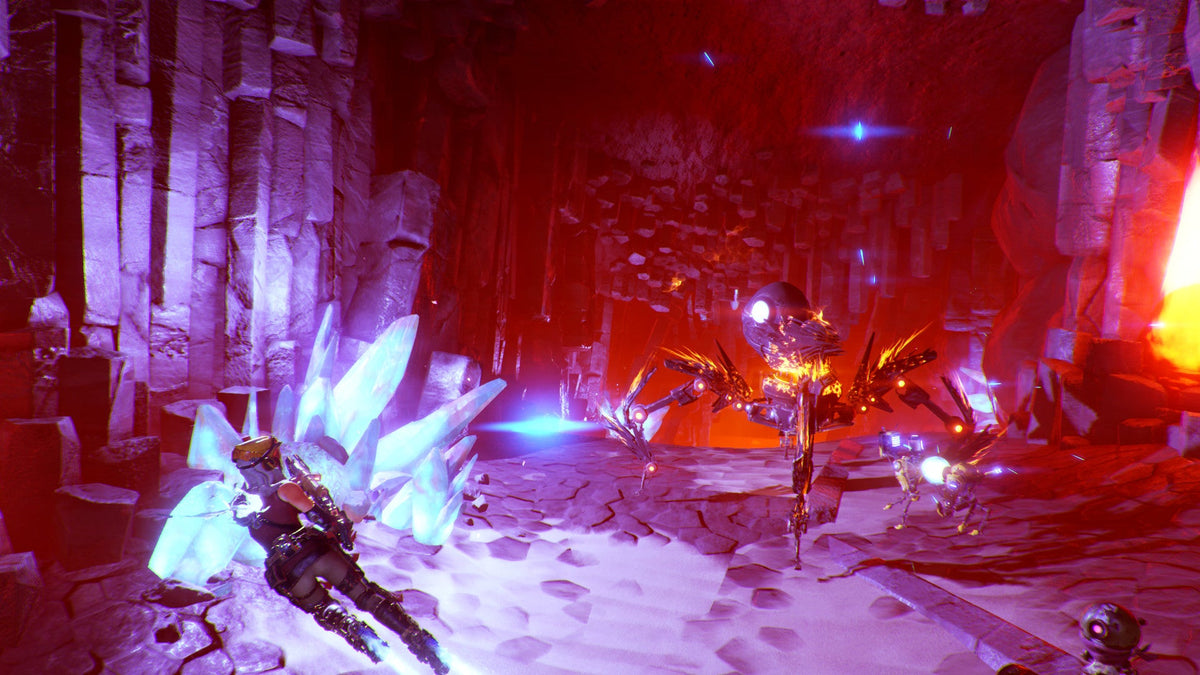
The glowing core is tempting. Pulling it at the wrong moment is less rewarding. ReCore gives Joule a gun, a lock-on system and an extraction cable, but the interesting combat decisions come from knowing which tool the enemy's current state is inviting you to use.
This guide uses the official Xbox game manual for the mechanics. The screenshots are publisher images of ReCore: Definitive Edition on PC. If you are buying a physical Xbox One copy, verify the offered edition and contents separately.

Lock on so movement can get your attention
Jez Corden's launch-period hands-on guide emphasizes lock-on alongside airborne dodging. That is a clue to the combat's intended division of attention: you should not spend the whole encounter rooted in place because the reticle has found something.
Joule can double-jump and chain an air dash into her movement. Use a manageable fight to learn how those actions connect. First identify where you want to land, then practice the movement that gets you there without losing track of the target.
The landing-ring guidance documented in that hands-on guide also makes the camera worth learning outside an emergency. A route that is easy to read while standing still can be harder to judge with an enemy demanding attention. Give yourself a little space to understand it before turning the whole encounter into a test.

Color matching has a combat purpose
Matching weapon and core colors improves damage; a matching charged shot interrupts an enemy lethal ability, according to the Xbox manual.
That creates two reasons to pay attention. One is steady effectiveness against the target. The other is timing an interruption when a dangerous action is developing. Recognizing the correct color is the first step; remembering to use it during pressure is the habit worth practicing.
Do not change every part of your approach at once. Start by noticing the target's color consistently. Then add the charged-shot decision. Breaking the learning process into those two steps makes it easier to tell whether an error came from selection or timing.
The health bar contains instructions
Black health-bar markers indicate layer breaks and a combo opportunity, also described in Corden's guide. The Xbox manual identifies white markers as the extraction threshold.
Read those signals instead of treating the health bar as one long instruction to keep firing. A fight has stages. Damage creates opportunities, and the next useful action can change when the enemy reaches one of those markers.

A useful practice goal is simply to identify the extraction opportunity before committing to it. If you can recognize that state reliably, deciding whether the surrounding fight is safe enough becomes a separate question. Otherwise the cable can feel unreliable when the real issue was trying to use it before the target was ready.
A red cable means ease off
For normal extraction, click the right stick, pull downward and ease pressure when the cable turns red. The Xbox manual warns that continuing against red disengages it. Think of the action as managing tension rather than forcing the pull.
The practical rhythm is to watch, respond and resume. If an extraction fails, separate the possible causes: was the target ready, did you engage correctly, and did you keep forcing the cable after its warning? That is a much more useful diagnosis than assuming every attempt should resolve from one sustained pull.

Combos can change the extraction opportunity
Corden also describes the ten-hit combo opportunity for instant extraction; the Xbox manual specifies the right-stick command. That is a different opportunity from the ordinary tension-management sequence. Learn to recognize it rather than trying to apply the same rhythm to every core.
Our recommendation is to build familiarity against enemies you can read. Pay attention to layer breaks, the combo and the changing target state. The goal is to notice why an opportunity appears, so you can recognize it again in a busier fight.
These tools reinforce each other. Lock-on frees attention for movement; color matching improves the exchange; the health markers tell you when the enemy's state has changed. Extraction then becomes the result of understanding the fight rather than a separate minigame that interrupts it.

Your Corebot also has a resource to watch
Companion lethal-ability pips above the health bar recharge over time, according to the manual. Check that indicator before building a plan around the ability. An instruction to a companion is most useful when the resource is actually ready.
The workbench requires blueprints and materials for parts. The manual also distinguishes the reward paths: extraction yields a core instead of material drops. Decide which resource you want before treating every available extraction as the automatic finish. A companion upgrade gives the next fight a purpose when you know which resource you are gathering.

Find the right desert adventure for your system
For the PC edition pictured, check ReCore: Definitive Edition's current listing. For a physical Xbox One copy, Zypher's ReCore listing identifies the offered format and contents. A physical listing does not automatically include a separate PC entitlement or unspecified extras.
If your next playthrough starts with making room, check Zypher's trading and selling information. Keep the games you want to return to, and give the rest a clear next destination.


