Dead Cells has several ways to make learning less punishing, and their names are easy to lump together. The Training Room lets you rehearse familiar threats. Assist Mode changes parts of the play experience. Aspects are powerful optional perks with a specific progression restriction.
Those are different tools. Choosing the right one starts with identifying what is getting between you and the next useful attempt: access to practice, the way a fight plays, or the difficulty of a whole run.
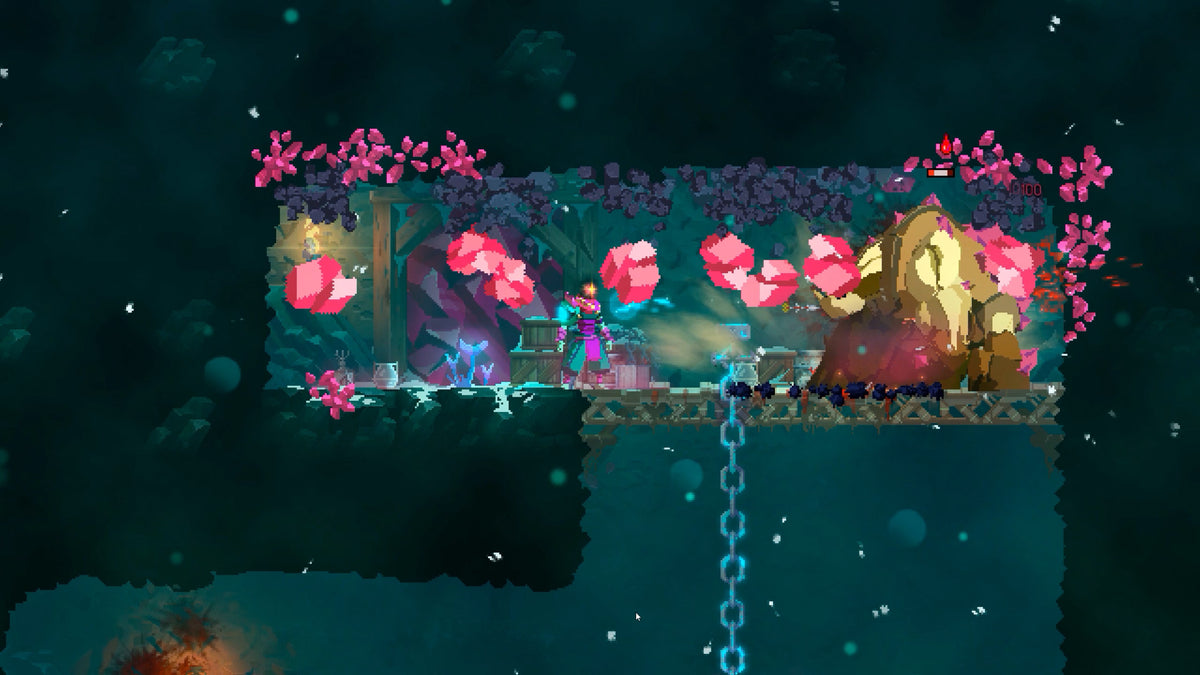
This guide covers features documented in the game's official Practice Makes Perfect and Accessibility updates. The accompanying images are archival developer-supplied gameplay captures of Dead Cells, not screenshots of those settings menus and not evidence that any particular option is enabled.
Use the Training Room when the missing ingredient is repetition
The official update notes describe a Training Room accessible from the starting section of Prisoners' Quarters after obtaining its key from a particular NPC's corpse. It allows practice against enemies you have already fought and bosses you have encountered in earlier runs.
That makes it useful when you know which encounter needs work but do not want every experiment to require another journey to reach it. Practice access and combat ability are separate problems. Reaching the same opponent more conveniently gives you more chances to study a specific part of the fight.
Use the room to isolate the part of the encounter that keeps catching you. Watch an attack begin before trying to punish it. Try standing farther away. See whether waiting changes the opening you get. You can work on that exchange without rebuilding the whole journey to the opponent each time.
The encounter history requirement matters too. This is not a promise that a new save can summon every boss immediately. Treat the room as a way to work on threats the game has already introduced to you.

Use Assist Mode when the conditions of play need changing
The Accessibility update documents Assist Mode options including adjustable enemy health, enemy damage and trap damage, as well as a continue option that restarts from the beginning of a biome after death. It also lists assistance with targeting and timing-related settings.
Begin with the problem you want to address. If a particular kind of damage is the issue, look at the relevant option before changing several unrelated settings. If the repeated loss of biome progress is what stops a session being useful, examine the continue option instead of assuming a general difficulty adjustment will answer the same concern.
Changing one setting at a time is practical advice for understanding the result, not a rule about how anybody is allowed to enjoy the game. If several changes make the experience comfortable, use them. The point is to choose deliberately rather than feel stuck with the first combination you tried.

Check the separate readability and input options
The same official update includes adjustments to HUD size and transparency, outlines, particles, fonts and the display of information beyond color alone. It also documents additional input choices, including hold-to-jump and hold-to-roll options.
These deserve attention even if you do not want to alter enemy health or damage. Being able to read the action and being able to survive a hit are different needs. A busier scene may be difficult to parse for reasons that a damage slider does not address.
Evaluate a readability change during ordinary combat, where enemies, effects and platforms are competing for attention. Look for a concrete improvement: locating the Beheaded faster, distinguishing a projectile from the scenery, or reading the HUD without losing track of the fight.

Read the restriction before selecting an Aspect
Aspects arrived in the Practice Makes Perfect update as strong optional perks selected at the start of a run. The official notes state the important tradeoff: with an Aspect equipped, you cannot unlock a new Boss Cell or earn flawless boss achievements.
That makes the intended session important. If your goal is to experiment with a powerful modifier, an Aspect may suit it. If the goal is specifically to earn the next Boss Cell, that restriction needs to be part of the decision before the run begins.
Do not transfer the Aspect rule to every feature in this article. The documented restriction is attached to Aspects. Similar-sounding ways to change an experience are not automatically the same system with the same consequences.

Pick one purpose for the next session
Our earlier Dead Cells session-planning guide discusses choosing a goal for an ordinary run. Apply the same principle here with a more specific choice: rehearse an encountered threat, adjust a condition that makes playing awkward, or deliberately try an Aspect while accepting its limitation.
If the next Boss Cell is tonight's target, keep the Aspect restriction in mind before starting. If the target is learning an encountered boss, head for the Training Room. If the way the action is displayed or controlled is the obstacle, give the accessibility options a look before launching another identical attempt.

Choose your next physical game
Explore Zypher’s game shelves and check the system, edition and stated contents before buying. If your collection needs a little space, look up the games you want to sell to Zypher.
Sources and image credits
- Official Practice Makes Perfect update notes
- Official Accessibility update notes
- Motion Twin: official Dead Cells press kit
Unaltered official Motion Twin press-kit gameplay images. Exact capture platform and build are unspecified. They provide game context and do not depict the Training Room, option menus or enabled settings. Feature descriptions come from the cited official update notes; practical session suggestions are Zypher editorial advice. Sources and store links checked November 15, 2026. No publisher endorsement is claimed.


