ZYPHER XP | FRANCHISE FEATURE
The next game can remember a decision you would rather stop discussing. That is a good reason to carry a Shepard through the Mass Effect trilogy. A sequel usually asks you to recognize the cast. Here, the history you bring can help decide what that reunion means.
Starting with Mass Effect on Xbox 360 and continuing through its sequels makes a save file part of the storytelling. The interesting distinction is between preserving a character's past and preserving every detail of a character build. Those are different promises, and Mass Effect does not treat them as interchangeable.
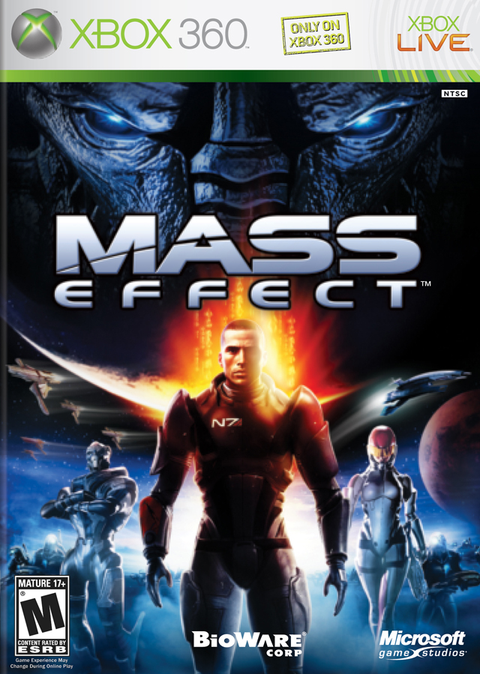
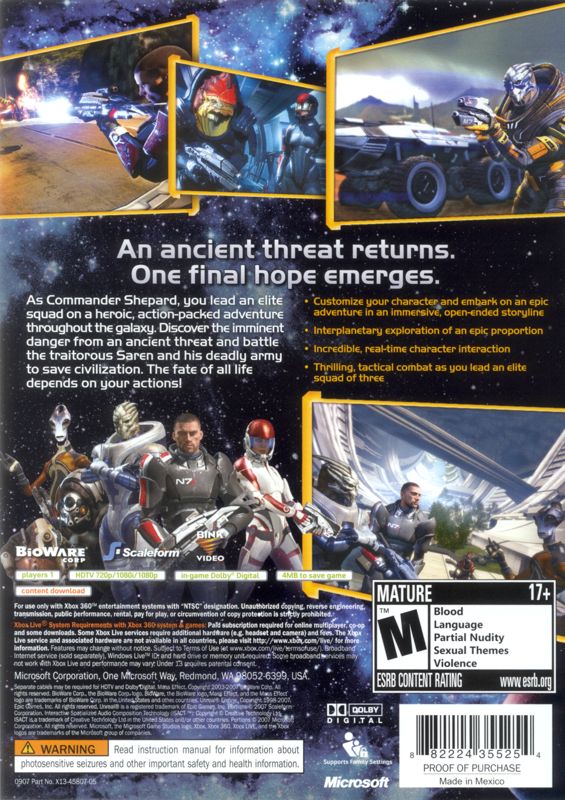
Featured image: the complete back cover of the original Xbox 360 Mass Effect, published by Microsoft Game Studios. Historical packaging illustrates the trilogy's starting point, not Legendary Edition or its included content. Used with permission from Microsoft.
The first game gives Shepard a way of dealing with people
The original Mass Effect's conversation wheel distinguishes between exploring a subject and moving the exchange forward. Charm and Intimidate talents can open additional responses, while Paragon and Renegade track different approaches to decisions.
That gives character development a social side. Spending points can change what Shepard is able to say, not just what happens after a trigger pull. A player building a persuasive Commander is making a practical investment in conversation.
Our reading is that the trilogy works best when those choices form a recognizable person. You might have a Shepard who tries to cooperate but becomes impatient under pressure. That is a more interesting role to maintain than selecting a response only because its color matches a meter you want to fill.
There is no need to plan every consequence before beginning. We would rather recommend paying attention to why you chose something. A later game has more to work with, emotionally, when the player remembers the reasoning instead of only the button.
Mass Effect 2 lets the history outlast the build
Mass Effect 2 on Xbox 360 makes the separation unusually clear. Its original Xbox 360 manual describes importing a character from the first game, receiving starting bonuses, and keeping the character's history. It also permits changing Shepard's appearance or class during that import.
That matters if you liked the Commander you created but disliked the way you fought. Continuing the career does not require pretending that the first combat role was your perfect choice. You can reconsider the build while retaining the reason this Shepard belongs in the sequel.
The second game's class abilities give that decision substance. An Engineer can deploy a combat drone; an Infiltrator has Tactical Cloak; a Vanguard uses Biotic Charge. Those are different invitations to approach a fight, not three names for the same job.
We would choose the role that sounds enjoyable now, then let Shepard's existing history do its own work. Loyalty to a character need not mean loyalty to a loadout. The galaxy has enough problems without making your previous class selection a binding employment contract.

The third game asks which career you brought
The original Mass Effect 3 PC manual documents importing a completed Mass Effect 2 career with Shepard's level and consequential decisions. It separately describes importing a completed Mass Effect 3 character for another run with class, level, weapons and modifications.
Those menu options answer different questions. Continuing from the previous game carries a history into the next chapter. Replaying the third game with an existing third-game character preserves a different set of things. Reading both as a generic promise that everything transfers is an easy way to expect the wrong result.
For the story, our preference is to follow one career forward before trying to engineer a perfect version of it. The accumulated decisions give the finale a personal context. You are responding to the galaxy your Commander helped shape, rather than treating every new chapter as a clean character sheet.
Legendary Edition keeps each game's saves separate
Mass Effect Legendary Edition for Xbox One / Xbox Series X collects the trilogy's single-player base games and more than 40 DLC. BioWare's own explanation also says each game retains its own independently managed saves, despite the collection's unified launcher.
The collection includes optional Genesis comics before the second and third games, allowing players to select earlier decisions when entering there. That offers a way into a later chapter. It does not give the player the experience of spending the earlier adventure with those people.
We would treat the comics as a useful entry option, not a test you have failed by using them. A newcomer interested mainly in the second game can make that choice deliberately. A player curious about the relationships has a different reason to begin at the start.
Keep the edition in view when looking up practical instructions. An import described in an original Xbox 360 or PC manual is evidence for that release. It is not, by itself, a guarantee that an old console career can move into the remastered collection or across platforms.
The final preparation belongs to this edition
BioWare changed Legendary Edition's Galaxy at War calculations so multiplayer and the old Mass Effect 3 companion app no longer influence Galactic Readiness. The developer describes playing the earlier games and carrying progress onward as a reliable way to prepare for the conclusion.
That makes edition-specific advice important even when the story is familiar. A checklist written around an original release's external systems may answer a problem the collection no longer has. Decide which version you are playing before turning preparation into a second job.
The appeal is still the long relationship with one Commander. Change a class if it makes the next game more enjoyable. Keep the decisions you want to live with. Those two choices can coexist, and that is one of this trilogy's more useful tricks.
Choose your route through the trilogy at Zypher
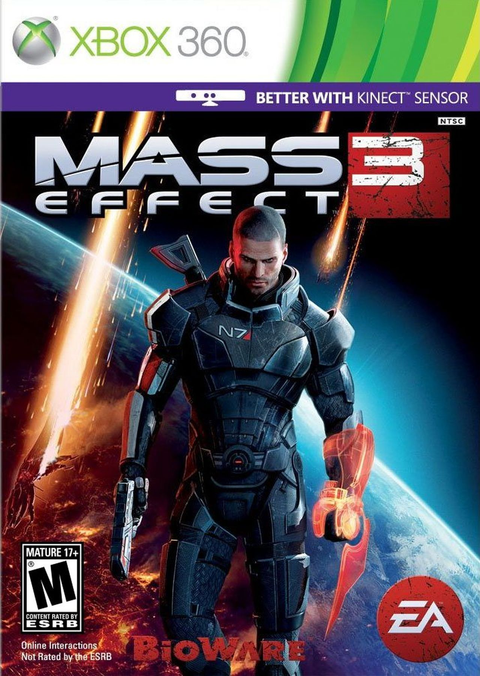
For original Xbox 360 releases, check Mass Effect on Xbox 360, Mass Effect 2 on Xbox 360 and Mass Effect 3. For the remastered collection, compare Mass Effect Legendary Edition for Xbox One / Xbox Series X with Legendary Edition for PS4. Match the listing to your hardware and intended edition before buying.
Read the selected condition and included-item notes. A box image does not promise unused codes, extra discs, downloadable content or original inserts in a particular used copy. If you are making room for another RPG run, sell your old games to Zypher and check the current Buy List.
Sources and packaging credits
Checked November 12, 2026. The original Mass Effect Xbox 360 manual, original Mass Effect 2 Xbox 360 manual, preserved in a public archive, and original Mass Effect 3 PC manual establish the specified conversation, class and import features. BioWare's Gameplay Calibrations article explains the collection's separate saves, Genesis option and revised Galaxy at War systems. EA's collection listing identifies its single-player content. Interpretation and recommendations are Zypher's.
Both images are complete, unchanged original Xbox 360 Mass Effect box shots from Zypher's catalog. Xbox identifies Microsoft Game Studios as that release's publisher. The images are proportionally displayed under Microsoft's box-shot permission. Used with permission from Microsoft. No Microsoft, BioWare or EA endorsement is implied.